


Facial Rejuvenation Treatments Explained: From Skin Care to Facelift Surgery
- Updated on: Oct 22, 2026
- 3 min Read

Arshi Anjum is a qualified homeopath who believes alternative medicine disciplines can really do wonders in certain situations and particularly for some conditions and diseases. She completed her medical education from Bakson Homeopathic Medical College, Greater Noida, India.
- Published on Jul 14, 2026
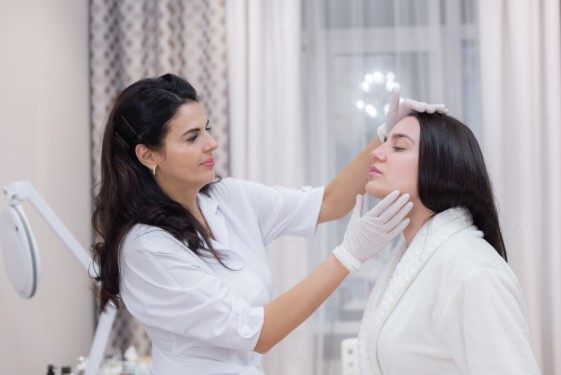
If you’re based in Detroit and you’ve started noticing more sagging, fine lines, or volume loss than you’d like, you’re definitely not alone. Facial aging shows up differently for everyone, and the good news is that treatment options today span a much wider range than most people realize.
From a solid skincare routine all the way to surgical facelifts, there’s a whole spectrum of choices depending on how much change you’re looking for. This guide breaks down where each option fits, so you can figure out what actually makes sense for your face and your goals.
ADVERTISEMENT
ADVERTISEMENT
Start With the Basics: Skincare That Actually Works
Before jumping to anything invasive, it’s worth getting your skincare foundation right. Daily sunscreen, a retinoid, and a good moisturizer do more heavy lifting than most people give them credit for, especially when it comes to slowing down further damage and preserving the collagen you already have.
A consistent routine also makes any future procedure look better, since healthier skin simply heals faster and holds results longer. That said, skincare has limits. It can improve texture and tone, but it can’t lift sagging skin or restore lost volume in the mid-face and jawline. That’s usually the point where people start researching more advanced procedures, including facelift in Detroit options. Accents Cosmetic Surgery is a good example of a practice where surgeons walk patients through exactly which approach fits their face, rather than pushing a one-size-fits-all solution.
Non-Surgical Options Worth Knowing About
Between basic skincare and surgery, there’s a whole middle tier of treatments that can make a real difference. Neurotoxins like Botox soften dynamic wrinkles caused by repeated facial movement, while dermal fillers restore volume in the cheeks, temples, and under the eyes. Chemical peels and microneedling improve texture and tone over a series of sessions, and skin biostimulators encourage your body to produce more of its own collagen over time.
Many patients also combine several of these treatments in the same visit, layering a filler with a neurotoxin, for instance, to address both volume loss and dynamic wrinkles at once. These treatments work well for early signs of aging, but they do have a ceiling. Once skin laxity becomes more pronounced, no amount of filler or neurotoxin can fully replace what a surgical lift accomplishes.
When a Facelift Becomes the Right Conversation
A facelift addresses what injectables simply can’t: excess skin, deeper folds, and sagging along the jawline and neck. Modern facelift techniques focus on repositioning the underlying facial tissue rather than just pulling skin tight, which is part of why today’s results tend to look more natural than the overdone results people associate with facelifts from decades ago.
Many surgeons now also pair the lift with fat grafting to restore volume in areas that have hollowed out over time, giving a more balanced, rested appearance rather than just a tighter one. Recovery has also improved, with many patients back to light routines within two weeks, though final results take a few months to fully settle as swelling resolves.
Facelifts Remain a Top Facial Procedure Nationwide
Facelifts aren’t a niche or fading option. According to the American Academy of Facial Plastic and Reconstructive Surgery, nearly 90 percent of its members perform facelifts annually, and the procedure continues to rank among the top three facial surgeries nationwide alongside rhinoplasty and blepharoplasty. Interestingly, the patient age range is shifting younger too, with more people in their 30s and 40s opting for smaller, earlier lifts rather than waiting until signs of aging are more advanced.
Choosing the Right Path for You
There’s no universal answer here, and that’s honestly a good thing. Someone in their early 30s with mild fine lines might do great with a solid skincare routine and the occasional filler, while someone in their 50s dealing with jowls and neck laxity may get far more satisfying, longer-lasting results from a facelift.
Budget, downtime, and how long you want results to last all factor into the decision too, since a filler might need refreshing every year while a well-done facelift can hold its results for a decade or more. The best way to figure out where you land is a real conversation with a board-certified facial plastic surgeon who can assess your skin quality, bone structure, and goals in person rather than guessing from a mirror at home.
Final Thoughts
Facial rejuvenation isn’t an all-or-nothing decision. It’s a spectrum that ranges from daily skincare habits to non-surgical treatments to surgical procedures, and most people move through more than one stage of that spectrum over the years. What matters most is matching the treatment to the actual problem instead of chasing whatever trend shows up on social media.
If you’re noticing changes in your face that skincare and injectables can no longer keep up with, it’s worth having an honest conversation with an experienced surgeon about what a facelift could realistically do for you.
Share this article

Latest Posts




ADVERTISEMENT