
How Pharma Manufacturing Teams Use Air Visualization to Investigate Contamination Risks
- Updated on: Jul 27, 2026
- 4 min Read

Tatheer Zehra Zaidi is a clinical pharmacist and pharmacologist with a master’s degree in pharmacy practice. She aims to deliver a positive contribution in the field of healthcare and research. She received her bachelor’s and master’s degrees from Jamia Hamdard New Delhi and then joined Spirant Communication Private LTD as a Medical content writer.
- Published on Jul 27, 2026
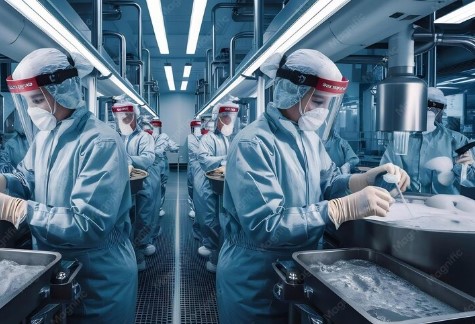
Every injectable medicine is manufactured in an environment where air itself is part of the safety system. It is not just filtered air; it is carefully controlled airflow moving in specific directions and at precise speeds, helping sweep particles away from critical areas before they can reach the product.
But what happens when something appears in that environment that should not be there? A single unexpected microbial result can bring a production line to a halt and trigger weeks of investigation. From pharmaceutical facilities in Indianapolis to sites across Europe and Asia, teams use air visualization to transform invisible airflow patterns into visible evidence, helping them identify risks, investigate contamination events, and improve cleanroom performance.
ADVERTISEMENT
ADVERTISEMENT
What Air Visualization Actually Is
The technique is often called a smoke study, which describes it fairly well. A harmless, visible vapour is released into a cleanroom or a critical filling zone, and cameras record how it moves.
That is genuinely all it is. The vapour behaves like the air around it, so watching where it drifts tells you exactly where the air is going. Filmed properly, it turns something invisible into something a team can pause, rewind and discuss with real evidence in front of them.
Why Airflow Matters So Much Here
In sterile manufacturing, exposed product is protected by what the industry calls first air. That is clean, filtered air coming straight off a HEPA filter, before it has touched any other surface. As long as it flows over the product in one steady direction, particles get carried away rather than settling.
Air is easily disturbed, though, and none of that disturbance is visible in normal operation. The room looks fine and the gauges read normally. Only when you add vapour and film does the actual behaviour become obvious.
Five Ways Teams Use It to Investigate Contamination
When something is found where it should not be, the investigation is trying to trace a path. These five mechanisms do most of the work.
1. Identifying First Air Disruption
If contamination appears, teams recreate the exact moment it happened and watch what the air did. The concern is air bouncing off machinery or an operator’s glove and folding back on itself, pushing already-exposed air across sterile vials instead of carrying it away.
2. Pinpointing Dead Zones and Turbulence
A cleanroom design can look perfect on paper and behave differently once real equipment is installed. Conveyors, filling heads and robotics all create local turbulence that nobody predicted. Air moving turbulently, or arriving from the wrong direction, raises the chance of particles reaching the product. Visualization shows the eddies where particles can gather before dropping onto a sterile surface later.
3. Evaluating Worst-Case Interventions
Regulators expect studies to cover routine operation and operator interventions, not just an empty room. Teams run the tracer while personnel actually interact with the filling line, watching whether a reach or a reposition drags less clean air from the surrounding area into the critical zone. This is a recurring theme in FDA inspection observations, the written findings inspectors leave at the end of a visit.
4. Validating Pressure Cascades
Air should move steadily from the cleanest zones outward to less clean ones, so that dirty air never travels inward. When particle or microbial counts come back out of limits, tracers can show whether a pressure drop or a door opening at the wrong moment let air migrate the wrong way.
5. Optimising Environmental Monitoring
Smoke studies reveal the natural path airborne particles travel. If routine samples keep failing, teams use that mapping to reposition settle plates and air samplers into the routes contaminants actually take, which gives the site’s contamination control strategy a scientific basis rather than a guess.
What the Footage Usually Reveals
Investigations rarely uncover something dramatic. They usually uncover something small and repeated. A common finding is that airflow looks perfect when the room is empty and breaks down the moment someone reaches in. Another is that equipment added after the original qualification is quietly creating a dead zone. Sometimes an operator’s technique, learned informally and passed on to colleagues, interrupts the flow every single time.
Studies of air visualization are most useful when they capture real operating conditions and real interventions, rather than a static test nobody would recognise from the shop floor. CAI is one firm that carries out these studies for GMP facilities, using synchronised multi-camera recording to reduce blind spots.
The filming angle matters enormously. A single fixed camera can easily miss the moment that explains everything, which is why front, side and top views together tend to produce a far more defensible conclusion.
What the Regulations Expect
This is not simply good practice. It is written into the rules governing sterile manufacturing.
The European Commission’s revised Annex 1 came into operation on 25 August 2023 and expects airflow pattern studies to be carried out both at rest and in operation, with video recordings retained, as published by the European Commission. The same guidance sets an air speed range of 0.36 to 0.54 metres per second for unidirectional airflow unless a manufacturer can justify otherwise.
In practice, when an inspector asks how a site knows its airflow protects the product, a folder of readings is no longer enough. They expect to see it.
Conclusion
Contamination investigations are difficult because the evidence is invisible and the event has already passed. Air visualization solves part of that by making the invisible part visible and repeatable.
It will not identify a microorganism or replace laboratory work. What it does is show how air behaves around people, equipment and exposed products in the real world, which is very often where the answer has been hiding all along.
Share this article

Latest Posts


ADVERTISEMENT