



How to Tell If a Medical Treatment Is Actually Working
- Updated on: Aug 29, 2026
- 4 min Read

Tatheer Zehra Zaidi is a clinical pharmacist and pharmacologist with a master’s degree in pharmacy practice. She aims to deliver a positive contribution in the field of healthcare and research. She received her bachelor’s and master’s degrees from Jamia Hamdard New Delhi and then joined Spirant Communication Private LTD as a Medical content writer.
- Published on Aug 29, 2026
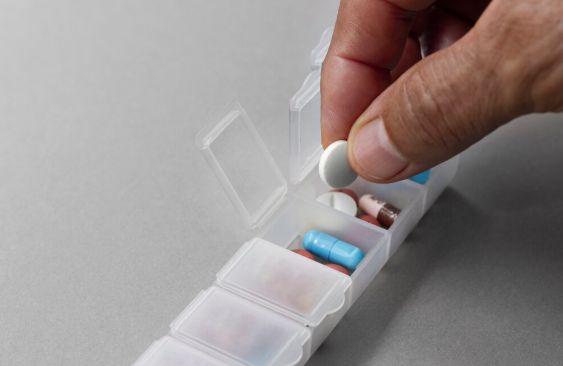
Starting a new medical treatment usually comes with a specific kind of uncertainty a few weeks in. You’re taking the medication, following the plan, doing everything the provider recommended – and you genuinely can’t tell if it’s helping. Maybe you feel a bit different. Maybe that’s the treatment. Maybe it’s just a decent week. Without something more concrete to go on, “is this working” becomes surprisingly hard to answer with any real confidence.
That uncertainty is common, and it’s not because patients are bad at paying attention to their own bodies. It’s because effectiveness usually isn’t something you can accurately judge from symptoms alone, especially early on. Real evaluation requires a mix of things – timeline, testing, tracked outcomes – that goes beyond a gut sense of feeling different. Understanding what that actually looks like tends to make the entire process, and the conversations with a provider along the way, considerably more useful.
ADVERTISEMENT
ADVERTISEMENT
Why Photos and Testimonials Aren’t the Whole Picture
A lot of people researching a new treatment start by looking at other patients’ documented results – photos, case studies, before-and-afters. Before-and-after photos can provide a visual reference, but they should never be the only way to judge a medical treatment. Someone researching norditropin before and after results should also consider treatment duration, baseline health, clinical measurements, and follow-up with the prescribing provider. A single image captures a moment, not a process – it says nothing about starting health status, dosage, treatment length, or how that particular person’s biology responded, all of which shape whether a similar result is realistic for someone else.
Why Symptoms Alone Rarely Tell the Whole Story
Symptom improvement matters, obviously – it’s often the reason someone sought treatment in the first place. But relying on symptoms exclusively to judge whether something is working has real limitations.
Symptoms fluctuate for reasons that have nothing to do with treatment. Sleep, stress, diet, even the weather can all shift how someone feels day to day, independent of whatever medication or therapy they’re on.
Some conditions improve internally before symptoms catch up, meaning a treatment can be genuinely effective for weeks before a patient notices any subjective change at all.
Placebo response is well documented in clinical research and can produce real, if temporary, symptom improvement even without an active treatment effect – which is exactly why clinical trials rely on more than patient-reported feeling better.
Some improvements are gradual enough that they’re difficult to notice day to day, even though they’re measurable when compared against an actual baseline recorded weeks or months earlier.
What Actually Goes Into Evaluating Effectiveness
A more complete picture of whether a treatment is working typically draws on several different sources of information rather than any single one.
Expected timeline. Different treatments work on genuinely different schedules, and knowing what’s realistic in advance prevents both premature disappointment and false reassurance. Some medications show measurable effect within days; others require months of consistent use before a meaningful change is expected to appear.
Lab tests and clinical measurements. Bloodwork, imaging, and other objective markers remain a cornerstone of how providers actually assess treatment response, precisely because they aren’t subject to the same day-to-day noise that self-reported symptoms are.
Physical changes tracked over time. Body composition, mobility, skin or tissue changes – whatever’s relevant to the specific treatment – are more informative when measured consistently at set intervals rather than eyeballed inconsistently whenever it happens to come to mind.
Patient-reported outcomes, structured properly. How a patient feels still matters, and structured tools – standardized symptom scales, consistent logging – make that information considerably more reliable than an unstructured, retrospective impression formed weeks after the fact.
Follow-up appointments. Regular check-ins give a provider the chance to review test results, adjust dosing if needed, and catch either a lack of progress or an emerging side effect early, rather than letting either go unaddressed for months.
Why the Same Treatment Doesn’t Produce the Same Result for Everyone
It’s worth understanding upfront that individual variation is a normal, expected part of medicine – not a sign that something’s gone wrong.
Baseline health differs significantly between patients, and someone starting from a more significant deficiency or more advanced condition often has a different trajectory than someone catching an issue earlier.
Genetics and individual metabolism affect how a given treatment is processed and how strongly it acts, which is part of why identical dosing can produce meaningfully different results in different people.
Adherence and consistency matter more than people often expect – a treatment used exactly as prescribed tends to perform differently than one used inconsistently, even when the underlying medication is identical.
Coexisting health conditions can accelerate, slow, or otherwise complicate how a treatment performs, which is part of why a provider’s full picture of a patient’s health matters more than the treatment protocol in isolation.
A Few Facts Worth Knowing
The research behind why objective measurement matters more than self-report alone is well established.
Clinical trials are specifically designed with control groups and objective endpoints because self-reported outcomes alone are known to be an unreliable way to measure treatment effect, a principle explained in general terms by Harvard Health Publishing in its overview of the placebo effect and how clinical trials use placebo groups to determine whether a treatment itself is responsible for an observed improvement.
Regular laboratory monitoring remains a standard part of many treatment plans specifically because it captures physiological changes that may not yet be noticeable to the patient, a point covered by MedlinePlus, a resource maintained by the National Library of Medicine, in its explanation of why routine testing is built into ongoing care.
Putting It Together With a Provider
The most reliable way to actually answer “is this working” is a genuine partnership with the prescribing provider, built around a few consistent habits.
Ask about the realistic expected timeline at the start of treatment, rather than assuming any specific week is when results should appear.
Keep a simple, consistent log of symptoms and relevant measurements rather than relying on memory when a follow-up appointment finally arrives.
Attend follow-up appointments even when things seem to be going fine, since lab results can reveal progress – or a lack of it – that isn’t yet noticeable subjectively.
Ask directly what specific markers or measurements the provider is using to judge effectiveness, so both patient and provider are actually tracking the same evidence.
Conclusion
Judging whether a medical treatment is actually working takes more than a gut sense of feeling different or a glance at someone else’s before-and-after photos. It takes an understanding of realistic timelines, objective testing, consistently tracked outcomes, and regular follow-up – combined with an honest acknowledgment that individual results genuinely vary for reasons that have nothing to do with whether the treatment itself is sound.
That fuller picture takes more effort than checking in with how you feel each morning, but it’s the difference between actually knowing a treatment is working and simply hoping it is.
Share this article


Latest Posts




ADVERTISEMENT