

Can Hand Exercises Help Arthritis? What Research Shows
- Updated on: Sep 14, 2026
- 4 min Read

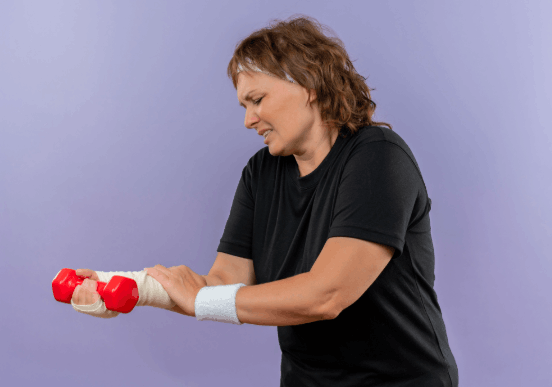
Hand exercises are one of the few self-managed treatments for arthritis with genuine clinical trial evidence behind them.
For rheumatoid arthritis, a structured hand exercise program is now recommended in UK national clinical guidelines. For osteoarthritis, the evidence is weaker but points consistently in the same direction.
ADVERTISEMENT
ADVERTISEMENT
What the research does not support is the idea that any hand exercise, done any way, at any time, will help. Timing, technique and the type of arthritis all change the answer.
Here is what the trials actually found.
What the Evidence Says for Rheumatoid Arthritis
The strongest evidence comes from the SARAH trial, which remains the largest study of its kind.
Researchers recruited 490 adults with rheumatoid arthritis affecting the hands across 17 NHS hospitals in the UK. Participants received either best-practice usual care alone, or usual care plus a tailored 12-week hand and arm exercise programme consisting of seven flexibility exercises and four strengthening exercises.
The results, published in The Lancet, showed significant improvements in hand function at both four and twelve months compared with usual care. The programme produced no adverse effects and was found to be cost-effective. On the strength of those findings, the SARAH programme is now recommended in NICE guidelines for adults with rheumatoid arthritis affecting the hands.
A more recent study of a self-guided online version of the same programme reported similar improvements in hand function, with medium effect sizes, again with no related adverse effects.
The Finding That Matters Most
An extended follow-up of the original trial tracked participants beyond two years, and the result is worth knowing before you start.
Participants who had done the programme still had better hand function than they did at baseline. But the difference between them and the control group had disappeared. The researchers linked this directly to a drop in how consistently people were still doing their exercises.
The benefit is real. It is also conditional on continuing. This is not a twelve-week course with permanent results, and any programme you adopt needs to be one you can realistically keep doing.
If you are managing rheumatoid arthritis, that adherence question matters more than which specific exercises you choose.
What the Evidence Says for Osteoarthritis
Hand osteoarthritis has been studied less rigorously, and the evidence is correspondingly weaker. It is still worth acting on.
A 2024 systematic review and meta-analysis published in the Journal of Orthopaedic & Sports Physical Therapy pooled 14 trials covering 1,341 participants. In the immediate term, under 24 weeks, exercise-based rehabilitation showed:
- Reduced stiffness. Moderate-certainty evidence, the strongest finding in the review
- Reduced pain. Low-certainty evidence
- Improved hand function. Low-certainty evidence
- Improved grip strength. Low-certainty evidence
- No effect on pinch strength. Low-certainty evidence
An earlier Cochrane review reached similar conclusions, finding low-quality evidence that exercise may improve hand pain, function and finger stiffness.
“Low-certainty” does not mean the treatment does not work. It means the trials were small, varied in design, and further research could change the estimate. For a treatment that is free, safe and has no meaningful downside, a consistent positive signal across fourteen trials is a reasonable basis for trying it.
The European League Against Rheumatism already recommends hand exercise therapy for improving strength and joint mobility in people with hand OA.
Context worth knowing: research has found that average grip strength in women with hand osteoarthritis is under 60% of that of healthy people of the same age and sex. That loss of strength is closely tied to the difficulty with everyday tasks that osteoarthritis patients report.
What the Exercises Actually Involve
Programmes with trial evidence behind them share a common structure. They are not strenuous.
Range of Motion Work
Performed daily, including on bad days, unless a joint is acutely inflamed.
- Finger bends. Slowly curl the fingers into a loose fist and straighten again. Ten repetitions.
- Finger spreads. Flat hand on a table, spread the fingers apart, then bring them together.
- Thumb circles. Slow, controlled rotations in both directions.
- Wrist flexion and extension. Forearm supported, move the hand up and down through comfortable range.
Tendon Glides
Sequenced hand positions that move the tendons through their full path. Straight hand, then a hook fist, then a full fist, then a tabletop position, then a straight fist. Five repetitions through the sequence.
These are standard in hand therapy and particularly useful for morning stiffness.
Strengthening
This is the part that requires judgement, and the part people most often get wrong.
The trials used light resistance and gradual progression. Therapy putty, a soft foam ball, or resistance bands for finger extension. The goal is restoring capacity, not building maximum strength.
Progression should be slow and stop at the first sign of joint pain, as opposed to muscle fatigue. Once symptoms are well controlled and range of motion has improved, some people progress to light grip strengtheners at the lowest available resistance, under guidance from their therapist. This is an endpoint, not a starting point, and it is not appropriate for everyone.
When Not to Exercise
This is the part most articles skip, and it is the part that matters clinically.
Stop or reduce during an active flare. Inflamed joints that are hot, swollen and painful should be rested rather than exercised. Gentle range of motion may still be appropriate, but strengthening is not.
Distinguish muscle fatigue from joint pain. A tired forearm is expected. Sharp or increasing pain in a joint is a stop signal.
The two-hour rule. If pain is noticeably worse two hours after exercising than it was before, the session was too much. Reduce the load or the repetitions next time.
Never push through swelling. Increased swelling after exercise means the tissue has been overloaded.
Speak to a professional first. A hand therapist or physiotherapist can tailor a programme to your specific joints and disease activity, which is how every trial in this evidence base was delivered.
Realistic Expectations
Based on the trial data, here is what hand exercise reasonably offers.
- It improves function and reduces stiffness. Consistently, across both RA and OA evidence.
- It may reduce pain. More reliably in RA than in OA.
- It does not slow joint damage. No exercise programme changes the underlying disease process.
- It complements medical treatment rather than replacing it. Every trial tested exercise in addition to usual care, not instead of it.
- It stops working when you stop doing it. The SARAH follow-up demonstrated this clearly.
Anyone with hand arthritis should be managing it alongside medical care rather than through exercise alone. Our overview of the main treatment options for hand arthritis covers where exercise sits within broader management.
The Answer, Briefly
Yes, hand exercises help arthritis. The evidence is strong for rheumatoid arthritis and good enough to act on for osteoarthritis.
The benefits are modest rather than transformative, they are strongest for stiffness and function, they require consistency to maintain, and they need to be paused during flares. Done that way, hand exercise is one of the safest and most accessible things a person with hand arthritis can add to their treatment.
Share this article

Latest Posts




ADVERTISEMENT