
What Are Ozempic Arms? Causes, Prevention, and Treatment Options
- Updated on: Oct 29, 2026
- 4 min Read

Saima Andrabi is a clinical biochemist and is passionate about driving knowledge platforms for creating health awareness in the general public. She pursued her master’s degree in clinical biochemistry from University of Kashmir, Srinagar followed by an internship from National Institute of pathology, New Delhi.
- Published on Oct 29, 2026
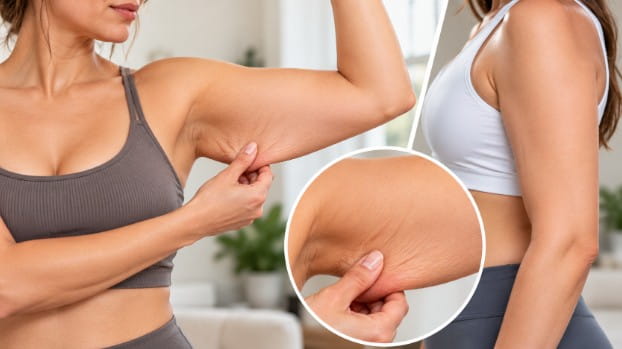
Weight loss medications such as Ozempic and Wegovy have helped many people lose significant weight, but the results in the mirror aren’t always what they expect. For some, the upper arms look looser and softer than before, even as the number on the scale keeps dropping.
So, what are Ozempic arms and can they be prevented or treated? This guide explains what the term means, why it happens, how to lower your risk, and which options exist, from strength training to in-office procedures and surgery.
ADVERTISEMENT
ADVERTISEMENT
What Are Ozempic Arms?
“Ozempic arms” is a popular, non-medical term for loose or sagging skin on the upper arms after significant weight loss, particularly weight loss with medications such as Ozempic. It isn’t a medical diagnosis, and it isn’t a side effect that belongs to one drug alone.
Ozempic (semaglutide) is an FDA-approved medication for type 2 diabetes. Wegovy uses the same drug at a higher dose, and tirzepatide-based medications such as Zepbound are approved for weight management. Because these medications can make substantial weight loss possible, the skin changes that follow have become a common topic, and “Ozempic arms” is the nickname that stuck. The same looseness can follow weight loss from diet and exercise or from bariatric surgery.
Is the Medication Causing It?
Not directly. Loose skin comes from the weight loss itself, not from a toxic effect of the drug on the skin. The more weight you lose, and the faster you lose it, the more your skin has to adapt. Medications that make large weight loss achievable can therefore make skin changes more noticeable.
Why Does Skin Sag After Weight Loss?
Skin gets its strength and firmness from collagen and its ability to stretch and recoil from elastin. If extra weight stays on the body for years, the skin stretches to cover it, and those fibers can be strained. Once the weight comes off, the skin may not fully retract. The upper arms are a common trouble spot because the skin there is thin and often stores fat.
Several factors influence how much looseness develops:
- Amount of weight lost. Larger losses leave more excess skin.
- Speed. Rapid loss gives skin less time to adapt.
- Duration. Skin that has been stretched for years tends to rebound less.
- Age. Collagen and elastin production slow over time.
- Genetics. Some people’s skin simply recoils better than others’.
- Muscle loss. Weight lost through any method can include muscle as well as fat, which can make the arms look softer.
- Sun exposure and smoking. Both speed up collagen breakdown.
Are Ozempic Arms Harmful?
For most people, sagging arm skin is a cosmetic concern rather than a medical one, though it can still affect confidence and clothing choices. Contact your doctor if extra skin causes rashes, irritation, or infections that keep returning, or if it interferes with exercise or daily activities.
How to Lower Your Risk
- Aim for steady weight loss. Work with your prescriber on pace, and never change your dose or skip doses on your own.
- Get enough protein. Adequate protein helps preserve muscle during weight loss.
- Do resistance training. Strength work for the arms, shoulders, back, and core helps maintain muscle under the skin.
- Eat a balanced diet and stay hydrated. Good nutrition supports skin health.
- Protect your skin. Use sunscreen daily and avoid smoking.
- Keep your follow-up appointments. Regular check-ins let your provider monitor your pace of weight loss and your nutrition.
Can Ozempic Arms Go Away on Their Own?
Mild looseness may improve slowly as the skin adapts, sometimes over a span of several months to roughly two years. Larger amounts of excess skin generally will not tighten completely without treatment, and outcomes differ from person to person.
Non-Surgical Ways to Improve the Look of Loose Arm Skin
- Strength training. Building the biceps, triceps, and shoulders can add fullness beneath loose skin and improve overall tone.
- Skincare. Moisturizers can improve softness, and topical retinoids may support collagen over time. Neither can tighten significant looseness. A dermatologist can recommend products that suit your skin.
- Radiofrequency. Uses heat to stimulate collagen in deeper layers of skin. It often requires a series of sessions, and results are gradual and modest.
- Ultrasound. Uses focused ultrasound energy to stimulate collagen. One ultrasound device, Sofwave, has FDA clearance for improving the appearance of skin laxity on the upper arms. In the manufacturer’s clinical study, 46 people had both arms treated in two sessions, and blinded reviewers rated 93% of treated arms as improved at a three-month follow-up. A single manufacturer-run study cannot predict what any one person will see, and the clearance covers the appearance of skin laxity, not the removal of excess skin.
- Fat-reduction treatments. Procedures such as fat freezing can reduce small pockets of fat, but they do not tighten skin.
- Massage and firming oils. They may feel good and soften the skin’s look temporarily, but there is little strong evidence that they tighten skin.
Surgical Options
For significant excess skin, surgery is the most effective option.
- Arm lift (brachioplasty). Removes excess skin, and sometimes fat, from the upper arm and tightens the remaining skin. It leaves a scar along the inner or back of the arm that can fade but will not disappear. Recovery usually involves swelling, bruising, and activity restrictions, and risks include infection, delayed healing, and changes in sensation.
- Liposuction. Removes fat rather than skin, so it may not suit people with significant loose skin, since the skin may not retract afterward.
How to Choose a Treatment and a Provider
Begin by meeting with a board-certified dermatologist or plastic surgeon. Tell them you take a GLP-1 medication, especially before any surgery or procedure involving sedation, because these drugs can affect digestion and anesthesia planning. Questions worth asking:
- Which option fits the amount of loose skin I have? The answer often depends on severity.
- Is this device or procedure cleared or intended for the upper arms? Ask for specifics, not general claims. For example, Sofwave is an ultrasound treatment with FDA clearance specifically for improving the appearance of upper-arm skin laxity, so it is fair to ask whether the device on offer has a similar clearance.
- What results can I realistically expect, and how many treatments might it take? Ask about limits as well as best-case outcomes.
- What are the risks, how long is recovery, and what will it cost overall? Ask for specifics before you commit.
- What is your experience with this treatment? Ask to see results from patients with similar concerns.
Final Thoughts
“Ozempic arms” describes loose upper-arm skin after major weight loss. It is common, usually cosmetic, and not unique to one medication. Steady weight loss, enough protein, and strength training can lower the risk, and options range from skincare and in-office treatments to surgery depending on how much skin there is.
The best first step is a conversation with your prescriber about your pace of weight loss, and a consultation with a qualified skin or plastic surgery specialist if the skin bothers you. This article offers general information only and is not a substitute for medical advice.
Share this article


Latest Posts




ADVERTISEMENT