

Want a More Natural-Looking Result? What Should You Ask a Plastic Surgeon?
- Updated on: Sep 17, 2026
- 4 min Read

Arshi Anjum is a qualified homeopath who believes alternative medicine disciplines can really do wonders in certain situations and particularly for some conditions and diseases. She completed her medical education from Bakson Homeopathic Medical College, Greater Noida, India.
- Published on Sep 17, 2026
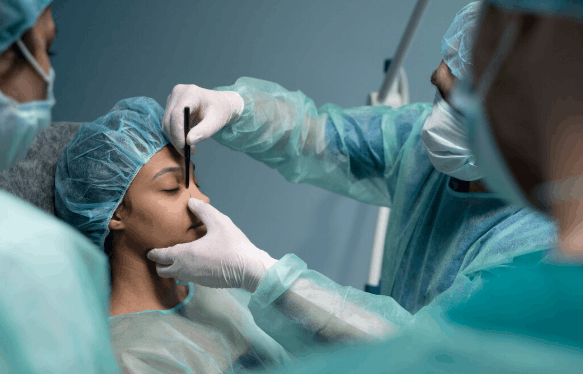
Wanting a cosmetic procedure does not always mean wanting a dramatic change. Many people simply want to look fresher, more balanced, or more like themselves. The challenge is explaining that goal clearly and finding a surgeon who understands what you mean by “natural.”
According to the International Society of Aesthetic Plastic Surgery, more than 17.4 million surgical procedures were performed by plastic surgeons in 2024. That number is significant. And in a place like San Francisco with so many cosmetic procedures and surgeons readily available, it’s easy to find cookie-cutter approaches. Which is why asking the right questions before choosing a procedure becomes important, as it can help you make a more informed decision.
ADVERTISEMENT
ADVERTISEMENT
So, what should you ask a plastic surgeon if a natural-looking result is your priority?
1. What Would You Recommend for My Features?
It can be tempting to arrive at a consultation with a specific procedure already in mind. But the procedure you have been researching may not be the best match for your face, body, or concerns.
Ask the surgeon what they would recommend and why. When meeting with a plastic surgeon in San Francisco, for example, you can ask how your anatomy and goals would affect the recommended approach. A good discussion should consider your features, the changes you want to make, and whether a surgical or non-surgical approach makes more sense.
The American Society of Plastic Surgeons also recommends asking what procedure the surgeon thinks is best for you rather than assuming you already know the answer. This question can reveal whether the consultation is really about your goals or simply about performing the procedure you requested.
2. How Will This Change My Appearance?
“Natural-looking” can mean different things to different people. For one person, it may mean looking less tired. For another, it may mean restoring facial balance or improving a feature that has always bothered them.
Ask the surgeon to explain what the procedure is expected to change and what it will leave untouched. You should also ask whether the result will be subtle or more noticeable. For example, facial procedures can affect proportions and the way different features relate to one another. A change that looks good on one face may not have the same effect on another.
The goal should be to understand the likely change before deciding whether you want it.
3. Can I See Results From Patients With Similar Features?
Before-and-after photos can be useful, but looking at the right examples matters. Ask to see patients who had the same or a similar procedure and had concerns or features close to yours. Some surgical centers, such as The MAAS Clinic, readily display patient galleries on their website to help potential patients compare even before scheduling a consultation. Such galleries can be useful for seeing how results vary across different procedures and facial features.
Photos should not be treated as a promise of what you will look like. They are better used as a starting point for a conversation about your own goals.
4. Would a Different Procedure Give Me a Better Result?
Sometimes the procedure you first considered is not the one that best addresses your concern. A person who wants a younger-looking face, for example, may benefit from a different combination of treatments than they originally expected.
Ask whether there are alternatives and what the trade-offs would be. This could include a different surgical procedure, a less invasive treatment, or no procedure at all. That last option is worth asking about, too. A surgeon should be willing to explain when a treatment may not give you enough benefit to justify the risks, cost, or recovery.
In practice, this kind of conversation can help prevent people from chasing a result that the chosen procedure cannot realistically provide.
5. What Could Make the Result Look Unnatural?
This question may feel uncomfortable, but it can lead to a very useful conversation. Ask what could make the result look overdone, uneven, or out of balance with the rest of your features.
The answer may depend on the procedure. Too much volume, an unsuitable implant, excessive tissue removal, or changes that do not fit your natural proportions can all affect how a result looks.
A surgeon should also be able to explain the limitations and risks of the procedure, including what happens if the result does not turn out as expected. Understanding what can go wrong does not mean expecting a bad outcome. It simply gives you a clearer picture before making a decision.
6. How Do You Plan for a Natural Result?
Finally, ask the surgeon to explain how they approach your specific procedure. What factors will they consider? How will they decide what is appropriate for your features? What part of the result depends on your anatomy?
This is where a surgeon’s experience and approach can become easier to understand. The important part is not simply hearing the words “natural results.” Ask what that means for you and how the surgical plan is built around your features.
The Key Takeaway
A natural-looking cosmetic result starts with realistic expectations and an honest discussion about what a procedure can achieve. The right questions can help you understand your options, compare possible outcomes, and decide whether a treatment actually matches what you want.
Before booking surgery, take the time to discuss your goals, alternatives, risks, expected results, and recovery with a qualified plastic surgeon. You may find that the best outcome is not the most dramatic change, but one that fits your features so well that you still look like yourself.
Share this article


Latest Posts


ADVERTISEMENT