

The Role of Public Health Experts in Controlling Epidemics
- Updated on: Mar 30, 2026
- 4 min Read

Mohd Sadiq is a bioinformaticist with a special interest in Nanotechnology. He completed his Master’s degree from Jamia Millia Islamia University, New Delhi, followed by an internship in the Department of Plant Molecular Biology, University of Delhi, South Campus. Mohd Sadiq has also worked at Codon Biotech Pvt. Ltd. Noida.
By
- Published on Mar 30, 2026
When a strange illness starts showing up in emergency rooms, it doesn’t usually feel historic at first. It feels confusing. A few unusual cases. A pattern that seems slightly off. Doctors notice. Nurses talk. Data is entered into systems that are reviewed quietly in the background.
Then numbers rise.
ADVERTISEMENT
ADVERTISEMENT
News alerts appear. Case counts are reported. Words like “outbreak” and “community spread” are used very quickly. What most people don’t see is that long before press conferences are held, public health experts have already been working. Charts have been built. Calls have been made. Early reports have been reviewed very carefully.
Epidemics are not managed by instinct. They are managed through structure. And that structure is built by trained professionals whose job is to watch, measure, and respond before panic fully sets in.
To understand how epidemics are controlled, it helps to look at the system underneath the headlines.
Epidemiology and the Educational Pathway
At the center of epidemic control is epidemiology. It sounds technical, and it is. But the purpose is straightforward: understand how disease spreads through populations and how that spread can be slowed.
When cases begin to rise, definitions are created. What qualifies as a confirmed case? What counts as exposure? Data is gathered from laboratories and hospitals. Trends are plotted. Transmission rates are calculated. These steps are not rushed. They are done methodically because mistakes at this stage can ripple outward.
Many professionals who want to guide this kind of response pursue an MPH in epidemiology because advanced training in biostatistics, outbreak investigation, and surveillance systems is required to interpret complex population data accurately and to design interventions that are grounded in evidence rather than assumption.
Coursework in such programs is typically centered on data analysis, research design, and applied fieldwork. Disease modeling is studied closely. Patterns are examined. Hypotheses are tested. And it is understood very clearly that decisions informed by this work can affect thousands — sometimes millions — of people.
During an epidemic, estimates are shared publicly. Reproduction numbers are discussed. Projections are debated. Those figures are not guesses. They are calculated using structured methods that have been refined over decades.
The math may not be visible on the evening news. But it shapes everything that follows.
Containment Measures and Contact Tracing
Once cases are confirmed, attention shifts toward containment.
Individuals who test positive are interviewed. Recent contacts are identified. Exposure timelines are calculated. Guidance is provided about isolation or monitoring. This work is detailed. It is also very human.
Conversations are held with families. Concerns are addressed. Privacy must be protected. Trust must be built quickly.
Contact tracing is often misunderstood as intrusive. In practice, it is a tool for interruption. Transmission chains are mapped so they can be broken. When done effectively, spread can be reduced significantly.
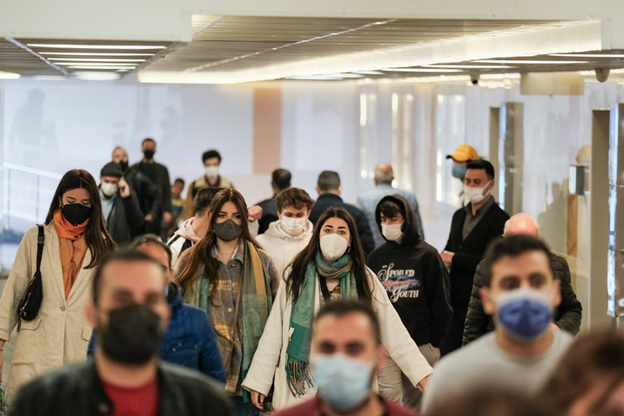
Broader containment strategies may also be considered. Mask recommendations may be issued. Public gathering limits may be introduced. Travel advisories may be updated.
These measures are not adopted lightly. Data is reviewed repeatedly before recommendations are made. Trade-offs are weighed. Economic impact is considered alongside health risk.
It is a balancing act, and it is rarely simple.
Communication: Turning Complex Data Into Clear Direction
Communication is often where epidemic response becomes really difficult.
Inside health departments, charts are reviewed. Models are updated. Statistical confidence intervals are discussed in very precise terms. Among epidemiologists, that language makes sense. It’s structured. It’s technical. It’s expected.
Outside that room, it rarely translates so easily.
Transmission rates, risk percentages, and projected curves must be explained in plain language. Numbers that feel manageable to analysts can feel very alarming to families watching the news at night. Uncertainty has to be acknowledged honestly, but panic must be avoided. That balance is not simple.
During an outbreak, guidance is often adjusted as new evidence is gathered. Research is published. Case counts shift. What was recommended last month may be modified this month. When those changes are announced, explanations are required. The reasoning has to be shared very clearly. Otherwise, confusion builds, and trust can be weakened.
Public health communication is not about sounding perfectly certain. It’s about helping people make informed choices while information is still evolving.
In recent years, misinformation has been spread very quickly through social media and online forums. Claims can circulate widely before they are verified. Corrections may be issued, but the original message often lingers. Public health experts are frequently tasked with correcting rumors while still coordinating testing, tracing, and treatment strategies.
That pressure can feel very heavy. Messages are drafted carefully. Words are chosen with caution. Because when guidance is misunderstood, compliance can drop.
Clarity doesn’t eliminate uncertainty. But it does reduce confusion. And during an epidemic, that difference matters very much.
Policy Decisions and Resource Allocation
Epidemics extend into policy spaces very quickly.
Schools may consider closures. Hospitals may expand capacity. Vaccine distribution strategies may be drafted. Funding may be redirected toward testing and research.
Public health experts advise policymakers using data and projections. But final decisions often involve economic and social considerations as well.
Resources must be allocated strategically. Protective equipment must be distributed. Staffing shortages must be addressed. Testing infrastructure must be expanded.
These actions are coordinated behind the scenes. Meetings are held. Models are reviewed again. Adjustments are made.
It is not dramatic work. It is very procedural.
And it is often done under intense public scrutiny.
Long-Term Prevention After the Crisis
When case counts begin to decline, public attention shifts. For public health professionals, the work changes form but does not stop.
After-action reviews are conducted. Weaknesses in response systems are identified. Preparedness plans are revised. Research gaps are examined carefully.
Vaccination programs may be strengthened. Community outreach may be expanded. Infrastructure investments may be proposed.
Epidemics are not isolated events. They are recurring challenges. Prevention requires ongoing vigilance.
Workforce development becomes part of the strategy. Training pipelines are evaluated. Public health education programs are expanded. Collaboration across regions is reinforced.
Quiet months are used to prepare for future ones.
From the outside, epidemics can feel chaotic. Headlines change daily. Emotions rise. Debates intensify.
Underneath that visible layer, a system is operating.
Data is being analyzed continuously. Models are being adjusted. Strategies are being revised. Communication plans are being implemented. Decisions are being documented.
Public health experts operate within that structure. Their work is methodical. It is sometimes criticized. It is often unseen.
But it is very real.
Epidemics are not controlled by instinct or optimism. They are managed through surveillance, analysis, coordination, and communication. Preparation is relied upon. Training is required. Infrastructure is maintained.
When outbreaks occur, response frameworks are activated. They are not invented in the moment.
And while the public sees case numbers and policy announcements, the steady, analytical work of public health professionals continues in the background — measuring, recalculating, advising.
It is not glamorous work. It is disciplined work.
And without it, the spread of disease would be very different indeed.
Share this article








ADVERTISEMENT