

False Teeth Options: Dentures, Dental Implants, Tooth Implants
- Updated on: Sep 18, 2026
- 7 min Read

Shahid is a pharmacologist with masters in pharmaceutical sciences and pharmacology. In the past, he worked for Maxinov Healthcare Research Division and R.P Biotech. At DiseaseFix, he is a content guide and writer. He is also associated as a researcher with Integrated Resources Pvt Ltd. currently. Shahid’s areas of interests include cellular and molecular pharmacology, pre-clinical screening, and systemic and clinical Pharmacology.
- Published on Oct 3, 2019
Our Review Process
DiseaseFix's every article is examined by board-certified medical professionals to ensure that details on conditions, symptoms, treatments, and protocols comply with current guidelines and recent research. Our content is also written, verified, and approved by a team of experienced writers, editors, clinicians, and other experts.
Our Editorial Team
Shahid Iquebal
AUTHOR
MEDICAL ADVISOR
by
- Medically Reviewed by
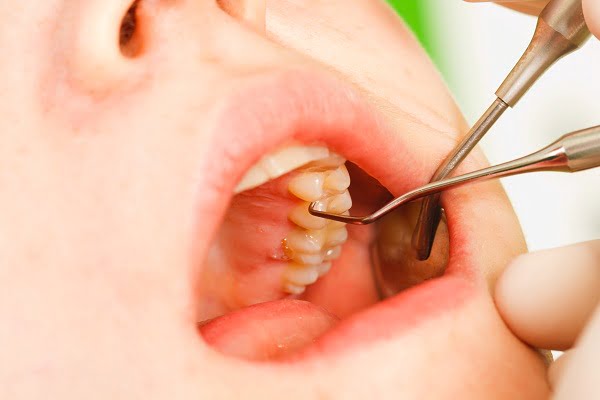
Your teeth are designed and aligned very specifically to work together to help you chew, speak and smile. It is difficult to do these things when teeth are missing. Your mouth can shift and your face looks older even if your back teeth are missing. The good news is that missing teeth can be replaced.
Essentially, missing teeth doesn’t always need to be replaced but there are lots of good reasons why your dentist may recommend you to replace them. The good reasons include improving your appearance, making your eating more comfortable and keeping your mouth and other teeth healthy. Replacing missing teeth may also help you speak more clearly. You should talk to your dentist regarding how replacing the missing teeth might help you.
ADVERTISEMENT
ADVERTISEMENT
Does every missing tooth need to be replaced?
Not necessarily. Whether a missing tooth needs to be replaced depends on which tooth is missing, how many teeth are missing, the condition of the remaining teeth and gums, and how the missing tooth affects chewing, speech, appearance and your bite.
For example, a missing wisdom tooth usually does not need to be replaced. In contrast, losing a front tooth may have an obvious effect on appearance and speech, while losing a back tooth may have a greater effect on chewing.
A dentist may sometimes recommend monitoring a missing tooth rather than replacing it immediately. In other situations, replacing the tooth may help restore function, prevent unwanted movement of neighboring teeth, improve appearance or support the overall dental rehabilitation. The decision should therefore be made on an individual basis rather than assuming that every missing tooth requires an implant, bridge or denture.
More: Tooth Loss (Edentulism): Causes, Prevention, Complications, Treatment
More: Loose Adult Tooth, Loose Tooth Pain in Adults
What happens if you don’t replace a missing tooth?
Leaving a missing tooth untreated does not necessarily cause problems in every person. However, the empty space can sometimes lead to changes in the surrounding teeth and oral tissues.
Depending on the location of the missing tooth, possible consequences include:
- neighboring teeth shifting or tipping into the empty space
- changes in the way the upper and lower teeth meet
- difficulty chewing certain foods
- changes in speech, particularly when front teeth are missing
- changes in the appearance of the smile
- gradual loss of bone at the site where the tooth was lost
The extent of these changes varies between individuals. A dental examination can help determine whether leaving the space untreated is reasonable or whether replacement would be beneficial.
What are the various missing teeth replacement options?
Depending on your needs and conditions, your dentist may recommend one of the following options. It is important to choose right treatment for you as the replacement teeth should last for years.
- Dentures (false teeth) – plastic or metal frameworks that carry false teeth which is removable
- Bridges – false teeth that are fixed onto adjacent natural teeth
- Dental implants – a titanium implant fitted with false teeth on top of it that is fixed directly into your jawbone (the bone of your jaw then fuses to the titanium)
The choice is not always limited to one type of treatment. For example, dental implants can be used to support individual crowns, bridges or removable dentures. In people who have lost several or all of their teeth, a combination of natural teeth, implants and removable or fixed prostheses may be used as part of the overall treatment plan.
The appropriate option depends on the location and number of missing teeth, the condition of the remaining teeth and gums, the amount of available bone, the patient’s general health, treatment preferences and the expected maintenance requirements.
Each type of teeth replacement options has their own advantages and disadvantages, therefore it is important to explore all your options, with the help of your dentist.
What are dentures?
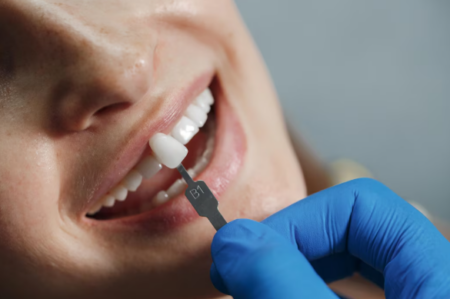
Dentures are often regarded as false teeth. It is a kind of dental prosthesis for a person who has one or several missing teeth. Use of a denture for tooth replacement helps patients in the consumption of food as well as in speaking.
Dentures also help in protecting the remaining teeth and stop facial sagging. This kind of denture is known as partial denture. Patients who would like to replace their entire teeth can chose the option of full dentures. Dentures can be either removable or affixed in a place.
In case when only one tooth needs to be replaced, the false tooth can be hooked around adjacent teeth. In case of full dentures, a full set of permanent false teeth can be connected to a plate that fits nice and snug over the gums or the upper portion of the mouth known as the “roof”. This plate is of same colour as of the gums and is composed of an acrylic material whose inner portion is made of metal. The gum section is made to extend so the edge can’t be seen when smiling.
If you are considering false teeth options such as dentures, dental implants, or tooth implants, it’s important to consult with a professional. You can check out Zahnarzt-muenchen-stadtmitte.de for individuals looking for a qualified dentist. They have a wide selection of highly experienced dentists specializing in a variety of false teeth options. With their help, you can find the best solution for your individual needs, whether it be dentures, dental implants, or tooth implants.
What are the different types of dentures?
Dentures are broadly classified as complete dentures or partial dentures.
Complete dentures replace all of the teeth in an upper or lower dental arch. They rest on the gums and underlying tissues.
Partial dentures replace some missing teeth when natural teeth remain. They may use the remaining teeth and oral tissues for support and retention.
Some dentures can also be supported or retained by dental implants. These are commonly called implant-supported dentures or implant overdentures. They may provide greater stability than conventional removable dentures in appropriately selected patients.
Advantages of dentures: what are the benefits of using dentures?
Dentures provide several benefits such as the following
- It is usually less expensive than dental implants or bridges
- Usually easier to repair than fixed bridges
Disadvantages of dentures
The disadvantages of dentures are:
- They can be uncomfortable
- They can break or be lost
- Frequently move about when eating, talking, laughing and smiling
- Can damage the gums
- Life expectancy of high quality dentures on an average is around 5-8 years
- Gums and bone often continue to shrink
- Some people are embarrassed to take them out for cleaning or at night
More: Loose Tooth Treatment How Do You Strengthen a Loose Tooth
Dentures also require ongoing care. They should be cleaned regularly and examined periodically by a dentist to check their fit and the condition of the oral tissues. The fit of a denture can change over time because the underlying gums and jawbone may change after tooth loss. A denture that becomes loose, uncomfortable or difficult to use may need adjustment, relining or replacement.
What is a bridge?
Your dentist may recommend a bridge if only one or two of your teeth are missing, and a dental implant isn’t applicable for you.
This usually consists of two crowns, which are placed on your natural teeth either side of the space, with a false tooth in the middle. Here your new false tooth is held firmly in place by support of your own teeth on either side.
Bridges comes in many designs and is mainly made of porcelain and/or metal. The kind of bridge which is suitable for you depends on the location of your missing tooth and the condition of your mouth, teeth and gum. Your doctor will discuss the same with you.
It is usually of permanent nature where your dentist will cement the bridge in place, so you don’t remove it for cleaning. You should clean the gap under a bridge with a special dental floss to keep your natural teeth healthy.
Your dentist or hygienist will demonstrate to you how to floss under your bridge. Adhesive bridge is another type of bridge having wings that your dentist bonds to the back of your supporting teeth. You should talk to your dentist and discuss which type is the best option for you.
Advantages of a bridge: what are the benefits of using a bridge?
Bridges provide several benefits such as the following:
- It looks, feel and function like natural teeth and is fixed
- It doesn’t require removal for cleaning purposes
- It is usually cheaper than implants
Disadvantages of a bridge
The disadvantages of a bridge are:
- Adjacent teeth have to be reshaped to fit a bridge
- Gums and bone often continue to shrink
- Risk of permanent tooth nerve damage and development of abscesses
- A high quality bridgework has a life expectancy of approximately 5-15 years
- In case of an extracted tooth, first a temporary bridge needs to be fitted for a few months so that bone can heal before a permanent bridge can be fitted.
What are dental implants?
Many patients these days opt for dental implants to replace a single tooth, several teeth or to support a full set of dentures.
A dental implant is a small biocompatible fixture, commonly made from titanium or a titanium alloy, that is surgically placed into the jawbone to replace the root portion of a missing tooth. After healing and integration with the surrounding bone, the implant can be connected to an abutment, which supports a dental crown, bridge or denture.
The process by which the implant becomes integrated with the surrounding bone is known as osseointegration. Dental implants can be used to replace a single missing tooth, support several missing teeth or provide retention and support for dentures.
It is followed by connection of an artificial crown, denture or bridge as replacement of missing teeth.
During this process, the implant is first buried in bone and left undisturbed under the gum tissue to heal itself. When a sufficient healing period is allotted, it is uncovered and connected to a small metal post that secures and supports the artificial tooth. After this, the bone grows to the implant and bonds to it making it very strong by a process known as osseointegration.
More: Missing front teeth, chipping of front teeth and its replacement
More: Dental Glue or Dental Cement for Teeth
Is dental implant suitable for everyone?
Dental implants are not recommended for everyone, since it involves surgery. The patient should be good in overall health before this procedure is done.
Conditions of chronic illness such as uncontrolled diabetes or leukaemia may slow down the healing after surgery. Individuals with these issues are not potential candidates for the implants. Smoking and chewing of tobacco may also affect the success of your treatment in case of dental implants.
You should ask your dentist if dental implants will be suitable for you or not.
Advantages of dental implants: What are the benefits of using a dental implant?
Dental implants provide several benefits such as the following:
- It is very similar to a natural tooth
- Nearby teeth are not involved in this replacement procedure
- It is the most cost effective procedure in respect to long term solution which can even last for decades
- It may also help in preventing jawbone shrinkage due to tooth loss
- It preserves gum and bone
Disadvantages of dental implants
The disadvantages of using a dental implant are:
- It is much expensive initially as the surgery is involved
- It requires longer duration of treatment
- It involves surgery
Dentures vs. bridges vs. dental implants
| Feature | Dentures | Dental bridges | Dental implants |
|---|---|---|---|
| Removable | Usually | No | No, when supporting a fixed restoration |
| Can replace one tooth | Yes, in selected designs | Yes | Yes |
| Can replace several teeth | Yes | Yes | Yes |
| Requires surgery | No | No | Yes |
| Requires neighboring teeth for support | Sometimes | Usually for conventional bridges | Usually no |
| Can support a denture | Yes | No | Yes |
| Initial treatment cost | Generally lower | Generally higher than a basic denture | Generally higher |
| Treatment time | Usually shorter | Usually shorter than implant treatment | Often longer |
| Requires ongoing maintenance | Yes | Yes | Yes |
Review Process For This Article:
Sources
Update History
DiseaseFix adheres to strict sourcing standards by basing its content on peer-reviewed studies, research from respected academic institutions, and established medical journals and associations. We rely solely on dependable, reputable sources to ensure our information remains accurate and trustworthy.
References
- Pjetursson BE, Heimisdottir K. Dental implants – are they better than natural teeth? European Journal of Oral Sciences. 2018;126(Suppl 1):81–87.
https://doi.org/10.1111/eos.12542 - Pjetursson BE, Brägger U, Lang NP, Zwahlen M. Comparison of survival and complication rates of tooth-supported fixed dental prostheses (FDPs) and implant-supported FDPs and single crowns (SCs). Clinical Oral Implants Research. 2007;18(Suppl 3):97–113.
https://doi.org/10.1111/j.1600-0501.2007.01439.x - Pjetursson BE, Tan K, Lang NP, Brägger U, Egger M, Zwahlen M. A systematic review of the survival and complication rates of fixed partial dentures (FPDs) after an observation period of at least 5 years. Clinical Oral Implants Research. 2004;15(6):667–676.
https://doi.org/10.1111/j.1600-0501.2004.01120.x - Sailer I, Makarov NA, Thoma DS, Zwahlen M, Pjetursson BE. All-ceramic or metal-ceramic tooth-supported fixed dental prostheses? A systematic review of the survival and the technical complication rates. Dental Materials. 2015;31(6):603–623.
https://doi.org/10.1016/j.dental.2015.03.005 - Jung RE, Zembic A, Pjetursson BE, Zwahlen M, Thoma DS. Systematic review of the survival rate and the incidence of biological, technical, and aesthetic complications of single crowns on implants reported in longitudinal studies with a mean follow-up of 5 years. Clinical Oral Implants Research. 2012;23(Suppl 6):2–21.
https://doi.org/10.1111/j.1600-0501.2012.02547.x - Moraschini V, Poubel LA, Ferreira VF, Barboza ESP. Evaluation of survival and success rates of dental implants reported in longitudinal studies with a follow-up period of at least 10 years: a systematic review. International Journal of Oral and Maxillofacial Surgery. 2015;44(3):377–388.
https://doi.org/10.1016/j.ijom.2014.10.023 - Howe MS, Keys W, Richards D. Long-term (10-year) dental implant survival: a systematic review and sensitivity meta-analysis. Journal of Dentistry. 2019;84:9–21.
https://doi.org/10.1016/j.jdent.2019.03.008 - Chrcanovic BR, Albrektsson T, Wennerberg A. Smoking and dental implants: a systematic review and meta-analysis. Journal of Dentistry. 2015;43(5):487–498.
https://doi.org/10.1016/j.jdent.2015.03.003
PubMed: https://pubmed.ncbi.nlm.nih.gov/25778741/ - Al Ansari Y, Shahwan H, Chrcanovic BR. Diabetes Mellitus and Dental Implants: A Systematic Review and Meta-Analysis. Materials. 2022;15(9):3227.
https://doi.org/10.3390/ma15093227
PubMed: https://pubmed.ncbi.nlm.nih.gov/35591561/ - Wagner J, Spille JH, Wiltfang J, Naujokat H. Systematic review on diabetes mellitus and dental implants: an update. International Journal of Implant Dentistry. 2022;8:1.
https://doi.org/10.1186/s40729-021-00399-8
PubMed: https://pubmed.ncbi.nlm.nih.gov/34978649/ - Chrcanovic BR, Albrektsson T, Wennerberg A. Diabetes and dental implant failure: a systematic review and meta-analysis. Journal of Dental Research. 2014;93(9):859–867.
https://doi.org/10.1177/0022034514538820 - Mustapha AD, Salame Z, Chrcanovic BR. Smoking and Dental Implants: A Systematic Review and Meta-Analysis. Medicina. 2022;58(1):39.
https://doi.org/10.3390/medicina58010039
PubMed: https://pubmed.ncbi.nlm.nih.gov/35056347/ - Sailer I, Mühlemann S, Zwahlen M, Hämmerle CHF, Schneider D. Cemented and screw-retained implant reconstructions: a systematic review of the survival and complication rates. Clinical Oral Implants Research. 2012;23(Suppl 6):163–201.
https://doi.org/10.1111/j.1600-0501.2012.02538.x - Wang R, et al. Dental implant outcomes in patients with diabetes mellitus: a systematic review. Clinical Oral Implants Research. 2026.
PubMed: https://pubmed.ncbi.nlm.nih.gov/42177496/ - Tobacco Smoking and Smoke-Free Products as Risk Factors for Dental Implants: A Systematic Review. Clinical Oral Implants Research. 2026.
https://doi.org/10.1111/clr.70108
PubMed: https://pubmed.ncbi.nlm.nih.gov/41776304/
Share this article

Latest Posts




ADVERTISEMENT