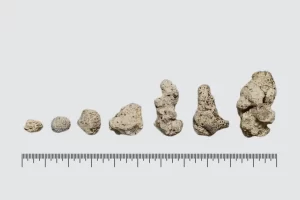

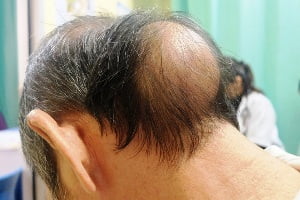


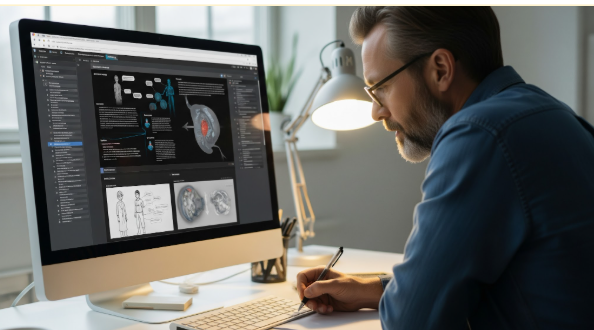
Pharma and biotech companies, healthcare providers have struggled with explaining complex medical concepts to investors and patients. It’s hard to explain the human physiology concept or a drug’s mechanism of action to a non-professional using only text or 2D graphics, as this information is too dense and complicated. Even professional doctors find it difficult to quickly grasp a new therapy or drug’s MoA, because they rarely have any visual reference.
That’s where high-quality medical visualization comes in. Medical and scientific animations have proved to be efficient in demystifying medical concepts, yet their creation requires lots of skills and knowledge. This guide highlights the process of making 3D medical videos that are scientifically accurate, clear, and attractive.
ADVERTISEMENT
ADVERTISEMENT
-
Understand your audience and objectives
First of all, it’s critical to define who you’re creating the video for. It is especially vital in the medical field, where the complexity and sensitivity of content can vary widely. A medical animation for healthcare professionals will look and sound very different from one created for non-professional patients.
Are you explaining a new surgical technique, illustrating a drug’s mechanism of action? Or you want to raise awareness about a public health issue? Each objective defines how you structure your content and choose your visuals.
For example, if you need an animated science video for clinical training, the priority might be precision and anatomical accuracy of both the models and narration. On the other hand, making science animation videos for patient education might require simplified language, relatable analogies, and a more empathetic tone.
-
Script and storyboard
Script and storyboard are the basis of every successful medical animation.
First, you should start with a well-structured script that explains the medical or scientific concept in logical sequence. The narration should be divided into digestible segments. Whether you’re illustrating a drug’s mechanism of action or creating 3d surgical animations, your script should simplify complex information without compromising on scientific integrity.
Understanding the target audience is crucial here as well. If you’re making animated science videos for healthcare professionals, keep terminology precise and data-backed. For patient education, however, you should aim for plain language and relatable analogies.
Once the script is finished, move on to storyboarding. It is the process of creating sketched frames arranged in a particular order to represent each key moment of the narrative shot by shot, scene by scene. The result of this process visualizes how the information will unfold, where key transitions happen, and what visuals or labels will support each point.
-
3D modeling and texturing
3D modeling and texturing are what give your visuals depth, realism, and credibility. Unlike basic diagrams or 2D illustrations, 3D animation allows you to show complex anatomy, microscopic processes, or drug interactions with clarity and a high level of immersion.
Accurate 3D models are essential when creating science animation videos that involve organs, cells, surgical tools, or molecules. However, you’ll always need to base these models on real anatomical data, medical imaging, or reference illustrations to ensure scientific accuracy. Collaborating with medical experts or using established model libraries can help maintain fidelity, especially when working on sensitive topics like disease progression or medical procedures.
Texturing adds the surface details that make models alive. It refers to skin tones, tissue textures, or the reflective surfaces of medical devices. Realistic textures can enhance viewer immersion and engagement, especially when you’re creating science videos for HCPs or patient education needs.
-
Animation and rendering
Once your 3D models are ready, the next step is bringing them to life through animating and rendering. This is where you combine motion, timing, and visual storytelling to turn complex medical concepts into clear, compelling narratives.
Animation allows you to demonstrate biological processes in action. For example, you depict how a virus infects a cell, how a drug binds to a receptor, or how blood flows through a stent. However, too much movement can overwhelm and lead to attention span, while too little can bore. Therefore, every transition and camera move should serve the goal of making the content more understandable.
Rendering is the final stage that gives animation its polished, professional look. In medical animations, the lighting and material choices can significantly impact the realism and informativeness of the visuals.
-
Voiceover
Voiceover is a vital part of medical animation as it follows the narration and explains the concepts presented. Its tone should be aligned with the objectives of the video as well. When creating science animation for healthcare professionals, the narration tone should be precise, data-driven, and use professional language. For patient-oriented content, an empathetic tone and simple language can improve comprehension and build trust.
Script pacing is also critical. Avoid overwhelming your audience with rapid explanations. Instead, you should give them time to absorb what they’re seeing and hearing. This is especially important in animated science videos where visual sequences may require verbal context to make full sense.
-
Revision and post-production
Creating high-quality medical content doesn’t stop at the first draft. If you want to make scientific animations that are both accurate and engaging, revision and post-production are essential final steps.
So, after the first version of your animation is complete, gather feedback from subject experts. They can catch scientific inaccuracies and ensure clarity and accessibility for the target audience.
In post-production, you’ll refine timing, adjust transitions, sync audio with visuals, and add final touches like callouts, labels, and subtitles.
Wrapping up
Creating efficient and engaging medical videos requires a careful combination of scientific accuracy, storytelling, and visual design. From scripting and 3D modeling to voiceovers and post-production, every step is vital for creating informative and accessible content. As you practice and refine your process and tools, you’ll be able to develop your unique style and workflow for creating scientific animations that truly resonate.
Related Reads


Latest Posts



ADVERTISEMENT