



Wondering Why Your Skin Suddenly Changed? Here’s When a Dermatologist May Help
- Updated on: Jun 3, 2026
- 4 min Read

Arshi Anjum is a qualified homeopath who believes alternative medicine disciplines can really do wonders in certain situations and particularly for some conditions and diseases. She completed her medical education from Bakson Homeopathic Medical College, Greater Noida, India.
- Published on Jun 3, 2026
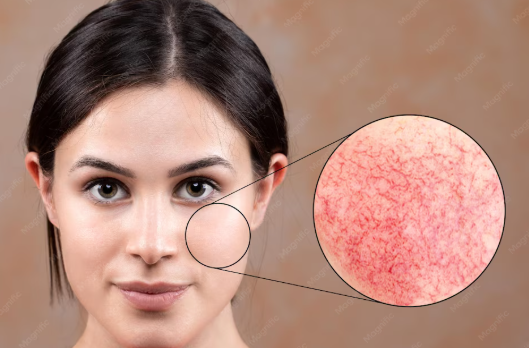
Your skin can go years without giving you much trouble — and then something shifts. A rash appears that won’t clear up. Breakouts that never bothered you in your teens show up in your 30s. A mole you’ve had forever looks slightly different than it did last year. A patch of dry skin that tried three different moisturizers and still won’t respond.
These changes feel disorienting partly because they seem to come from nowhere. But skin doesn’t change randomly — there’s almost always a reason, and figuring out what it is usually requires more than a product swap or a Google search.
ADVERTISEMENT
ADVERTISEMENT
Why Skin Changes as We Age
Skin goes through significant shifts at different life stages, and most people aren’t fully aware of the internal mechanics driving what they’re seeing.
In your 20s, oil production starts to regulate — but hormonal fluctuations from stress, birth control changes, or pregnancy can disrupt that balance significantly. In your 30s, cell turnover begins to slow, which means skin that used to recover quickly from breakouts or irritation starts taking longer. In your 40s and beyond, declining estrogen levels affect skin thickness, hydration, and elasticity in ways that change how products work and which ingredients actually help.
Environmental factors layer onto all of this: sun exposure accumulated over years, changes in climate or season, shifts in diet or sleep, new medications with skin-related side effects. Sometimes a skin change that feels sudden has actually been building for a while — and the trigger that finally made it visible was just the last variable added to an already loaded equation.
The Conditions That Often Go Undiagnosed for Too Long
A lot of common skin conditions get self-managed for months or years before someone seeks a professional opinion. Sometimes that’s fine. Often it’s not — partly because the wrong products can make some conditions worse, and partly because certain things that look like minor skin concerns can indicate something that needs attention.
A few that frequently get missed or mismanaged:
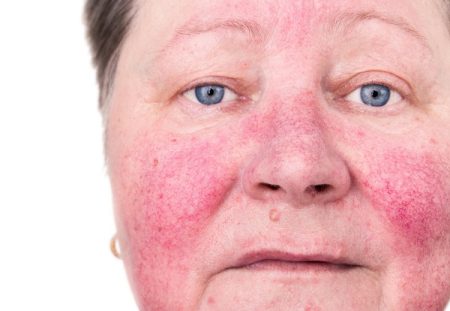
- Rosacea — often mistaken for general sensitivity or adult acne. The redness, flushing, and breakout-like bumps of rosacea respond to specific treatments. Many over-the-counter products marketed for sensitive skin either don’t help or actively flare the condition.
- Seborrheic dermatitis — the flaky, oily patches that commonly affect the scalp, nose, and eyebrows are caused by a yeast on the skin, not dryness. Moisturizing doesn’t address it; targeted antifungal ingredients do.
- Contact dermatitis — an allergic or irritant reaction to something in your environment or your products. Identifying the actual trigger requires either patch testing or careful elimination — not just switching to ‘gentle’ formulas.
- Hormonal acne in adults — shows up primarily along the jawline and chin, often cyclically. It doesn’t respond well to topical acne treatments alone. Managing it usually requires addressing the hormonal component directly.
None of these are scary diagnoses. But they’re all conditions where knowing exactly what you’re dealing with makes the treatment significantly more effective than guessing.
When to Stop Self-Managing and Make an Appointment
Most people have a higher threshold for booking a dermatology appointment than they should. Here are the signals that move it from “I’ll monitor it” to “I should actually get this looked at:”
- A mole, spot, or skin growth that has changed in size, shape, or color — or is new after age 30
- A rash or breakout that hasn’t improved after 6 to 8 weeks of consistent treatment
- Itching, burning, or irritation that is affecting sleep or daily comfort
- Skin changes that coincide with a new medication, a major life change, or a shift in overall health
- Anything that looks infected — increased redness, warmth, swelling, or discharge around a skin lesion
The American Academy of Dermatology maintains an extensive resource library on skin conditions — useful for understanding what you might be dealing with, though it’s not a substitute for a clinical evaluation.
What a Dermatology Appointment Actually Covers
People sometimes avoid dermatology because they’re not sure what to expect or worry about feeling dismissed for a concern that seems minor. In practice, a dermatology visit is a focused clinical assessment.
The dermatologist examines the skin in question, takes a history of when it started and what you’ve tried, and considers relevant factors like your medical history, medications, and lifestyle. From that, they’ll either provide a diagnosis and treatment plan, refer you for additional testing (like patch testing or a biopsy), or help you understand what’s actually driving what you’re seeing.
For people in the Boston area seeking expert skin care, seeing a dermatologist Boston residents trust through APDerm can help diagnose and treat irritation, eczema, psoriasis, and cosmetic concerns with care focused on the underlying cause.
Skin Care Products Are Not a Substitute for Diagnosis
This is worth saying directly: a product recommendation — even a well-informed one from a reputable source — is not the same as a diagnosis. Skin care content online is largely built around healthy skin optimisation. It’s not equipped to address medical skin conditions, and applying that advice to conditions that need clinical treatment often delays improvement and sometimes makes things worse.
If you’ve been through multiple product routines without meaningful results, that’s itself a signal. It doesn’t mean the products weren’t good. It means the problem may require something they’re not designed to provide.
Key takeaways
Skin changes can be frustrating to navigate, particularly when you’ve been trying to manage things independently and nothing is working. A dermatologist doesn’t just tell you what to buy — they tell you what’s actually happening, which is a completely different kind of information. If your skin has shifted in a way that’s bothering you, that’s reason enough to book an appointment and stop guessing.
Share this article

Latest Posts




ADVERTISEMENT