

Why Do UTIs Keep Coming Back? 5 Possible Urological Causes
- Updated on: Jun 14, 2026
- 4 min Read

Amina Ahmad is a bio-technologist and aims to deliver a positive contribution in healthcare industry by spreading health awareness in general public. She completed Masters in Technology (Biotechnology) from IMS Engineering College (AKTU). Then, she moved to Jamia Millia Islamia, a technological University in New Delhi, where she worked in the Research Division of Life Sciences Department as a researcher. She was also associated with Advancells, a stem cell company, as a Research Associate and laboratory expert in the past.
- Published on Jun 14, 2026

If you’ve had more than two urinary tract infections in six months — or three or more in a year — you’re dealing with what clinicians call recurrent UTIs. It’s a pattern that’s frustratingly common, and one that urology practices in cities like New York see regularly. Each infection gets treated with antibiotics, symptoms clear, and then weeks or months later the cycle starts again.
The problem with treating recurrent UTIs as separate events is that it misses the underlying reason they keep happening. There is almost always a structural, hormonal, or behavioural factor driving the pattern — and identifying it is the only way to properly break the cycle. Here are five urological causes worth knowing about.
ADVERTISEMENT
ADVERTISEMENT
1. Incomplete Bladder Emptying
When the bladder doesn’t fully empty during urination, the residual urine left behind creates an environment where bacteria can multiply unchecked. This condition — called urinary retention or elevated post-void residual — is one of the most clinically significant contributors to recurrent infection.
It can result from weakened bladder muscles, nerve damage associated with conditions like diabetes or multiple sclerosis, pelvic organ prolapse in women, or an enlarged prostate in men. A simple ultrasound scan following urination — a post-void residual test — can confirm whether this is a factor and guide the appropriate next step.
2. Anatomical Abnormalities in the Urinary Tract
Some people have structural features of the urinary tract that make infection more likely. A short urethra — more common in women due to anatomical differences — gives bacteria a shorter distance to travel to reach the bladder. In others, a urethral diverticulum (a small pouch in the urethral wall) can trap urine and harbour bacteria between voidings.
Vesicoureteral reflux — where urine flows backwards from the bladder into the ureters or kidneys — is another structural issue that promotes recurrent infection, particularly in children but also in some adults. Urological imaging and cystoscopy are the tools that reveal these abnormalities when standard treatment consistently fails.
3. Kidney or Bladder Stones
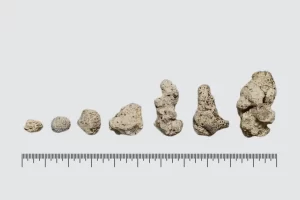
Stones in the urinary tract act as a physical reservoir for bacteria. The rough, irregular surface of a stone provides an ideal environment for bacterial biofilm to form — a protective layer that antibiotics struggle to penetrate. Treating the infection without addressing the stone rarely results in long-term resolution.
Some stones form specifically because of infection — struvite stones, also called infection stones, develop from bacteria that split urea in the urine. This creates a self-reinforcing cycle: infection promotes stone formation, and the stone promotes recurrent infection. Imaging is essential to identify stones that may not produce symptoms on their own.
4. Hormonal Changes and the Vaginal Microbiome
Oestrogen plays a protective role in urinary health. It maintains the acidity of the vaginal environment and supports the growth of Lactobacillus bacteria, which naturally inhibit the colonisation of pathogens like E. coli. When oestrogen levels drop — as they do during menopause or following certain cancer treatments — this protection weakens significantly.
Postmenopausal women who seek specialist input from a urologist treating UTI New York patients often find that targeted vaginal oestrogen therapy — distinct from systemic HRT — substantially reduces their infection frequency without the risks associated with long-term antibiotic use.
Practices like Pelvic Pain Doc, Dr. Sonia Bahlani address hormonal contributors as part of a broader recurrent UTI work-up rather than simply continuing antibiotic cycles that don’t resolve the root cause.
5. Bacterial Persistence and Biofilm
Not every recurrent UTI is a new infection. In some cases, the original bacteria were never fully eliminated — they retreated into the cells lining the bladder wall, forming intracellular bacterial communities (IBCs) that are protected from both the immune system and antibiotic treatment.
This phenomenon, increasingly recognised in urological research, explains why some patients culture the same bacterial strain repeatedly despite completing full antibiotic courses. Standard urine culture and sensitivity testing doesn’t always detect biofilm-associated bacteria, which means the infection appears resolved when it hasn’t been.
Clinically, this requires more specialised investigation and sometimes longer or differently targeted antibiotic regimens to adequately address.
The Scale of the Problem
Recurrent UTIs are far more prevalent than many people realise — and they carry a significant burden beyond the discomfort of each individual episode.
According to the National Institutes of Health, UTIs account for approximately 8 million physician visits annually in the United States alone, with up to 25% of women experiencing a recurrence within six months of their initial infection. Despite this prevalence, many cases are managed reactively rather than through systematic investigation of the underlying cause.
When to Ask for a Referral?
If you’ve had two or more UTIs in the past six months and your GP has only provided repeat antibiotic prescriptions, it’s reasonable — and advisable — to request a urological referral. A specialist evaluation typically includes:
- Urine culture with extended sensitivity testing to identify the specific bacteria involved
- Ultrasound or CT imaging to assess for stones, structural abnormalities, or post-void residual
- Cystoscopy to directly examine the bladder wall if indicated
- Hormonal assessment, particularly for peri- and postmenopausal women
- Review of any systemic conditions that may be contributing to immune or urinary function
Final Thoughts
Recurrent UTIs are not something you simply have to live with. Each return episode is a signal worth investigating — not just treating. The five causes above represent real, identifiable, and in most cases manageable conditions that a urologist can assess and address.
The sooner the underlying driver is identified, the sooner the cycle can be broken. If the pattern sounds familiar, the right step is a proper urological work-up — not another round of antibiotics and hope.
Share this article


Latest Posts


ADVERTISEMENT