


5 Signs It May Be Time to Consider a Facelift Instead of Temporary Treatments
- Updated on: Jul 9, 2026
- 3 min Read

Amina Ahmad is a bio-technologist and aims to deliver a positive contribution in healthcare industry by spreading health awareness in general public. She completed Masters in Technology (Biotechnology) from IMS Engineering College (AKTU). Then, she moved to Jamia Millia Islamia, a technological University in New Delhi, where she worked in the Research Division of Life Sciences Department as a researcher. She was also associated with Advancells, a stem cell company, as a Research Associate and laboratory expert in the past.
- Published on Jul 9, 2026
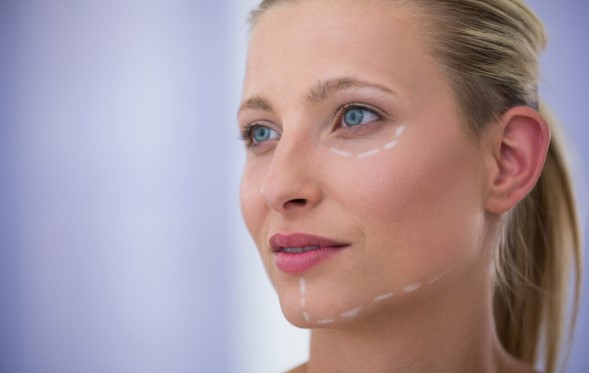
There’s a point where filler, Botox, and at-home skincare stop closing the gap between how you look and how you feel. That’s not a failure of those treatments. It’s just what they were always designed to do, soften, refresh, and delay, rather than reverse structural changes that come from years of skin and tissue losing their support.
In Charlotte, where patients often spend years cycling through non-surgical options before ever booking a surgical consultation, a lot of people reach this point without quite realizing they’ve crossed it. Here are five signs that suggest a facelift may be doing what temporary treatments simply can’t.
ADVERTISEMENT
ADVERTISEMENT
1. Higher Maintenance Costs, Lower Returns
This is one of the clearest financial signals, even though it’s rarely framed that way. Filler and injectables require repeat sessions every few months to maintain the same effect, and as skin laxity increases, many people find they need more product just to maintain results that used to take less. At some point, the cumulative cost of ongoing maintenance starts to rival or exceed what a one-time surgical solution would cost over the same stretch of years.
If you’ve noticed your usual treatments wearing off faster, or needing more frequent touch-ups to get the same result you used to get easily, that’s often a sign the underlying issue has moved past what those treatments were ever meant to fix.
2. Sagging in the Jowls and Neck Has Become the Main Concern
Injectables are excellent at restoring volume and softening fine lines, but they were never designed to lift sagging tissue or redefine a jawline that’s lost its structure. Jowls, neck laxity, and a blurred jawline are structural changes that happen at a deeper tissue level, not something a syringe can meaningfully correct.
Many patients who go for a facelift in Charlotte NC, note that jowls and neck sagging were the deciding factors that pushed them past non-surgical options. Practices serving this area, such as PPSD, often point to this same pattern, since their own guidance notes that only surgical options like a facelift can address such structural issues such as sagging skin, jowls, and neck definition. That distinction matters because no amount of filler repositions tissue that’s already descended.
3. You Look Tired or Upset Even When You’re Not
This is one of the more emotionally frustrating signs, and it comes up constantly in consultations. As deeper facial structures shift and soft tissue volume redistributes, the resting expression can start to look tired, sad, or stern, regardless of actual mood. Filler can soften specific lines, but it can’t reposition the deeper structures responsible for that overall expression shift.
According to research on facial aging, age-related changes in facial features significantly influence how observers perceive a person’s mood and energy level, independent of their actual emotional state. When that perception gap becomes a daily frustration rather than an occasional annoyance, it’s often a sign that the issue is structural rather than something topical treatments can fully resolve.
4. Photos and Video Calls Are Showing You Something Skincare Can’t Fix
Cameras, especially the front-facing kind used constantly for video calls, tend to reveal changes that are harder to notice in the mirror. Lighting, angles, and the static nature of a photo can make sagging, jowls, and a loss of jawline definition far more obvious than they feel in daily life. A lot of people describe this as the moment that finally pushed them to book a consultation, not a single dramatic realization, but a slow accumulation of unflattering photos.
If skincare routines and your usual injectables haven’t changed how you look in these moments, that’s a meaningful signal that lasting solutions, which may be in the form of a facelift, are worth exploring.
5. When Results Are More Than Temporary
This sign often comes directly from a provider rather than from self-assessment. If an injector or aesthetician has mentioned that they can offer some improvement but that it will be subtle or short-lived, given the degree of laxity present, that’s a fairly direct, professional signal that you’ve moved past what their toolkit can meaningfully address.
This is exactly the kind of conversation worth bringing to a surgical consultation rather than dismissing. A provider who’s honest about the limits of non-surgical treatment is doing you a favor, even if it’s not the answer you were hoping for in that appointment.
The Bottom Line
None of these signs means surgery is mandatory or that non-surgical treatments have failed you. They simply mean the underlying changes have moved into territory that temporary treatments weren’t built to address.
Recognizing that shift earlier rather than later tends to lead to better outcomes and a more straightforward decision, since waiting longer usually means more advanced sagging and a longer road back to the results you’re hoping for. If two or more of these signs sound familiar, a surgical consultation is worth having, even if you ultimately decide you’re not ready yet.
Share this article


Latest Posts




ADVERTISEMENT