

Can Artificial Intelligence Detect Diseases Earlier Than Doctors?
- Updated on: Jul 20, 2026
- 7 min Read

Monika Singh is an expert in computer sciences and has pursued her Master’s degree (M.Tech-CS) from Banasthali University, Rajasthan. Her areas of interest include data structure, software engineering, software testing, and computer graphics. Monika Singh has published a paper on “Modified AODV in MANET,” International Journal of Computer Science and Management Studies (IJCSMS), ISSN: 2231-5268, Vol-14, Issue-05 May 2014, PP:12-18.
By
- Published on Jul 16, 2026
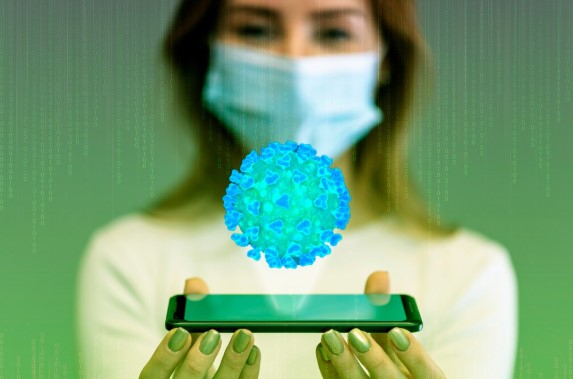
Artificial intelligence is changing healthcare in ways that felt futuristic only a few years ago. It can scan images, sort through records, spot patterns, and flag risks faster than a human can do manually. That has led to a big question: can AI detect diseases earlier than doctors? The honest answer is yes, sometimes, in specific settings. But the fuller answer is more important. AI is usually strongest as an assistant, not a replacement. In many real-world cases, it helps clinicians notice warning signs sooner, yet the final diagnosis still depends on medical judgment, context, and follow-up care. Global health bodies such as the World Health Organization support the science-based use of AI in healthcare, but they also stress that it must be safe, ethical, equitable, and properly governed.
How AI can spot disease earlier
Doctors diagnose by combining symptoms, examination findings, lab results, imaging, and experience. AI does something different. It can be trained on huge datasets and learn subtle patterns that are hard to see at a glance. In imaging, that often means finding a tiny abnormality, a risk pattern, or a change over time before it becomes obvious to a clinician reviewing a single case. In clinical workflow, AI can also monitor data continuously and raise alerts when a patient’s risk starts moving in the wrong direction. That is why AI is already being used in diagnosis, disease surveillance, and health systems management.
ADVERTISEMENT
ADVERTISEMENT
The best results tend to happen in narrow, well-defined tasks. AI is especially strong when the disease leaves a clear digital trail, such as a retinal image, a mammogram, a CT scan, or structured clinical data in the chart. In those environments, it can act like a highly focused second reader. That does not mean it understands disease the way a doctor does. It means it is very good at pattern recognition when the task and the data are controlled.
Where AI has already shown early detection value
Breast cancer screening is one of the clearest examples. Recent large studies have shown that AI can improve detection rates when paired with radiologists. A large German screening study found that AI-supported screening increased breast cancer detection compared with standard screening. Another retrospective Swedish analysis reported that certain commercial AI systems may flag signs of breast cancer well before diagnosis in some cases. That does not mean AI is independently diagnosing cancer years in advance for everyone, but it does show that it may surface risk earlier than routine human reading in selected populations.
Diabetic retinopathy is another area where AI has real promise. Eye screening is ideal for AI because retinal images can be standardized and read at scale. Research and implementation studies show that AI-assisted retinal screening can identify referable disease and diabetic macular edema, and commercial AI-aided systems have been in use for several years. Even so, adoption is still limited, which says something important: technical success is not the same as widespread clinical integration.
Sepsis offers a different kind of example. Unlike a photo or scan, sepsis often develops from a messy mix of symptoms, chart data, and changing vital signs. AI models have shown promise by predicting or flagging sepsis earlier than traditional scoring methods in some studies. That matters because sepsis can become life-threatening quickly, and earlier treatment can save lives. Still, the challenge is not just building a good model. Hospitals also need a reliable workflow so alerts arrive early enough to matter and do not overwhelm clinicians with false alarms.
AI is also moving into broader diagnostic conversation. Systems such as AMIE, developed for clinical history-taking and diagnostic dialogue, suggest that AI may help gather information, ask follow-up questions, and support the diagnostic process more intelligently than earlier chat-based tools. That is promising, but it is still not the same as a physician examining a person, noticing what the patient did not say, and integrating everything into a treatment plan.
Why the answer is not a simple yes
The phrase “earlier than doctors” can be misleading. Earlier than what doctor, in what setting, with what data, and for which disease? AI may outperform a clinician on a narrow pattern-recognition task, especially when the clinician is working without enough time or when the signal is subtle. But medicine is not just pattern matching. It is also uncertainty, context, risk tolerance, and human communication. An AI model can find a suspicious shadow, but a doctor still needs to decide whether that shadow matters in the real world.
That distinction matters because many AI systems are evaluated in controlled environments that are cleaner than everyday practice. A model can look impressive on a test set and underperform once it is exposed to different scanners, different patient populations, missing data, or a workflow that no longer matches the training environment. The FDA has acknowledged that AI-enabled medical devices require careful regulatory oversight, and it maintains a public list of authorized AI-enabled devices to help make this landscape more transparent.
Diagnostic AI also does not solve the problem of false confidence. In one systematic review and meta-analysis of generative AI diagnostic studies, overall diagnostic accuracy was modest, showing that impressive demos do not always translate into dependable clinical performance. That does not mean AI is useless. It means the technology is still uneven, and the quality depends heavily on the task, the data, and the way it is deployed.
Doctors still matter, and often more than ever
Doctors do more than identify disease. They decide what to do next, explain options, coordinate care, and catch problems that do not fit the algorithm. A patient may have an abnormal result that looks concerning on paper, yet the real story may be medication side effects, a benign condition, or a chronic pattern that only becomes clear after conversation and examination. AI can miss that nuance. A clinician can also notice when a result is clinically irrelevant, emotionally significant, or tied to a larger health issue that a model cannot infer on its own.
That is why the most successful use cases today are not “AI versus doctor.” They are “AI plus doctor.” The machine handles volume, repetition, and pattern detection. The clinician handles judgment, explanation, and action. In practice, this partnership can lead to earlier recognition of disease without removing human oversight. It can also reduce workloads so doctors spend more time on the patients who need deeper evaluation.
The role of EMR Systems in earlier detection
The quality of AI depends on the quality of the data it reads. That is where EMR Systems become important. The Office of the National Coordinator for Health IT describes EMRs as records used in clinician offices, clinics, and hospitals, mainly for diagnosis and treatment. In practice, that means AI can only help detect disease early if the underlying chart data is structured enough, complete enough, and current enough to support good prediction. If symptoms, labs, medication history, and screening results are scattered across disconnected systems, AI has less useful material to work with.
Good EMR workflows also make population-level screening possible. Instead of waiting for symptoms to appear, systems can identify patients who are overdue for screening, at high risk based on chart patterns, or showing early warning signs in repeated visits. This is where AI can support preventive medicine, not just disease detection after the fact. It is also why interoperability matters. If the records cannot move, the insights cannot move either.
Why MIPS Reporting Services and Insurance Credentialing Services still matter
It may seem odd to mention MIPS Reporting Services in a discussion about disease detection, but the connection is real. CMS says MIPS measures performance across quality, improvement activities, Promoting Interoperability, and cost. In other words, modern care is not only about making the right diagnosis. It is also about documenting quality, exchanging information electronically, and improving care processes. Practices that invest in better reporting infrastructure are often better positioned to capture and use the data that AI systems need.
Insurance Credentialing Services also play a supporting role. Credentialing is not an AI function, but it affects whether clinicians can participate in the systems where early detection matters. CMS enrollment and provider certification processes exist so clinicians and organizations can bill Medicare and operate within the healthcare system. When administrative work is delayed or messy, care access slows down, and patients may wait longer for appointments, screenings, or follow-up. That weakens early detection even when the technology itself is strong.
The biggest limits of AI in diagnosis
AI’s weaknesses are just as important as its strengths. First, it can inherit bias from training data. If a model is trained on one kind of population and used on another, accuracy may drop. Second, it can struggle when information is incomplete or messy. Third, it may generate alerts that are hard to interpret clinically. Fourth, it can improve detection but not necessarily improve outcomes unless the system acts on the alert quickly and correctly. These are major reasons WHO and FDA both emphasize governance, transparency, safety, and oversight.
There is also a workflow problem. A model that catches disease earlier is only useful if the clinic has a way to respond. That means imaging follow-up, patient outreach, documentation, insurance support, referral pathways, and communication with the patient. In other words, AI is not just a software problem. It is an operational one. The clinics most likely to benefit are the ones that connect clinical intelligence with strong systems around records, reporting, billing, and enrollment.
So, can AI detect diseases earlier than doctors?
Yes, in some settings, AI can detect disease earlier than doctors working alone. It can do this especially well in imaging, screening, and predictive monitoring, where huge amounts of data contain faint patterns that are easy to overlook. Breast cancer screening, diabetic retinopathy, and sepsis prediction are strong examples of where AI has already shown value. But that does not mean AI is better than doctors in general. It means AI is better at certain kinds of pattern recognition, while doctors remain better at full clinical judgment.
The most realistic future is one where AI helps doctors catch disease sooner, not one where it replaces them. As healthcare gets more digital, the combination of AI, EMR Systems, MIPS Reporting Services, and Insurance Credentialing Services will shape how quickly patients move from risk to diagnosis to treatment. Used well, AI can make detection faster, earlier, and more precise. Used poorly, it can add noise. The difference is not the algorithm alone. It is the system around it.
Conclusion
Artificial intelligence can detect some diseases earlier than doctors in specific, well-defined scenarios. It is already proving useful in radiology, retinal screening, and early warning systems like sepsis detection. But broad claims that AI is simply “better than doctors” are not supported by the evidence. The real story is more practical and more hopeful: AI can extend human ability, catch patterns sooner, and help clinicians intervene before disease advances. That makes it one of the most promising tools in modern medicine, as long as it stays grounded in good data, careful oversight, and human expertise.
About Author:
Nathan Bradshaw is a digital health and healthcare IT expert specializing in EHR, RCM, and practice management systems. With 10+ years of industry experience, he helps healthcare organizations bridge the gap between clinical care and technology. He regularly shares insights on AI in healthcare, operational efficiency, and the future of medical practice transformation.
Share this article


Latest Posts



ADVERTISEMENT