


Behavioral Addictions Are Real Diseases: What Your Brain Is Actually Doing When You Can’t Stop
- Updated on: Aug 19, 2026
- 8 min Read

Mohd Sadiq is a bioinformaticist with a special interest in Nanotechnology. He completed his Master’s degree from Jamia Millia Islamia University, New Delhi, followed by an internship in the Department of Plant Molecular Biology, University of Delhi, South Campus. Mohd Sadiq has also worked at Codon Biotech Pvt. Ltd. Noida.
By
- Published on Aug 19, 2026
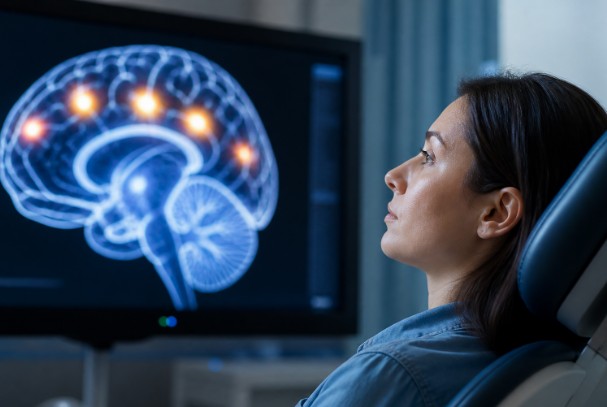
If someone you care about can’t stop gambling, gaming, or scrolling through social media despite real harm to their finances, relationships and wellbeing, you may have found yourself wondering: how can this be an addiction when there’s no drug involved? It’s a fair question, and one that medicine has spent decades answering with increasing precision. A behavioural addiction is sometimes a compulsive relationship with an activity that continues despite negative consequences. Behavioural addictions may involve some of the same reward, motivation, learning and self-control circuits implicated in substance-use disorders, although the underlying mechanisms may not be not identical. The difference is that there is no external chemical; the behaviour itself is doing the hijacking.
This article explains, in plain terms, what is happening inside the brain during these conditions, why clinicians and medical bodies treat them as genuine diseases rather than failures of character, and how that understanding points directly to effective, structured treatment. However, note that not all of this information may be completely proven as yet and research in this direction is evolving.
ADVERTISEMENT
ADVERTISEMENT
What counts as a behavioural addiction, and how it mirrors substance dependence
A behavioural addiction develops when a particular activity repeatedly overstimulates the brain’s reward system, leading to compulsive engagement despite mounting harm. The activity can be gambling, gaming, shopping, sexual behaviour, pornography use, or social media use, among others. What matters clinically is not the activity itself but the pattern it produces.
The parallels with substance addiction are striking. People with compulsive gambling or gaming describe intense urges they struggle to resist, a need for bigger or more frequent hits to feel the same effect, and a low, irritable, or restless state when they try to cut back. These withdrawal-like symptoms are real, even without a chemical leaving the body, and as with substance disorders, the behaviour continues despite clear damage to health, finances, relationships, or work.
The key difference is mechanism: there is no external molecule crossing the blood-brain barrier. Rewarding behaviours can activate dopamine-related signalling involved in motivation, reinforcement and learning. Physical withdrawal is usually milder than with opioids or alcohol, but the psychological craving and the risk of relapse can be just as stubborn.
In terms of formal recognition, the DSM-5 currently classifies gambling disorder as a diagnosable behavioural addiction, placing it in the same category as substance-related disorders. Clinicians widely recognise comparable patterns in gaming, compulsive shopping, online pornography use, and social media, particularly when people show impaired control and real-world harm, even where diagnostic criteria are still evolving. None of this reflects weak character. It reflects how a normal, healthy reward system can be pushed, by repeated high-intensity stimulation, into a disease state.
Inside the addicted brain: dopamine, reward circuits, and hijacked habit loops
To understand why behaviours without chemicals can become addictions, it helps to understand what the brain’s reward system was built to do. When we do something life-sustaining, whether eating when hungry, connecting with a friend, or solving a difficult problem, the brain releases dopamine into regions involved in motivation and pleasure. The signal it sends is essentially: ‘this matters, remember it, do it again.’ As Stanford Medicine’s Anna Lembke, professor of psychiatry and author of Dopamine Nation, has put it, even the most primitive organisms are driven by this reward system to move towards things that help them survive. The system is ancient, conserved across millions of years of evolution.
The problem is that modern behaviours can exploit this wiring in ways evolution never anticipated. A gambling win, an in-game reward, a social media notification, or completing a purchase all deliver fast, concentrated dopamine spikes that can be more intense than most naturally occurring rewards. Stanford Medicine researchers note that these stimuli were essentially engineered, or at least selected, for their ability to activate the reward pathway more powerfully than anything found in nature.
The brain responds to repeated surges by adapting: it reduces the number and sensitivity of dopamine receptors, so everyday pleasures feel flat and the addictive behaviour is needed just to feel normal. As Lembke notes, ‘people use more just to feel normal.’ This is tolerance at the neurological level, and it happens with behaviour just as it does with cocaine or alcohol.
Alongside this, habit loops form. A cue, perhaps stress, boredom, loneliness, a phone notification, or even a particular time of day, becomes tightly linked with the behaviour through repeated pairing. The brain learns that this cue predicts a dopamine hit, and it begins firing anticipatory signals the moment the cue appears. The uncomfortable tension that results is what we experience as craving. This is why a gamer who genuinely intends to play for half an hour can be pulled into a four-hour session by in-game reward structures, or why someone picks up their phone for a quick check at midnight and emerges an hour later, frustrated but unable to stop.
Adding to this, the prefrontal cortex, the part of the brain responsible for planning, weighing long-term consequences, and applying the brakes, becomes progressively less effective under constant bombardment from the reward system. Keith Humphreys, professor of psychiatry at Stanford Medicine, describes the broader process as ‘maladaptive learning’: the brain begins treating the behaviour as more important than basic needs like sleep, safety, or genuine connection.
What your brain is doing when you just can’t stop
The cycle that keeps a compulsive behaviour locked in place has a recognisable shape. A trigger arrives, either an internal state such as stress, anxiety, emptiness, or loneliness, or an external cue such as payday, being alone, or a particular website. The urge rises. The person turns to the behaviour and feels a brief sense of relief or pleasure. Then, in the aftermath, come shame, guilt, anxiety, or concrete damage: debt, a ruined relationship, a missed deadline. These painful feelings become new triggers, and the loop begins again.
Each pass through this cycle does something physical. The neural connections linking the cue, the behaviour, and the dopamine response are strengthened with every repetition. Over time, this reshapes the brain’s priorities. Functional brain imaging shows heightened responses to addiction-related cues and blunted responses to ordinary rewards in people with established compulsive behaviours. Gambling, gaming, pornography, and shopping come to dominate thinking, planning, and attention, crowding out other sources of motivation. This narrowing of focus is not a choice; it is a measurable change in how the brain allocates its resources.
The weakened prefrontal control that results is why someone can make a firm decision not to gamble, or to stop playing at a certain time, and then find themselves doing exactly that thing, apparently without a clear moment of choosing. The decision-making circuitry is simply outgunned by the learned reward pathway.
Genetics and early experience also matter. Studies suggest genetic factors account for roughly 40% to 60% of the vulnerability to addiction, and people who inherit a more reactive reward system or less strong baseline impulse control are more susceptible. Trauma, neglect, or chronic stress can prime the brain to seek rapid relief through whatever delivers it most efficiently, whether that is alcohol, a slot machine, or a gaming session. There is a strong link between addiction and conditions like depression, PTSD, and ADHD, meaning that compulsive behaviours often develop on a foundation of pre-existing psychological vulnerability. This is not weakness; it is biology interacting with circumstance, and it is also why willpower alone so often fails.
Why behavioural addictions are recognised diseases, and what that means for treatment
A disease, in clinical terms, is not simply something that feels bad or causes distress. It has characteristic features: a persistent and often relapsing course, identifiable changes in bodily function, predictable symptoms, and substantial impairment in daily life. Behavioural addictions meet all of these criteria. The brain changes are real and measurable. The symptoms, craving, tolerance, withdrawal-like distress, loss of control, and continuing despite harm, are consistent and predictable. The impairment, financial ruin from gambling, destroyed relationships from gaming or pornography use, sexual risk-taking from compulsive sexual behaviour, is often severe. The American Society of Addiction Medicine defines addiction as a chronic brain disorder, and that definition explicitly covers behavioural as well as substance-based conditions.
Understanding this as a brain disease, rather than a bad habit or a moral failing, changes what treatment looks like. The goal is not simply to tell someone to stop; it is to address distorted reward learning, retrain weakened control circuits, and build new habits and coping strategies that can compete with the entrenched ones.
Cognitive behavioural therapy is the most thoroughly evidenced approach, working by identifying the thoughts, triggers, and routines that maintain the cycle and systematically replacing them with healthier responses. Dialectical behaviour therapy adds skills in emotional regulation and distress tolerance, which are especially important where the behaviour has been serving as the person’s main way of managing difficult feelings. Where co-occurring conditions such as depression, anxiety, ADHD, or trauma are present, treating those with appropriate medication can reduce the pressure on the addictive behaviour and make psychological therapy more effective. Stabilising underlying conditions is often a critical part of the picture.
Structured residential or intensive outpatient programmes provide something that home-based efforts rarely can: separation from the cues and environments that trigger the habit loop, daily therapeutic contact, peer support from others who understand the experience, and practical relapse-prevention planning grounded in the neuroscience of reward and habit change. Calm Rehab’s non-substance addiction programme is built around exactly these principles, offering individual assessment and psychoeducation alongside evidence-based therapies for people struggling with compulsive behaviours.
One genuinely hopeful finding from neuroscience is that these brain changes are partly reversible. With sustained abstinence and the development of healthy routines, dopamine receptor sensitivity can recover and frontal control systems can regain function. As Humphreys puts it, ‘with the right support, people can rebuild their natural reward systems. It starts to feel good again to play with your kids, to eat a good meal, to feel connected.’ The underlying vulnerability does not vanish, which is why ongoing support matters, but recovery is not just possible: it is the expected outcome with the right treatment.
Recognising the signs and taking a meaningful next step
Knowing the neuroscience is useful, but what matters most is recognising when it applies to your life or someone else’s. A simple self-screen can help. Ask honestly: do you often engage in this behaviour longer or more intensely than you intended? Have you tried to cut down and found you couldn’t? Are you hiding it, minimising it, or lying about it to people close to you? Is it damaging your sleep, work, finances, studies, or relationships? Do you feel low, anxious, irritable, or restless when you can’t do it? If several of those questions prompt an uncomfortable yes, that pattern is worth taking seriously.
Some specific warning signs are worth naming. Mounting debt or financial secrecy often accompanies gambling or compulsive shopping. Withdrawal from offline friendships and family, or persistent conflicts about time spent online, can signal gaming or social media problems crossing into compulsion. Repeated sexual risk-taking that feels out of character, or using pornography as the primary way to manage stress or difficult emotions, may point to compulsive sexual behaviour. The common thread is that the behaviour has become the brain’s default solution to a wide range of situations and feelings, and everything else has started to shrink around it.
If you are worried about a loved one, timing and tone matter. Approach them when things are calm rather than in the middle of a conflict or crisis. Describe specific patterns you have noticed rather than making general accusations, and anchor your concern in care rather than judgement: ‘I’ve noticed this happening a lot and I’m worried about you’ lands very differently from ‘you need to stop.’ Suggesting a professional assessment together, rather than issuing ultimatums, tends to open conversations rather than close them.
A GP, psychiatrist, or psychologist can carry out a proper assessment, distinguish between heavy use, a compulsive habit, and a clinical addiction, and screen for co-occurring conditions. When patterns are persistent, severe, or have already caused significant harm, specialist support makes a real difference. What you need to know about non-substance addiction is a practical starting point: it sets out what to look for, how these conditions are assessed, and what a structured treatment pathway involves. Reaching out for that kind of information is not an admission of failure. It is the first and most important act of taking the problem seriously, and the science is clear that people who get effective help typically recover.
Disclaimer: This article is for general educational and informational purposes only and is not intended to diagnose, treat, or provide medical advice for behavioural addiction or any other mental health condition. Behavioural symptoms and their underlying causes can vary from person to person. If you or someone you care about is experiencing compulsive gambling, gaming, or other behaviours that are causing significant distress or affecting daily life, relationships, finances, or safety, speak with a qualified healthcare or mental health professional for an appropriate evaluation and treatment plan.
Information in this article is based on established medical and scientific literature. Medical terminology, diagnostic classifications, and treatment recommendations can change as research evolves. Where appropriate, readers should verify information with current guidance from qualified medical professionals and authoritative health organizations.
Share this article


Latest Posts





ADVERTISEMENT