

Rotator Cuff Tear: How Surgeons Decide Between Surgery and Physical Therapy
- Updated on: Sep 3, 2026
- 4 min Read

Vishakha Yadav is a biotechnologist with Masters's degree in Biotechnology. She has pursued her Bachelors's and Masters's degrees from Amity University, Noida. She aspires to contribute to the field of healthcare and research. Currently, she is associated with Maxinov Solutions Pvt. Ltd. as Research Analyst and a medical content writer at DiseaseFix.
- Published on Sep 3, 2026
An MRI report confirming a rotator cuff tear rarely settles anything. Most patients leave with one question: does this need surgery, or can therapy fix it? Search for an answer and it gets murkier, because half of what is written says trials prove therapy works just as well, and the other half says a torn tendon will not heal on its own. Patients researching shoulder surgery in Troy, MI or anywhere else hit the same contradiction.
Both claims come from real evidence. They point in different ways because they measure different things over different timeframes. Knowing what surgeons actually weigh is more useful than another article declaring a winner, and it changes the conversation a patient can have in the exam room.
ADVERTISEMENT
ADVERTISEMENT
What the Research Actually Shows
The most-cited trials compare surgical repair against structured physical therapy, and in the short term the results are close.
- A Finnish randomized trial of patients over 55 with nontraumatic supraspinatus tears compared therapy alone, acromioplasty with therapy, and repair with therapy. At two years there was no clinically important difference between the groups.
- The 2019 AAOS guideline reports that both therapy and surgery produced notable improvement in patient-reported outcomes for small to medium full-thickness tears.
- MOON Shoulder Group cohort data has been widely reported to show around three quarters of patients following a structured therapy program avoided surgery over two years.
Longer follow-up complicates this. A Norwegian randomized trial of 103 patients with tears up to 3 cm found outcomes broadly similar early on, but by ten years most pain and function scores significantly favored the surgical group, and 14 of the 51 patients originally assigned to therapy had crossed over to surgery.
Neither result cancels the other. Therapy resolves symptoms for a large share of patients. A meaningful minority get worse, and the tear is part of why.
Why the Same Evidence Points Different Ways
The trials above enrolled specific populations. Applying their conclusions to a patient who does not resemble those populations is where advice goes wrong. These are the factors that shift the recommendation.
| Factor | Leans toward therapy first | Leans toward earlier repair |
| Tear type | Partial-thickness | Full-thickness, especially traumatic |
| Tear size | Small, under roughly 1 cm | Larger, particularly 1 cm to 3 cm |
| Onset | Gradual, degenerative | Sudden, following a fall or lifting injury |
| Age and demand | Older, lower physical demand | Younger, physically demanding work or sport |
| Tissue quality on MRI | Healthy muscle, no fatty change | Fatty infiltration or tendon retraction present |
| Symptom duration | Recent, still improving | Long-standing, plateaued despite therapy |
| Response so far | Strength and motion recovering | Weakness persisting after a genuine therapy trial |
Age gets over-weighted in most articles. A 68-year-old golfer with a small degenerative tear and good strength is a reasonable therapy candidate. A 68-year-old who tore the tendon falling off a ladder and cannot lift the arm is a different case, and age is not what separates them.
The Variable Most Patients Never Hear About
Rotator cuff tears do not reliably stay the same size. Research on unrepaired full-thickness tears under 1 cm has found that roughly half progress beyond 1 cm over time, and one trial reported that 29% of unrepaired tears enlarged by more than 5 mm within twelve months.
Size alone is manageable. The concern is what happens to the muscle once the tendon has been detached for a long period. It retracts, and fatty tissue gradually replaces working muscle. That change is largely permanent, and it affects whether a repair will hold.
This is why “wait and see” is a real clinical decision rather than a neutral default. For many patients it is the right call, made with monitoring and a plan to reassess. Made by drift, over years, it can quietly close options. A trial of conservative care is reasonable. Indefinite avoidance of follow-up is a different thing.
What Helps Your Surgeon Give You a Straight Answer
Patients often arrive with less information than they think, which pushes the consultation toward generic advice. It helps to bring:
- How it started. A specific injury or a gradual onset changes the assessment.
- The actual imaging, not just the report. Surgeons read the images themselves.
- A record of therapy already done. Six weeks of supervised, progressive rehab is meaningful. Two visits and a handout is not.
- What you need the shoulder to do. Overhead work, sleeping through the night, and returning to sport are different thresholds.
- Your own priorities. Someone unwilling to accept a sling and months of restricted use should say so early.
Common mistakes include leaning on repeated cortisone injections instead of addressing the problem, quitting therapy after two weeks and calling it a failure, and ignoring persistent weakness because the pain has settled. Weakness without pain is not recovery.
When to Get It Assessed
Sudden weakness after a fall, an inability to raise the arm, or pain that consistently wakes you at night warrants evaluation. So does shoulder pain that has not improved after several weeks of rest and activity modification.
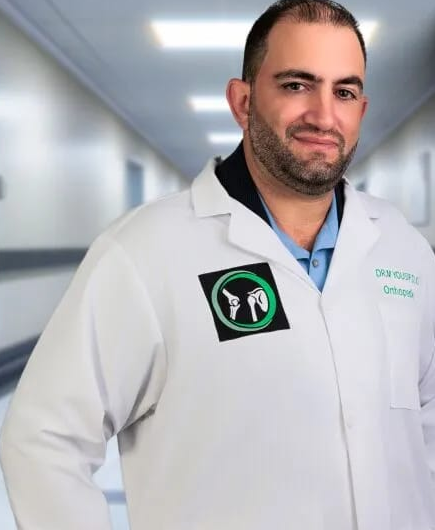
Choosing between repair and rehabilitation is a shared decision resting on the tear, the tissue, the timeline, and what the patient needs the shoulder to do. Practices offering in-house physical therapy alongside surgical care, including Yousif Orthopedic Surgery in Michigan, can make that call without a default answer built in, and can change course without the patient starting over somewhere new. A surgeon who only operates and a therapist who never refers are both working from an incomplete menu.
For most patients a genuine trial of therapy comes first, with a clear checkpoint to reassess rather than an open-ended wait. The goal is neither avoiding surgery nor pursuing it, but deciding deliberately.
FAQs
Can a rotator cuff tear heal without surgery?
The tendon itself does not reattach on its own, but many people recover good function without repair. Therapy strengthens the surrounding muscles to compensate, and for partial and small tears this often resolves symptoms.
How long should I try physical therapy before considering surgery?
Most surgeons want a genuine supervised trial, commonly six to twelve weeks, before drawing conclusions. Traumatic full-thickness tears in younger, active patients are sometimes an exception where earlier repair is discussed.
Does a bigger tear always mean surgery?
No, though size is one of the stronger factors. Tear type, tissue quality, symptom duration, and functional demand all feed in.
Will waiting make surgery harder later?
It can. Tendon retraction and fatty change accumulate over time and are largely irreversible, which is why monitoring matters if you choose conservative treatment.
Can rotator cuff surgery fail?
Repairs can retear, and rates vary with tear size, tissue quality, age, and rehabilitation adherence. This is one reason surgeons weigh tissue quality before recommending repair.
Is cortisone a reasonable option while deciding?
It can reduce pain enough to make therapy tolerable, but it does not heal tendon tissue and repeated injections carry their own risks. It is a bridge, not a treatment.
Share this article

Latest Posts



ADVERTISEMENT