


Who May Benefit From WaveLight Plus Ray-Tracing LASIK?
- Updated on: Sep 29, 2026
- 3 min Read

Kishore Bharati is a biotechnologist with a special interest in cell biology, molecular biology, genetics and genomics, biophysics, and biochemistry. She Pursued her Master’s degree from Amity University, Noida, U.P., and has worked as a Research Trainee at Rapture Biotech, Noida.
- Published on Sep 29, 2026
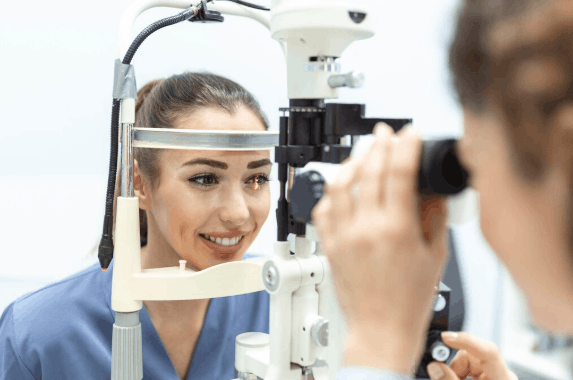
Not everyone considering LASIK is the same. Some people have a straightforward prescription. Others have subtle irregularities in the shape of their eye that a standard vision test never quite catches.
That difference matters more than most patients realize when it comes to planning surgery. If you live in San Francisco and have started researching LASIK, you have probably noticed there are several versions of the procedure, not just one. One of the newer approaches uses something called ray tracing, and it works a bit differently than the LASIK most people picture.
ADVERTISEMENT
ADVERTISEMENT
What Makes Ray-Tracing LASIK Different
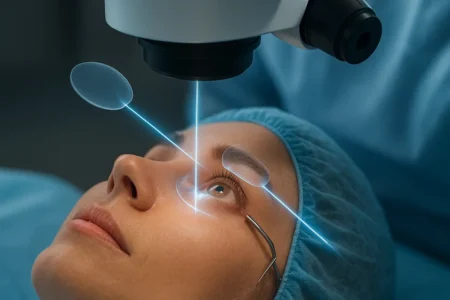
Traditional LASIK planning often relies on population averages, meaning the treatment gets designed around what works for most eyes rather than the specific shape of yours. WaveLight Plus ray-tracing LASIK flips that approach.
Instead of averages, it builds a three-dimensional model of your actual eye using more than 100,000 individual data points. That model traces how light rays travel through your cornea, lens, and other structures, then uses that information to calculate a treatment plan built specifically around your optical anatomy. This is the technology behind WaveLight Plus ray-tracing LASIK, which pairs a detailed diagnostic scan with a laser platform to carry out that personalized plan.
Who Tends to Benefit Most From This Approach
Not every LASIK candidate needs this level of detail. But certain situations make WaveLight Plus ray-tracing LASIK particularly useful.
People With Mild Irregularities: A Standard Test Might Miss
Some patients have small optical imperfections that a routine eye exam does not fully capture. Because ray tracing works from measured data rather than averages, it can account for these irregularities more precisely than a standard approach might.
People Who Want the Most Personalized Planning Available
Some patients simply want the most detailed version of treatment planning available to them, even if their prescription is fairly typical. For these patients, the appeal is less about correcting a specific problem and more about wanting every variable accounted for.
People Comparing Multiple Advanced LASIK Options
Patients already familiar with topography-guided treatments sometimes want to understand how ray tracing stacks up against that approach before deciding. Since both technologies aim to personalize treatment, comparing the two usually comes down to which type of data best matches your particular eyes.
How It Compares to Other Advanced LASIK Options
Ray tracing is not the only personalized approach available in San Francisco. There’s the topography-guided LASIK, which maps the surface of the cornea using thousands of elevation points, while wavefront-optimized LASIK relies on a more generalized correction based on overall refractive error.
Ray-tracing LASIK sits somewhere in between generalized correction and highly specific surface mapping, since it builds a full optical model rather than focusing on the cornea’s surface alone. In practice, this makes it a good fit for patients whose vision issues involve more than just the front surface of the eye. Evaluating which platform fits best usually comes down to a detailed eye exam, since no single technology is automatically the right choice for every patient.
What the Consultation and Recovery Process Looks Like
Before finalizing treatment plans for WaveLight Plus ray-tracing LASIK in San Francisco, candidates typically go through a full diagnostic scan that captures the data used to build their eye model. This step is what allows the surgeon to confirm candidacy and determine whether ray tracing is actually the best match for that person’s eyes.
Recovery timelines tend to resemble other forms of LASIK, with most patients noticing a real improvement within a day and continued stabilization over the following weeks. Mild dryness or light sensitivity in the first few days is common and typically fades as healing progresses.
Why the Provider Behind the Technology Still Matters
Even the most advanced diagnostic technology depends heavily on the surgeon interpreting it. Two surgeons using the exact same equipment can still recommend different treatment plans based on how they read the data.
Practices that have offered WaveLight Plus ray-tracing LASIK since it became available, like Pacific Vision, for example, tend to have more experience distinguishing which patients are strong candidates for it versus those better suited to a different approach entirely. That kind of pattern recognition typically comes only with repeated exposure to the technology across many different eyes.
Conclusion
Ray-tracing LASIK is not necessarily better for every patient, but it does offer a level of personalization that some people specifically want, especially those with subtle irregularities or a strong interest in data-driven treatment planning. Whether it makes sense for your eyes really comes down to your individual anatomy and goals.
A detailed consultation, including corneal mapping, is the only reliable way to know whether this approach fits your situation better than a more standard LASIK technique would.
Share this article
Latest Posts




ADVERTISEMENT