



What are the different types of kidney stones?
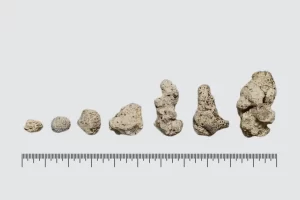
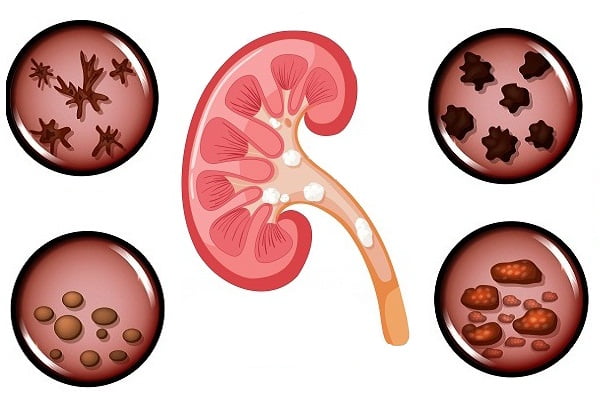
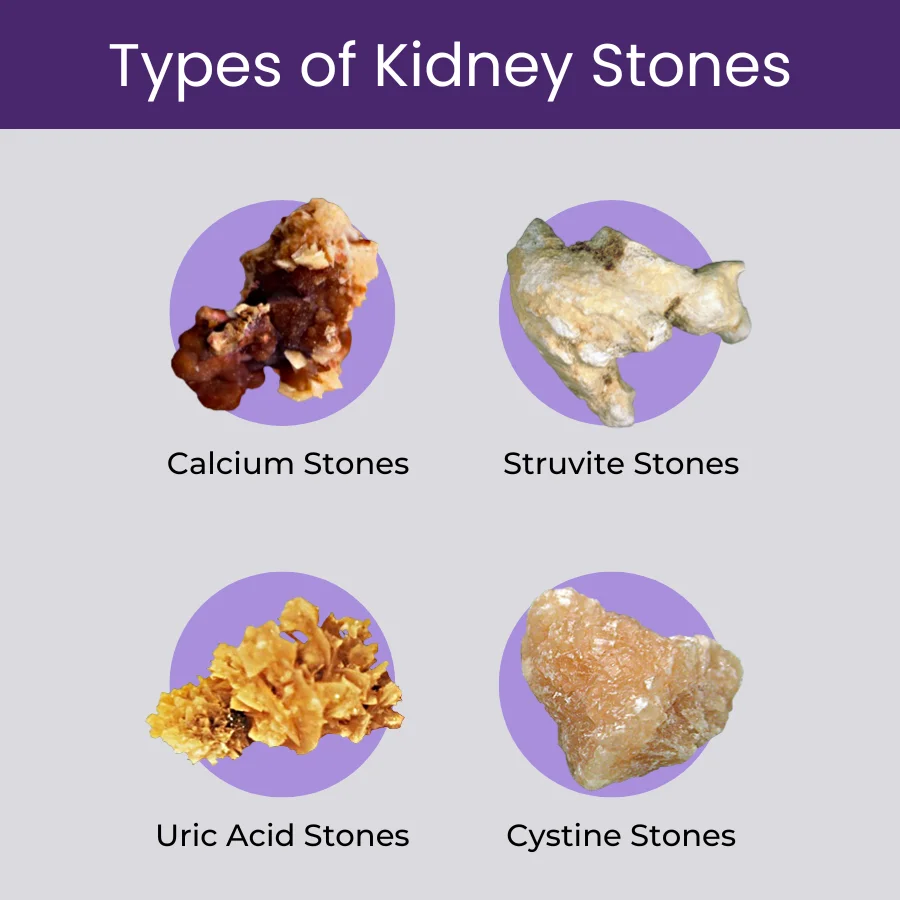
Kidney stones are solid masses made up of crystals. Not all crystals formed in your body are same. They are made up of different substances. There are four main types of kidney stones. Knowing the different types of kidney stones can help your doctor to choose the suitable treatment for kidney stone you have. The four different types of kidney stones include:
- Calcium stones
- Uric acid stones
- Struvite stones
- Cystine stones
Calcium Stones
ADVERTISEMENT
ADVERTISEMENT
These are the most common type of kidney stones. They usually consist of calcium and oxalate crystals but some are made of calcium and phosphate crystals. You can get calcium kidney stones if you don’t drink enough water or if you sweat a lot and don’t replace the fluids you lose. Cutting down the consumption of oxalate rich foods can reduce your risk of developing this type of kidney stone. High oxalate foods may include spinach, beets, chocolate, peanuts and potato chips.
Uric Acid Stones
Uric acid kidney stones are more common in men than in women. They generally develop in people having gout or going through chemotherapy. Uric acid is a waste product that is excreted out of your body in the urine. However, it may accumulate in some people which causes uric acid kidney stones formation. Acidic urine environment can also lead to the formation of this kind of kidney stones. Some other factors which may increase the risk for this type of kidney stone include:
- Increased alcohol intake
- Low urine output
- Health conditions like Crohn’s disease
- A diet high in animal protein, such as meat, eggs and fish
Struvite stones
Struvite stones are found mostly in women having certain types of urinary tract infections. The infection causing bacteria produce ammonia that builds up in your urine and may later cause stones. Struvite stones mainly consist of magnesium, ammonium and phosphate.
These stones are generally large and can cause urinary obstruction. Development of struvite stones can be prevented by treating the underlying infection.
Cystine stones
This is the least common and rare type of kidney stone which is made up of the chemical cystine. This type of kidney stone occurs in both men and women having the genetic disorder called cystinuria, which causes cystine to leak from the kidneys into the urine. You have a greater risk of getting cystine stones if you are from a family having history of cystinuria.
Generally people develop more than one type of these kidney stones i.e. usually a combination of calcium and uric acid stones.
Another rare type of kidney stones can also appear as a result of taking certain medications or herbal products. The chemicals from these medicine and herbal products can build-up in your urine. Example of such agents includes indinavir, ephedrine, guaifenesin, and products containing silica.
Rare and drug-related kidney stones
Less common kidney stones can develop because of inherited metabolic disorders or certain medications. Examples include xanthine stones, 2,8-dihydroxyadenine stones and drug-related stones. Some medications can crystallize directly in the urine; indinavir is one recognized example. The specific cause is important because prevention and treatment depend on the stone’s composition and underlying condition.
What does newer research say about kidney stone types?
Recent research and updated urology guidelines show that kidney stones are more diverse than the four major types commonly discussed with patients. Stones can contain multiple substances, and less common types—including such as ammonium urate, xanthine, 2,8-dihydroxyadenine and drug-related stones—can occur in specific metabolic, genetic, infectious or medication-related conditions. Stone analysis is therefore important when a passed or removed stone is available, because its composition can help guide evaluation and prevention.
Medical References
- European Association of Urology (EAU). EAU Guidelines on Urolithiasis – 2026. https://uroweb.org/guidelines/urolithiasis
- European Association of Urology (EAU). EAU Guidelines on Urolithiasis – Metabolic Evaluation and Recurrence Prevention. Metabolic Evaluation and Recurrence Prevention
- National Institute of Diabetes and Digestive and Kidney Diseases (NIDDK). Kidney Stones – Definition & Facts. Kidney Stones: Definition & Facts
- National Institute of Diabetes and Digestive and Kidney Diseases (NIDDK). Treatment for Kidney Stones. Treatment for Kidney Stones
- National Kidney Foundation. Kidney Stones. Kidney Stones – National Kidney Foundation
Related Reads


Latest Posts





ADVERTISEMENT