


Tesamorelin Research: Growth Hormone and Aging
- Updated on: Nov 26, 2026
- 7 min Read

Shahid is a pharmacologist with masters in pharmaceutical sciences and pharmacology. In the past, he worked for Maxinov Healthcare Research Division and R.P Biotech. At DiseaseFix, he is a content guide and writer. He is also associated as a researcher with Integrated Resources Pvt Ltd. currently. Shahid’s areas of interests include cellular and molecular pharmacology, pre-clinical screening, and systemic and clinical Pharmacology.
- Published on Nov 26, 2026
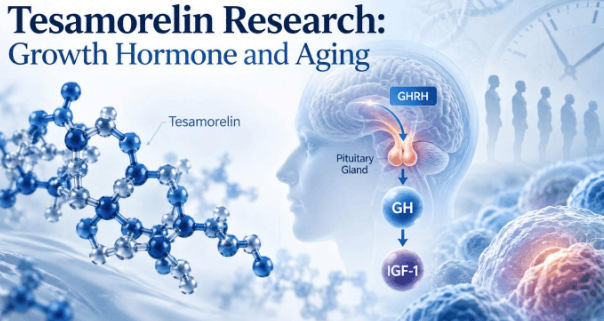
Tesamorelin, often referred to as tesa peptide, is a synthetic analog of growth hormone-releasing hormone (GHRH). It works through the GHRH receptor to stimulate the body’s growth hormone (GH) pathway and influence downstream insulin-like growth factor 1 (IGF-1) signaling.
Its established clinical use is reducing excess abdominal fat in adults with HIV-associated lipodystrophy. Research has also examined tesamorelin in relation to visceral fat, body composition, metabolic biology, cognition, and the broader relationship between the GH pathway and aging.
ADVERTISEMENT
ADVERTISEMENT
This research has attracted interest because GH secretion generally declines with age. However, studying the GH-GHRH-IGF-1 pathway does not establish tesamorelin as an anti-aging treatment or prove that it reverses biological aging. Current research continues to examine both its potential applications and its limitations.
What Is Tesamorelin?
Tesamorelin is a synthetic analog of GHRH. Normally, GHRH stimulates the pituitary gland to produce and release GH through the GHRH receptor.
Tesamorelin Peptide acts through this same receptor pathway, making it useful for studying GH regulation and the downstream GH-IGF-1 axis. It differs from recombinant human growth hormone because tesamorelin stimulates the body’s own GH production rather than directly supplying GH.
This distinction is important when interpreting research. Results from studies of recombinant GH or other GHRH-related compounds should not automatically be attributed to tesamorelin.
Why Is Tesamorelin Being Studied?
The GH pathway has several roles in human physiology, including effects related to body composition, protein metabolism, and metabolic regulation.
GH secretion generally decreases with age, a change sometimes called somatopause. This has led researchers to investigate whether age-related changes in GHRH and GH signaling are connected with changes in body composition, metabolism, and other aspects of aging biology.
Tesamorelin is particularly interesting because it provides a way to investigate this pathway by stimulating GHRH receptor signaling.
The evidence, however, needs to be interpreted in context. A 2025 clinical review noted that research involving GH and aging still has important questions surrounding long-term safety and efficacy.
Tesamorelin and the GH-IGF-1 Pathway
A simplified pathway is:
Tesamorelin → GHRH receptor → GH release → IGF-1 signaling
GHRH is one of several signals involved in regulating GH secretion. Somatostatin and other physiological signals also influence the GH axis.
When tesamorelin activates the GHRH receptor, GH secretion can increase, followed by changes in IGF-1. This makes tesamorelin useful for research examining how the GHRH-GH-IGF-1 pathway affects body composition and other biological processes.
The pathway can be summarized as:
Tesamorelin
↓
GHRH receptor activation
↓
Growth hormone release
↓
IGF-1 signaling and downstream effects
This mechanism is different from directly administering recombinant GH.
What Benefits of Tesamorelin Are Being Studied?
The term “tesamorelin benefits” should be used carefully. Some effects have been demonstrated in specific clinical populations, while other areas remain under investigation.
Visceral Fat and Body Composition
The strongest human evidence concerns visceral adipose tissue in adults with HIV-associated lipodystrophy.
In a randomized controlled trial, tesamorelin reduced visceral adipose tissue compared with placebo. The study also reported improvements in measures including waist circumference and trunk fat.
A 2026 systematic review and meta-analysis of randomized controlled trials in people with HIV-associated lipodystrophy similarly found reductions in visceral adipose tissue, waist circumference, and trunk fat, along with an increase in lean body mass.
These findings are important, but they should not be generalized to all adults or presented as evidence that tesamorelin is a general weight-loss treatment.
GH and IGF-1 Signaling
Tesamorelin stimulates the GHRH receptor and increases activity within the GH pathway. GH then influences downstream IGF-1 production.
This makes tesamorelin relevant to research investigating how the GH-IGF-1 axis responds to GHRH stimulation.
Metabolic Research
Because GH and IGF-1 interact with pathways involved in fat and glucose metabolism, researchers have also investigated tesamorelin in metabolic settings.
For example, clinical research has examined its effects on visceral fat and liver fat in people with HIV and metabolic complications. These findings provide a basis for further research but do not establish tesamorelin as a treatment for metabolic disease outside its approved indication.
Aging Biology
The age-related decline in GH signaling is one reason tesamorelin has attracted interest in aging research.
Researchers are investigating whether modulating GHRH signaling could affect some biological changes associated with aging. However, this remains an area of research rather than an established anti-aging application.
Cognitive Research
Tesamorelin has also been investigated in relation to cognitive function.
A 2025 randomized Phase 2 trial in people with HIV, abdominal obesity, and neurocognitive impairment found that tesamorelin reduced waist circumference, but the difference between tesamorelin and standard care in the primary cognitive outcome was not statistically significant. The researchers also noted limitations including insufficient statistical power and the lack of a placebo arm.
Therefore, cognitive benefits should be considered investigational rather than established.
Is Tesamorelin FDA Approved?
Yes. An FDA-approved prescription product containing tesamorelin exists in the United States.
The FDA originally approved tesamorelin in 2010. The current EGRIFTA WR prescribing information indicates its use for reducing excess abdominal fat in HIV-infected adults with lipodystrophy. It is not indicated for general weight-loss management.
The FDA labeling also states that the long-term cardiovascular safety of tesamorelin has not been established.
This distinction is important:
FDA-approved prescription tesamorelin ≠ research-grade tesamorelin
Research-grade material sold for laboratory use is not the same regulatory product as an approved prescription medicine and should not be represented as FDA-approved for human use.
Tesamorelin and Muscle Research
The GH-IGF-1 pathway is involved in protein metabolism and body composition, which is one reason tesamorelin appears in muscle and lean-mass research.
However, calling tesamorelin a “muscle-building peptide” would overstate the evidence.
Research may demonstrate changes in lean body mass or body composition without establishing improvements in muscle strength, athletic performance, or general muscle-building effects.
The 2026 meta-analysis reported an increase in lean body mass in people with HIV-associated lipodystrophy, but that finding should be kept within the population and research setting in which it was observed.
Tesamorelin vs. Sermorelin
Tesamorelin and sermorelin are both associated with the GHRH pathway, but they are different molecules.
| Feature | Tesamorelin | Sermorelin |
|---|---|---|
| Relationship to GHRH | Synthetic GHRH analog | GHRH-derived peptide |
| Main pathway | GHRH receptor and GH secretion | GHRH receptor and GH secretion |
| Research interest | GH signaling, visceral fat and body composition | GH secretion and GHRH signaling |
| U.S. regulatory history | FDA-approved prescription product exists | Historical prescription product |
| FDA-approved anti-aging use | No | No |
The key point is that findings from sermorelin research should not automatically be attributed to tesamorelin, or vice versa.
Tesamorelin Side Effects and Safety Context
Safety information should be interpreted according to the specific product and population being studied.
The FDA-approved tesamorelin product carries warnings and precautions involving:
- Elevated IGF-1
- Fluid retention
- Glucose intolerance or diabetes
- Hypersensitivity reactions
- Malignancy-related considerations
- Long-term cardiovascular safety that has not been established
Clinical studies have also reported adverse effects such as injection-site reactions, joint-related symptoms, peripheral edema, and muscle pain.
These safety data relate primarily to the approved prescription product and its studied populations. They should not automatically be presented as clinical safety data for an unspecified research-grade product.
Research-grade materials can also differ in identity, purity, formulation, and manufacturing controls. Laboratory material should therefore not be assumed to have the same quality or safety profile as an approved pharmaceutical product.
Tesamorelin for Research Use
Tesamorelin is also available from suppliers that market it specifically as laboratory research material.
For example, Peptide Update lists Tesa, its tesamorelin product, as a research-use-only material and research information resources. The supplier states that the product is not intended for human or animal use and is not FDA-approved. Its product page also provides batch-specific laboratory testing information and Certificates of Analysis.
For researchers evaluating laboratory materials, documentation such as batch-specific analytical reports can provide useful information about the material being supplied. This type of research material should remain clearly distinguished from FDA-approved tesamorelin medication.
What Does the Research Actually Establish?
The current evidence supports several points:
- Tesamorelin is a synthetic GHRH analog.
- It activates the GHRH receptor and stimulates the GH pathway.
- GH influences downstream IGF-1 signaling.
- Tesamorelin has demonstrated effects on visceral adipose tissue in clinical studies of adults with HIV-associated lipodystrophy.
- Research has examined its effects on body composition and lean body mass in specific populations.
- Tesamorelin continues to be studied in relation to metabolic biology, cognition, and aging.
- Research on the broader GH or GHRH pathway should not automatically be attributed to tesamorelin.
The strongest clinical evidence remains tied to its approved indication. Whether manipulating this pathway produces meaningful benefits for healthy aging remains uncertain.
Current research does not establish tesamorelin as a treatment that reverses biological aging.
Key Takeaways
- Tesamorelin is a synthetic GHRH analog that stimulates the GH pathway.
- Tesa peptide is an informal term commonly used for tesamorelin.
- Its established FDA-approved use is reducing excess abdominal fat in adults with HIV-associated lipodystrophy.
- Clinical research has demonstrated reductions in visceral fat and changes in body composition in the relevant study populations.
- Research is also examining tesamorelin in metabolic, cognitive, and aging-related contexts.
- These emerging research areas should not be presented as established anti-aging benefits.
- Tesamorelin is different from sermorelin and recombinant human GH.
- FDA-approved tesamorelin medication should be distinguished from research-grade material.
- Research-grade tesamorelin is intended for laboratory research, not human or animal use.
Frequently Asked Questions
What is tesamorelin?
Tesamorelin is a synthetic analog of growth hormone-releasing hormone (GHRH). It activates the GHRH receptor and stimulates the body’s GH pathway, which can subsequently influence IGF-1 signaling.
What are the potential tesamorelin benefits being studied?
Research has examined tesamorelin in relation to visceral fat, body composition, GH and IGF-1 signaling, metabolic biology, cognition, and aging. The strength of evidence differs across these areas, and not all represent established clinical benefits.
What is tesa peptide?
“Tesa peptide” is an informal term commonly used to refer to tesamorelin.
Is tesamorelin FDA approved?
Yes. An FDA-approved prescription product containing tesamorelin is indicated for reducing excess abdominal fat in adults with HIV-associated lipodystrophy. It is not approved for general weight-loss management or anti-aging use.
Does tesamorelin help build muscle?
Tesamorelin affects the GH-IGF-1 pathway and has been studied in relation to body composition and lean body mass. However, this does not establish it as a general muscle-building or performance-enhancing treatment.
What are tesamorelin side effects?
The FDA-approved product includes warnings and precautions concerning elevated IGF-1, fluid retention, glucose-related effects, hypersensitivity reactions, and malignancy-related considerations.
What is the difference between tesamorelin and sermorelin?
Both are associated with GHRH signaling, but they are different molecules. Tesamorelin is a synthetic GHRH analog, while sermorelin is a GHRH-derived peptide.
Does tesamorelin reverse aging?
There is currently no established evidence that tesamorelin reverses biological aging. Research is investigating the broader relationship between GHRH, GH, IGF-1, body composition, metabolism, and age-related biological changes.
Does Ion Peptide supply tesamorelin for research?
Ion Peptide lists Tesa as a research-use-only tesamorelin product. The supplier states that the material is intended for laboratory research and is not for human or animal use or FDA-approved therapeutic use.
Share this article



Latest Posts





ADVERTISEMENT