

Why More Patients Are Choosing Biomimetic Dentistry
- Updated on: Feb 18, 2026
- 2 min Read

Mohd Sadiq is a bioinformaticist with a special interest in Nanotechnology. He completed his Master’s degree from Jamia Millia Islamia University, New Delhi, followed by an internship in the Department of Plant Molecular Biology, University of Delhi, South Campus. Mohd Sadiq has also worked at Codon Biotech Pvt. Ltd. Noida.
By
- Published on Feb 18, 2026
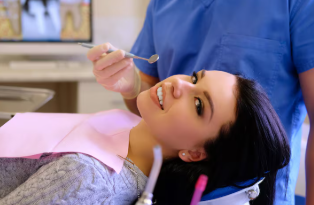
For decades, going to the dentist for a large cavity or cracked tooth often meant one thing: a crown. While crowns are still widely used, many patients today are asking a different question “Is there a more conservative option?”
Centers like Biomimetic Dentistry and practicing clinicians focus on preserving as much of your natural tooth as possible rather than automatically covering it with a full crown. The idea is simple but powerful: instead of cutting away healthy structure, work with the tooth’s natural design to restore strength and function.
ADVERTISEMENT
ADVERTISEMENT
What Does “Biomimetic” Really Mean?
The word biomimetic literally means “to mimic life.” In dentistry, it refers to restoring teeth in a way that replicates how they naturally function.
Teeth aren’t solid blocks; they’re made of enamel and dentin, two materials with very different properties. Enamel is hard and protective, while dentin is more flexible and shock-absorbing. Traditional restorations sometimes ignore this balance. When a tooth is aggressively shaped for a crown, a large portion of healthy structure is removed, which can weaken the tooth over time.
Biomimetic techniques aim to do the opposite. Using advanced bonding materials and layered composite techniques, dentists rebuild the tooth in a way that mimics its original strength and flexibility. The goal isn’t just to “fix” the tooth, it’s to help it behave like a natural tooth again.
Why Avoid a Crown When Possible?
Crowns certainly have their place. In cases of severe damage, they can be necessary. But they often require removing a significant amount of healthy tooth structure to create space for the restoration.
Once a tooth is crowned, it enters what some dentists call the “restorative cycle.” Over the years, crowns may need to be replaced, and each replacement can require removing more structure. Eventually, some teeth end up needing root canal treatment or extraction.
Biomimetic dentistry aims to slow or even stop that cycle by reinforcing what’s left instead of replacing it entirely.
The Benefits Patients Notice
Patients who choose biomimetic treatment often appreciate:
Less drilling. Preserving more natural tooth structure usually means a more conservative procedure.
Lower risk of complications. By protecting the dental pulp and reducing stress on the tooth, there may be a decreased likelihood of needing a root canal later.
Natural feel and function. Because bonded restorations distribute biting forces more evenly, the tooth can feel more like it did before damage occurred.
Long-term preservation. The primary goal is keeping your natural tooth strong for as many years as possible.
When Is It a Good Option?
Biomimetic approaches can be especially helpful for:
- Large cavities
- Cracked or fractured teeth
- Broken cusps
- Replacement of old silver (amalgam) fillings
- Teeth that might otherwise be recommended for crowns
Of course, not every tooth can be saved this way. Severe structural breakdown may still require traditional solutions. A thorough examination and proper diagnosis are essential.
A Shift Toward Preservation
Modern patients are more informed than ever. They’re asking about minimally invasive treatments and long-term outcomes, not just quick fixes. Dentistry is evolving to meet that demand.
Biomimetic dentistry reflects a broader shift in healthcare: preserve what’s healthy, strengthen what’s weakened, and intervene as conservatively as possible. Rather than viewing a damaged tooth as something to be replaced, this philosophy treats it as something worth saving.
As materials and bonding techniques continue to improve, more dentists are adopting this approach. For patients, that often means fewer aggressive procedures and a greater chance of keeping their natural teeth for life.
And ultimately, that’s the real goal of modern restorative care, not just repairing teeth, but preserving them.
Share this article

Latest Posts





ADVERTISEMENT