


How Higher Education Helps Nurses Lead in Modern Healthcare
- Updated on: Mar 6, 2026
- 4 min Read

Kishore Bharati is a biotechnologist with a special interest in cell biology, molecular biology, genetics and genomics, biophysics, and biochemistry. She Pursued her Master’s degree from Amity University, Noida, U.P., and has worked as a Research Trainee at Rapture Biotech, Noida.
- Published on Mar 6, 2026

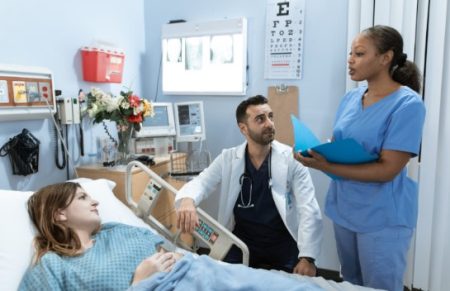
Someone eventually asks the nurse what should be done next. It happens in patient rooms, at the nurses’ station, and sometimes in quiet hallway conversations where a doctor pauses and looks over because the nurse has been watching the situation longer than anyone else.
Nurses are not only carrying out care plans. They are noticing things, connecting details, and often guiding small decisions that affect how treatment actually unfolds during a shift. The strange part is that the system has not always treated that role as leadership, even though that is often what it becomes.
ADVERTISEMENT
ADVERTISEMENT
The Everyday Leadership Nurses Already Practice
In hospitals, leadership is often linked to titles like manager or department head, but the floor tells a different story. Nurses lead in quieter ways. One might notice a patient declining before the monitors catch it. Another quietly fixes a messy medication schedule so the shift runs more smoothly. Someone else calms a worried family member who just needs plain language.
These actions happen constantly. They rely on judgment and experience built over time. Still, modern healthcare is complicated. Policies change, technology evolves, and data now shapes many decisions. Because of that complexity, many nurses turn to higher education to move from informal leadership into roles with broader influence.
.
Education Pathways That Expand Nursing Leadership
Many nurses reach a point where experience alone does not feel like enough. They understand patient care deeply, but they also see the larger systems around them. Staffing policies, hospital management decisions, quality metrics. These things shape care just as much as clinical skill.
Higher education pathways like the RN to MSN degree program help nurses step into that larger picture. These programs allow registered nurses to move directly toward a master’s degree while expanding their knowledge in leadership, healthcare systems, and advanced patient care. Programs like this exist because many nurses already carry leadership responsibilities long before they receive formal titles.
These specialized programs are designed specifically for working individuals who want to move into advanced practice or leadership positions without starting their education from the beginning again. Flexible pathways have been created so experienced individuals can build on their current credentials rather than replace them. Programs like this exist because many of these professionals already carry leadership responsibilities long before they receive formal titles.
Healthcare Systems are Changing Faster Than Many People Expected
Anyone who has worked in a hospital for more than ten years can probably point to the moment when technology began reshaping everything. Electronic health records arrived. Data tracking expanded. Patient outcomes began to be measured with intense precision. None of these changes were small.
Healthcare organizations now operate with constant streams of information. Patient readmission rates, infection control metrics, and medication safety reports. Hospitals study these numbers carefully because funding, accreditation, and public trust depend on them. Nurses sit at the center of that environment, whether they realize it or not. Much of the data used to evaluate patient care comes directly from nursing documentation and bedside observation.
Higher education helps professionals understand how these systems function behind the scenes. Instead of simply entering information into electronic charts, nurses begin to see how that information influences hospital policy and clinical decisions across departments. That understanding allows them to participate in conversations that once belonged only to administrators or physicians.
Communication Becomes a Different Skill at the Leadership Level
Another quiet shift happens when nurses move into leadership roles. Communication changes. The conversations are no longer only about patient care tasks or shift reports.
Leaders must explain clinical concerns to hospital administrators who may be focused on budgets or regulatory requirements. They must interpret policy changes for staff who are already dealing with heavy workloads. Sometimes they must translate technical language so families can understand complex medical decisions.
This kind of communication requires more than clinical expertise. It requires an ability to organize information, speak clearly, and understand how different groups inside healthcare organizations view the same issue.
Graduate education often includes coursework focused on communication, ethics, and healthcare management. These subjects may sound distant from bedside care, but they become very relevant when nurses begin guiding teams or influencing hospital policy. Many professionals say this is the part of education they did not expect to matter as much as it does.
Patient Advocacy Becomes Stronger with Knowledge
Nurses have always acted as patient advocates. It is part of the profession’s identity. They spend more time with patients than most other healthcare professionals, which means they often notice problems early or hear concerns that patients hesitate to share elsewhere. Higher education strengthens that role by providing a broader context.
For example, understanding healthcare policy helps nurses recognize how insurance rules affect treatment options. Knowledge of population health helps them see patterns in chronic illness or community health risks. Training in research methods helps them evaluate medical studies rather than simply accept conclusions at face value.
When nurses combine bedside experience with that kind of knowledge, their advocacy becomes more persuasive. They can explain why a certain change in care may help a patient not only emotionally but also clinically and economically. Hospital leadership tends to listen more carefully when those arguments are grounded in evidence.
The Emotional Weight of Modern Nursing
Nursing leadership is not only about knowledge. Much of it is emotional work that happens quietly during long shifts. Hospitals have always been stressful places, but staff shortages, heavy patient loads, and recent public health crises have pushed many systems close to their limits. Nurses often support tired coworkers while still protecting patient safety. Sometimes they calm conflicts between staff, other times they help families process difficult medical news.
Higher education does not remove these pressures. What it offers is preparation. Leadership and team management courses explore how people react under stress and how problems can be handled calmly, which becomes very real during overnight hospital shifts.
Clinical care and healthcare leadership are no longer separate worlds. Policies influence outcomes, technology shapes daily workflow, and data quietly affects funding and reputation. Nurses already move through all of this, even if their titles do not say “leader.” Many have been guiding decisions on the floor for years. Higher education does not create that instinct, but it helps organize it. It gives these professionals clearer language, a broader perspective, and a stronger voice when systems that shape patient care need to change.
Share this article

Latest Posts




ADVERTISEMENT