



IVF Treatment in Dubai: A Step-by-Step Guide for Patients
- Updated on: Oct 3, 2026
- 5 min Read

Saima Andrabi is a clinical biochemist and is passionate about driving knowledge platforms for creating health awareness in the general public. She pursued her master’s degree in clinical biochemistry from University of Kashmir, Srinagar followed by an internship from National Institute of pathology, New Delhi.
- Published on Oct 3, 2026

Medically reviewed by Dr. Mohammed Mazen Dayeh, Consultant in Reproductive Medicine & Infertility
IVF has become an established treatment option for people who are unable to conceive naturally or who have not achieved pregnancy with other fertility treatments. The treatment involves retrieving eggs from the ovaries, fertilising them with sperm in a laboratory and transferring an embryo into the uterus.
ADVERTISEMENT
ADVERTISEMENT
For someone going through IVF for the first time, however, knowing what the treatment involves can be just as important as understanding what IVF is. The process takes place over several stages, and the timing and medication used can vary depending on the patient’s age, fertility history and response to treatment.
In Dubai, patients have access to a range of fertility services and assisted reproductive medicine centers. Before starting treatment, it is useful to understand what happens during a typical IVF cycle and which parts of the process may differ from one patient to another.
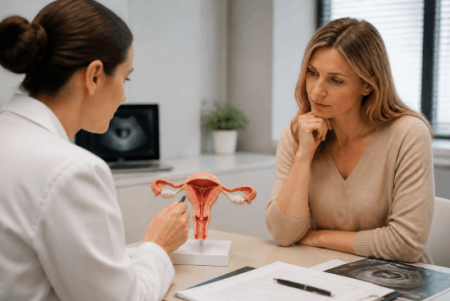
The first consultation
The IVF process begins with a fertility assessment. Rather than starting treatment immediately, the doctor first looks at the couple’s medical and reproductive history and any previous fertility investigations.
For the woman, this may include an ultrasound examination and tests to assess ovarian reserve, along with other blood tests where appropriate. A semen analysis is generally part of the assessment for the male partner. Previous pregnancies, surgeries, medications and earlier fertility treatments may also be relevant.
There is no single test that determines whether a couple needs IVF. Infertility can be linked to male factors, female factors, a combination of both, or sometimes no clear cause can be found. Causes may include problems with ovulation, the fallopian tubes, the ovaries, the uterus, hormones or sperm. The results of this assessment help the fertility specialist decide whether IVF is appropriate and, if so, how the cycle should be planned.
Preparing for ovarian stimulation
The next stage involves medication to stimulate the ovaries. During a natural cycle, usually one egg reaches maturity. IVF medication is used to encourage the development of several follicles so that more than one egg may be available for treatment.
The patient is monitored during this period, mainly through ultrasound scans and sometimes blood tests. The response to medication is not always predictable, so the dosage may be adjusted during the cycle.
Some women experience bloating, pelvic discomfort or tiredness during ovarian stimulation. More significant symptoms should be reported to the treating team, particularly because excessive ovarian response can lead to ovarian hyperstimulation syndrome (OHSS).
Egg retrieval
Once the follicles have developed sufficiently, a trigger medication is given. This is timed carefully because egg collection is scheduled after the eggs have had an opportunity to mature.
Egg retrieval is performed under ultrasound guidance. A needle is passed through the vaginal wall into the ovarian follicles, and the fluid containing the eggs is collected. The procedure is generally performed under sedation or anesthesia.
The number of eggs collected can vary considerably. It is also not unusual for the number of eggs to decrease at each subsequent stage of treatment. Some eggs may not be mature, some may not fertilise and some embryos may stop developing. These changes are part of the biology of IVF and do not necessarily indicate a problem with the treatment.
Fertilisation and embryo development
After egg collection, the eggs are taken to the embryology laboratory. A sperm sample is usually provided on the same day unless frozen or donor sperm is being used.
With conventional IVF, the eggs and sperm are placed together in the laboratory. Where ICSI is considered appropriate, an embryologist injects a single sperm directly into an egg.
ICSI is commonly considered when there are significant sperm-related problems or when previous treatment has resulted in poor or failed fertilisation. It is not automatically required for everyone undergoing IVF.
The fertilised eggs are then monitored as they develop into embryos. The embryology team assesses their development over the following days. Depending on the treatment plan, an embryo may then be selected for transfer, while suitable embryos that are not transferred may be frozen.
Embryo transfer
Embryo transfer is usually a relatively simple procedure compared with egg retrieval. A thin catheter is passed through the cervix and the embryo is placed inside the uterus. General anaesthesia is not normally required.
The technique used during transfer can matter. Evidence-based guidance from the American Society for Reproductive Medicine supports the use of ultrasound guidance and soft transfer catheters in appropriate circumstances.
The decision about how many embryos to transfer is made carefully because transferring more than one embryo can increase the chance of multiple pregnancy. The appropriate number depends on the patient’s circumstances, embryo availability and relevant clinical guidance.
After the transfer
There is then a period of waiting before the pregnancy test. The clinic will provide a date for testing and instructions about medication. Patients may experience symptoms during this time, but symptoms on their own cannot confirm whether an embryo has implanted.
If the test is positive, further follow-up is arranged to confirm the pregnancy and monitor its early development. If it is negative, the doctor can review the cycle and discuss what the result means before deciding whether another treatment approach should be considered.
How long does IVF take?
The answer depends on the treatment protocol. A typical IVF cycle may take several weeks from the beginning of ovarian stimulation to the pregnancy test. HFEA describes a typical IVF cycle as taking around three to six weeks, although the timing can differ depending on the protocol and the individual patient.
Patients travelling to Dubai for treatment should discuss the schedule in advance. Monitoring appointments may be required during stimulation, followed by egg retrieval and, depending on the treatment plan, embryo transfer.
What can affect the outcome?
IVF success is not determined by one factor. Age is an important consideration, but ovarian reserve, the underlying cause of infertility, sperm quality, embryo development and previous treatment history can also influence the outcome. This is why a clinic’s overall success rate should not be interpreted as an individual’s personal chance of pregnancy. Patients should ask how a clinic calculates and reports its success rates and whether the figures relate to the same patient age group and treatment type.
What should patients look for when choosing a clinic?
The decision about where to have IVF involves more than comparing advertised success rates. Patients may want to find out who will be responsible for their treatment, the qualifications and experience of the fertility specialists, the facilities available for embryology, how complications are managed and what is included in the quoted treatment cost.
It is also worth checking whether additional procedures, medication, embryo freezing or storage are charged separately. For those researching treatment options, information published by a fertility clinic in UAE can also provide useful background on the medical team, available treatments and the services offered.
In Dubai, the DHA has established standards for centers providing assisted reproductive services.
Questions to discuss with the fertility specialist
Patients do not need to arrive at their first consultation knowing all the terminology used in IVF. A few practical questions can help clarify the treatment plan:
- What is the likely cause of infertility in our case?
- Why is IVF being recommended?
- Which medication protocol is being considered?
- How will the ovaries be monitored?
- Is ICSI appropriate in our situation?
- What happens to embryos that are not transferred?
- How long will the treatment take?
- What costs are included?
- What are the main risks in our particular case?
The answers will depend on the individual patient. A fertility specialist can explain the options after reviewing the relevant medical information.
A personalised approach to IVF
Although IVF is often described as a sequence of standard procedures, the treatment is not identical for every patient. The medication, monitoring, laboratory techniques and timing may all be adjusted according to individual circumstances.
Understanding the main stages can help patients know what to expect, but the treatment plan should ultimately be based on an assessment by the fertility team. For patients considering IVF in the UAE, centres such as Best Life Fertility Center offer consultations to discuss treatment options based on individual circumstances.
References
World Health Organization (WHO). Infertility.
https://www.who.int/news-room/fact-sheets/detail/infertility
Human Fertilisation and Embryology Authority (HFEA). In vitro fertilisation (IVF).
https://www.hfea.gov.uk/treatments/explore-all-treatments/in-vitro-fertilisation-ivf/
American Society for Reproductive Medicine (ASRM). Performing the embryo transfer: a guideline.
https://www.asrm.org/practice-guidance/practice-committee-documents/performing-the-embryo-transfer-a-guideline-2017/
Dubai Health Authority (DHA). Standards for Assisted Reproductive Medicine Centers.
Share this article

Latest Posts





ADVERTISEMENT