



Why Women Over 35 Face Greater Fertility Challenges — And What Modern Medicine Can Do
- Updated on: Sep 18, 2026
- 8 min Read

Sonalika Ghosh is a dedicated biotechnologist who holds a Master's degree in Biotechnology. She completed both her Bachelor's and Master's degrees at Amity University, Noida, fostering a strong foundation in the field. Passionate about advancing healthcare and research, she actively contributes to these domains. Presently, Sonalika serves as a Research Analyst at Maxinov Solutions Pvt. Ltd. while also employing her expertise as a medical content writer for DiseaseFix.
- Published on Sep 18, 2026
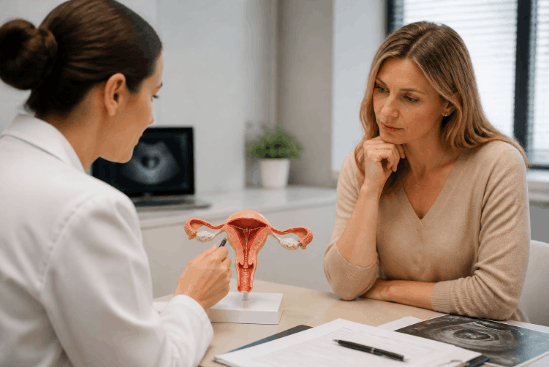
More women than ever are starting or growing their families in their mid-30s and beyond, and one of the first things many encounter is the concept of a ‘fertility cliff’ at 35. It is an anxiety-inducing idea, and it is also a significant oversimplification. Fertility challenges after 35 are real, but they represent a gradual biological shift rather than a sudden drop off a ledge, and understanding what is actually happening can help you make informed, timely decisions rather than panicked ones.
This article explains, in plain language, what changes in your body with age and why it matters for conception, which tests can tell you where you actually stand, and what modern fertility treatments at a specialist clinic such as Millennium IVF Clinic can and cannot realistically do to help. Partners are part of the picture throughout, because male factors contribute to difficulty conceiving in a large share of couples, so testing and treatment decisions involve both of you. The guidance here is aimed at women in their mid-30s to early 40s specifically, because the right steps are genuinely age-dependent.
ADVERTISEMENT
ADVERTISEMENT
Why fertility declines after 35: eggs, hormones and miscarriage risk
The core biological fact is this: women are born with a fixed number of eggs, and that supply decreases continuously throughout life. The decline is gradual at first, then becomes steeper in the mid-30s, so that by age 40 the chance of conceiving in any single cycle is around 1 in 10, compared with roughly 1 in 4 for women in their early 30s. That gap matters, but it also means most women at 40 are still ovulating and still have a realistic chance of conceiving.
What changes is not just quantity but quality. As eggs age, the risk of chromosomal errors during division increases, which is why both the likelihood of successful implantation and the risk of miscarriage rise together: chromosomally abnormal embryos are less likely to implant, and if they do, are more likely to miscarry. The risk of certain chromosomal conditions, including Down syndrome, also increases with maternal age, though the absolute risk remains relatively low for most women and prenatal screening is available to assess risk in any pregnancy.
Overlapping with these egg-related changes, some women over 35 experience more variable ovulation, including occasional cycles where no egg is released at all. The uterus and its hormonal environment can also shift with age: fibroids and endometriosis become more common and can interfere with implantation or the ability to carry a pregnancy to term. Hormone levels, including the FSH rise that signals the ovaries are working harder to produce eggs, reflect these cumulative changes rather than any single threshold event.
Two common myths are worth correcting directly. The first is that fertility functions normally until 35 and then suddenly stops; in reality, the decline is gradual and begins in the late 20s, accelerating through the mid-30s. The second is that a particularly healthy lifestyle can fully cancel out these age-related changes. Lifestyle choices genuinely help, but they act on top of the underlying biology, not instead of it. A man’s fertility also declines with age, though more gradually and less predictably than a woman’s, which is why male-factor assessment is part of any thorough fertility evaluation.
When to seek help and what to expect from fertility testing after 35
The evidence-based guidance on timing is clear and more age-specific than many people realise. Women under 35 are generally advised to seek a fertility assessment after 12 months of trying without success. For women aged 35 to 39, that threshold drops to 6 months. Women aged 40 and over are advised to seek an evaluation before they begin trying, or promptly after 3 months if they have already started. If you have a known risk factor such as endometriosis, irregular cycles, previous pelvic surgery, or a history of cancer treatment, seeking help sooner makes sense at any age.
Going for an assessment in your mid-to-late 30s after six months is not overreacting. Because treatment options and their success rates are strongly age-dependent, acting promptly is a practical use of time rather than a sign of alarm. Reproductive specialists are particularly important to see in this age group, because time genuinely matters and a delayed referral can cost months that are difficult to recover.
At Millennium IVF Clinic, the first step is a detailed consultation covering your menstrual history, any previous pregnancies or miscarriages, contraception history, medical and surgical history, current medications, and how long you have been trying. Your partner’s history is taken at the same time, including a review of lifestyle factors and anything that might affect sperm quality or sexual function.
The key tests for women over 35 typically include blood tests to measure anti-Müllerian hormone (AMH) and day-2 or day-3 follicle-stimulating hormone (FSH) and oestradiol levels, which together give an estimate of your ovarian reserve, meaning how many eggs you are likely to have left. Where indicated, thyroid function and prolactin levels are also checked, since both can affect ovulation. AMH and FSH results do not predict with certainty whether you will conceive, but they do help guide which treatment approaches are most appropriate and how urgently.
An antral follicle count scan, carried out via vaginal ultrasound, complements the blood tests by showing directly how many small follicles are visible in the ovaries at that point in your cycle. This is a routine outpatient procedure, and it adds useful information that blood tests alone cannot provide. Imaging also looks at the uterus for fibroids, polyps, or structural changes that could affect implantation, and tubal patency checks confirm that the fallopian tubes are open, since a blockage would prevent natural conception and would change treatment recommendations significantly.
A semen analysis for your partner is almost always recommended at this stage. Male-factor issues are involved in a substantial share of couples who have difficulty conceiving, and knowing this early changes the treatment plan. Sometimes, after all this testing, no single cause is identified, a situation known as unexplained subfertility. In many of these cases, age and egg quality remain the most relevant factors guiding recommendations.
How lifestyle and underlying health conditions interact with age-related fertility
Age-related changes to egg quality cannot be reversed, but they do not act in isolation. Several health conditions that become more common or more advanced after 35 can compound the challenge: endometriosis, uterine fibroids, polycystic ovary syndrome (PCOS), thyroid disorders, high blood pressure, diabetes, and obesity can each interfere with ovulation, egg quality, implantation, or the ability to sustain a pregnancy. Having one of these conditions does not mean you cannot conceive, but it does make early specialist input particularly valuable.
On the lifestyle side, some modifications make a genuine difference. Stopping smoking, moderating alcohol, achieving a healthier weight if that is relevant for you, managing sleep, and keeping chronic conditions well controlled before trying to conceive all support fertility. Smoking is associated with earlier depletion of the egg supply, and poorly managed thyroid disease or diabetes can impair implantation and early pregnancy. Millennium IVF Clinic works closely with GPs and other specialists to ensure conditions such as thyroid disease or diabetes are stabilised before fertility treatment begins, and to adjust medication protocols to your broader health picture.
That said, lifestyle changes are best understood as maximising your personal chances alongside timely medical care, not as an alternative to it. They support treatment; they do not substitute for it.
On the subject of stress: trying to conceive in your late 30s can be emotionally taxing, and it is worth addressing directly. The research is mixed; stress does not appear to be a complete block to pregnancy, but managing it matters for your wellbeing and for the sustainability of what can sometimes be a longer journey. Whether through counselling, mindfulness, or peer support, developing coping strategies is genuinely useful, primarily because it helps protect your mental health during a process that can feel uncertain and drawn out.
Modern fertility treatments after 35: options, success rates and realistic limits
Treatment choices work as a ladder, starting with the least invasive and moving up depending on your age, test results, how long you have been trying, and whether there are additional factors such as tubal problems or significant male-factor issues. The right starting point varies: a 36-year-old with good ovarian reserve and no identifiable cause might reasonably begin with a simpler approach, while a 39-year-old with lower reserve might be advised to move more quickly to IVF to make the best use of remaining egg supply.
Ovulation induction uses medication to stimulate and regulate egg development, guided by blood tests and ultrasound scans, and is most appropriate for women who are not ovulating regularly, for example due to PCOS. When combined with timed intercourse or intrauterine insemination (IUI), it can improve the chances of conception in the right candidates. IUI involves placing processed sperm directly into the uterus around the time of ovulation, and is considered for mild male-factor issues or unexplained subfertility where the tubes are open. Its success rates also fall with age, so the number of cycles tried before reconsidering the approach is a conversation worth having at the outset.
IVF is often recommended sooner for women in their late 30s and 40s, precisely because time matters more in this age group and IVF makes it possible to assess egg quality, optimise fertilisation, and select the best embryo for transfer. The ovaries are stimulated with medication to produce multiple eggs, which are collected under sedation, fertilised in the laboratory, and grown into embryos before one is transferred to the uterus. Intracytoplasmic sperm injection (ICSI), where a single sperm is injected directly into each egg, is added when there are significant sperm abnormalities, previous poor fertilisation, or sometimes when egg numbers are low. ICSI improves fertilisation rates but does not change the underlying quality of the eggs.
Extending embryo culture to day 5 or 6, known as blastocyst culture, allows the laboratory to select the embryos with the best developmental potential before transfer. Any additional good-quality embryos can be frozen, giving multiple chances of pregnancy from a single stimulation cycle, which is particularly helpful when fewer eggs are retrieved due to age.
Pre-implantation genetic testing for aneuploidy (PGT-A) screens embryos for chromosomal abnormalities before transfer. For women in their late 30s and 40s, where a higher proportion of embryos are chromosomally abnormal, this can reduce the risk of miscarriage and potentially shorten the time to a successful pregnancy by avoiding the transfer of embryos that would not implant or would result in miscarriage. It is important to understand that PGT-A identifies which existing embryos are chromosomally normal; it cannot create normal embryos where there are none.
For women whose ovarian reserve or egg quality is very poor, typically more often in the early-to-mid 40s, donor eggs are an option worth understanding. With donor eggs, the fertilised embryo comes from a younger donor’s egg, so success rates primarily reflect the donor’s age rather than the recipient’s. This option has higher live-birth rates for older women than IVF with their own eggs, and modern fertility clinics in Bangkok such as Millennium IVF Clinic can discuss it fully so you can make an informed decision.
On success rates broadly: IVF cumulative live-birth rates are meaningfully higher under 35, remain significant but lower in the late 30s, and are more limited after 40. These are population averages, and your individual prognosis depends on your specific test results, medical history, and the treatment plan designed for you. No treatment can fully undo the impact of age on eggs, but modern techniques allow clinics such as Millennium IVF to personalise protocols and make the most of each cycle.
Preparing for your first fertility consultation: practical steps and questions to ask
Seeking specialist help after 35 tends to bring a complicated mix of emotions: relief at finally taking action, anxiety about what you might hear, and, for some, a background sadness that conception has not been straightforward. All of these are understandable and say nothing about your chances. What they do signal is that looking after your mental health throughout this process is part of treatment, not an optional extra.
Before your first appointment at Millennium IVF Clinic, it helps to gather a few things: a record of your recent cycle lengths, any ovulation tracking data from apps or basal temperature charts, the results of any fertility tests you have already had, details of past pregnancies or miscarriages, and a current list of medications and supplements. If your partner is coming, ask them to note their own medical and surgical history and any relevant lifestyle factors. Bringing your partner where possible is genuinely useful, because both of you can hear the same information at the same time, both can ask questions, and male-factor assessment is likely to be recommended.
A short list of focused questions to bring with you:
- What do you think is most likely affecting our fertility based on our history and tests?
- Which additional tests do we need, and what will each one tell us?
- How does my age and ovarian reserve affect the options you are recommending?
- What are the realistic success rates and risks of each option for someone in my situation?
- How many cycles of each treatment would you recommend before reviewing the plan?
At Millennium IVF Clinic, treatment for women over 35 is adjusted to the individual rather than applied as a standard protocol. That might mean adapting stimulation medication doses to your ovarian reserve, advising on the right point to move from IUI to IVF given your age and results, or discussing whether additions like PGT-A or embryo freezing are appropriate in your case. The aim is to agree a clear, stepwise plan with defined review points, so you are never simply waiting without knowing what comes next.
Emotional support is part of that plan too. Counselling, peer support groups, and referrals to additional resources are all available through the clinic. If you are over 35 and have been trying within the timelines described above, or have known risk factors at any age, booking a consultation with Millennium IVF Clinic is the most productive next step: it turns general information into a personal picture of where you stand and what your real options are.
Share this article


Latest Posts





ADVERTISEMENT