

Still Unhappy With Your Nose After Rhinoplasty? Understanding Your Options
- Updated on: Sep 17, 2026
- 4 min Read

Arshi Anjum is a qualified homeopath who believes alternative medicine disciplines can really do wonders in certain situations and particularly for some conditions and diseases. She completed her medical education from Bakson Homeopathic Medical College, Greater Noida, India.
- Published on Sep 17, 2026
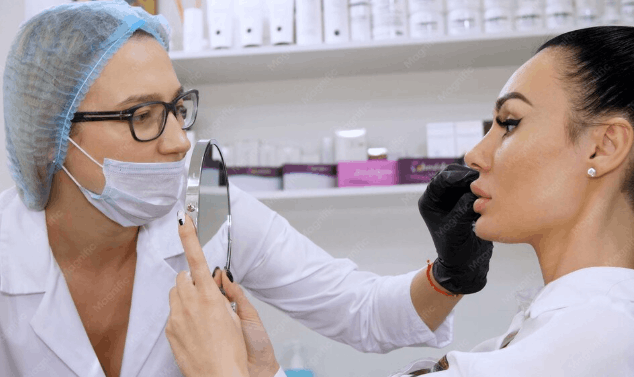
Rhinoplasty can change the shape of the nose, improve breathing, or address both concerns at once. But what happens when you are still unhappy with the result after healing? Maybe the shape is different from what you expected, breathing has become difficult, or a problem that was present before surgery was not fully corrected. For patients in Glendale, the thought of undergoing another nose surgery can bring plenty of questions.
Those concerns are understandable. Rhinoplasty is already a detailed procedure, and correcting a nose that has been operated on before can involve additional challenges. In some cases, the issue may be minor. In others, the nose may need structural support or correction of a functional problem.
ADVERTISEMENT
ADVERTISEMENT
If you are considering another procedure, here are some things to understand before deciding what to do next.
Give Your Nose Time to Heal
Before thinking about another surgery, make sure enough time has passed for your nose to heal. Swelling can last for months after rhinoplasty, and the final shape may not be clear during the early stages of recovery.
Most people return to many normal activities within about a week, but swelling can continue for several months, with most of it gone within a year. This is especially important if your concern is mainly about appearance. What looks uneven or overcorrected early in recovery may change as the tissues settle.
Your surgeon can help determine whether what you are seeing is part of normal healing or something that may need further attention.
Understand Why You Are Unhappy With the Result
Before planning another operation, it helps to identify exactly what is bothering you. Saying that you simply “do not like” your nose is understandable, but a more specific concern can help guide the next step.
For example, you may notice:
- A remaining dorsal hump or irregularity
- A tip that looks too wide, narrow, lifted, or droopy
- An uneven appearance
- Changes that do not suit the rest of your face
- Difficulty breathing through one or both sides
- A nose that appears to have lost too much support
Some problems may come from an issue that was not fully addressed during the first operation. Others can result from how the nasal tissues healed. In some cases, too much cartilage or other tissue may have been removed, leaving the nose with less structural support.
Understanding the cause matters because the solution depends on the problem.
Revision Rhinoplasty May Be an Option
When the nose needs further surgical correction, people often seek revision rhinoplasty to address both cosmetic and functional concerns. The procedure may involve relatively small adjustments, or it may require more involved reconstruction.
The surgeon may examine the structure of the nose and determine whether additional cartilage or other techniques are needed to restore support. Cartilage may come from the septum or ear, while more complex cases may require rib cartilage. This is one reason revision rhinoplasty in Glendale can be more complicated than a first rhinoplasty. The surgeon is working with anatomy that has already been changed and may also have scar tissue from the previous operation.
The approach also varies from person to person. Revision surgery can use either an open or closed technique, depending on what needs to be corrected.
A Second Opinion Can Help You Make a Better Decision
If you are unhappy with your first rhinoplasty, you do not necessarily have to return to the same surgeon for another procedure. Getting an independent assessment can help you understand what happened and whether another surgery is actually appropriate.
A consultation should give you an opportunity to explain what you expected, what you are unhappy with, and whether you have experienced any breathing problems since the first surgery. The surgeon can then examine your nose and explain what may be causing the issue.
This is also a good time to discuss what is realistic. Revision surgery cannot guarantee that your nose will look exactly like a computer-generated image or return to how it looked before the first operation. However, some facial plastic surgeons in Glendale, such as Dr. A. John Vartanian, use computer imaging during consultations to discuss possible changes, such as cosmetic or structural corrections, before the procedure begins.
Consider the Surgeon’s Revision Experience
Choosing a surgeon for revision rhinoplasty deserves careful thought. A surgeon who performs many primary rhinoplasties may not have the same experience with complex revision cases.
Look for someone with specific experience correcting problems after previous nasal surgery. Ask how often they perform revision procedures and whether they have treated concerns similar to yours. That type of case experience is worth considering when you are comparing surgeons. It can also help to review before-and-after photos of revision cases rather than only looking at primary rhinoplasty results.
Closing Thoughts
Being unhappy with your nose after rhinoplasty does not automatically mean you need another operation. Sometimes the concern is related to swelling or healing and improves with time. In other cases, the change may be minor enough that surgery is unnecessary.
If there is a genuine structural or functional problem, however, revision rhinoplasty may provide a way to address it. The key is understanding what caused the problem and what can realistically be changed.
Before committing to another procedure, take the time to let your nose heal, get a clear assessment of the concern, and discuss your options with a surgeon experienced in revision work. A careful evaluation can help you decide whether another surgery makes sense and what it may realistically accomplish.
Share this article


Latest Posts


ADVERTISEMENT