



Top 5 Healthcare AI Voice Agent Platforms
- Updated on: Nov 4, 2026
- 6 min Read
- Published on Nov 4, 2026
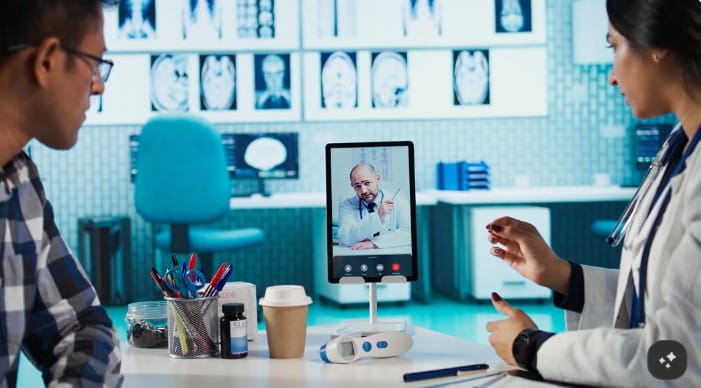
Calls from patients that hit voicemail don’t wait around. Those callers hang up and dial the next clinic on the list. The best healthcare AI voice agent platforms have changed that dynamic entirely, they pick up around the clock, figure out why someone’s calling, and hand things off to staff without routing anyone through a phone tree. What follows is a breakdown of five platforms worth a serious look, including what each one actually does.
What matters most when you’re evaluating a healthcare voice agent
This category covers a broad spectrum of tools. Some handle nothing beyond after-hours calls; others try to run entire hospital operations. Before getting into specific platforms, a handful of factors tend to separate a good fit from a wrong one.
ADVERTISEMENT
ADVERTISEMENT
Call resolution rate matters far more than raw call volume. A platform that answers every call but pushes 70% of them to staff hasn’t actually fixed anything. Look for published resolution figures, and make sure you understand what each vendor actually counts as “resolved.”
EHR compatibility is a practical constraint most practices only discover after it’s too late. Any voice agent that can’t write back to a practice’s existing system just creates double-entry work. Confirm specific system support before signing, not a vague claim about major EHR support, but the exact names.
HIPAA compliance is a baseline, but the details differ more than vendors suggest. Ask about call recording retention policies, where data is stored, and what happens to caller information once a call ends. It’s also worth weighing setup difficulty, a platform that takes weeks of IT work and staff training starts delivering value a lot later than one that goes live in days.
How a vendor prices its product tells you something about who they’re really selling to. Per-seat enterprise contracts make sense for health systems; flat monthly rates suit small practices better. Know which model fits your situation before you start comparing features.
Ubie Smart Support is built around one specific problem: calls that a small or mid-sized practice misses. It answers after-hours and overflow calls in a natural conversational voice, captures the caller’s name, callback number, urgency level, and preferred contact time, then guides patients toward booking an appointment. When a call genuinely needs a person, it escalates to staff. The practice keeps its existing phone number; calls only forward to the agent when they go unanswered.
Setup requires no IT work and no staff training, according to Ubie’s product page. The agent trains on the practice’s own website content and can be customized at any time at no extra cost. It works with multiple calendar and EHR systems and syncs captured caller information so staff get a clean callback list rather than a pile of vague voicemails.
Pricing is a flat $850 per month for 24/7 coverage, roughly $1.16 per hour. Ubie reports that typical practices see a 30 to 40 percent drop in missed calls within the first month, though those figures are illustrative. The platform is HIPAA compliant, was qualified by the Mayo Clinic Platform on 08/12/2026, and is backed by Google. It’s designed for solo practitioners and multi-physician groups, not large health systems.
-
Assort Health
Assort Health targets the full operational call stack across an entire care journey. The platform covers appointment scheduling, intelligent triage and routing, patient intake, after-hours calls, medication refills, referral automation, payment resolution, and proactive outreach, most of what a front-desk team handles in a given day. It works with over 84 EHR systems, including Epic, Cerner, athenahealth, and DrChrono, which is a notably broad compatibility list.
Founded in 2023 and headquartered in San Francisco, the company trained its platform on more than 300 million patient interactions. Published customer results include an 89% reduction in hold times, a 220% increase in labor capacity, and an 81% drop in call abandonment rates. Hundreds of healthcare organizations on the platform report PSAT scores above 94% and 98% call resolution rates. Assort operates across 23-plus medical specialties.
The company raised $120 million in Series C financing led by Menlo Ventures at a $1.2 billion valuation and earned recognition on both the 2025 Forbes Cloud 100 and the 2026 Enterprise Tech 30. Pricing isn’t publicly listed; buyers negotiate directly. For larger practices and health systems needing a broad-scope solution, Assort Health is one of the more established names at this scale.
-
Suki
Suki’s angle is documentation, not call handling. The platform captures full patient conversations during visits and generates clinical notes, patient instructions, and orders, reducing the charting burden that has long pushed clinician burnout higher. It works across 100-plus medical specialties and runs on desktop, iOS, and Android.
Founded in 2017 and headquartered in Redwood City, California, Suki has roughly 422 employees and is deployed across more than 450 healthcare organizations. EHR partnerships include Epic, Oracle Health (Cerner), athenahealth, and MEDITECH. A 2024 KLAS Spotlight Report gave the platform a 93.2 out of 100 overall performance score, with 95% of surveyed organizations saying they’d buy Suki again. The company also received Frost & Sullivan’s 2026 North American Transformational Leadership Recognition, and it raised a $90 million Series E in October 2026 led by Healthier Capital, bringing total funding above $255 million.
Suki Compose is reported at roughly $299 per user per month; Suki Assistant runs roughly $399. Enterprise contracts typically land between $350 and $500-plus depending on EHR depth. For practices whose core pain is documentation time rather than phone volume, Suki addresses a different but equally real problem.
-
Sully.ai
Sully.ai positions itself as a team of autonomous AI agents covering clinical and administrative tasks across the full patient journey, before, during, and after visits. Products include AI Receptionists, Scribes, Medical Coders, Nurses, and Consultants, all built to work with EHR systems like Epic and athenahealth. The company reports more than 20,000 clinicians using the platform across health systems.
Founded in 2021 and headquartered in Santa Clara, California, Sully.ai has 64 employees and has raised $30.5 million total, including a $21.8 million Series A in January 2025. Published customer results include $680,000 in annual call-center operating cost savings and $1 million in incremental annual revenue. The company cites 12 to 21 weeks to onboard new providers, a figure worth factoring into planning timelines. Sully.ai publishes research on ensemble decision-making and has reported superior safety scores on HealthBench benchmarks. No pricing is publicly available.
For organizations that want a single platform spanning the full clinical and administrative workflow, not just calls or documentation, Sully.ai presents a unified-agent model. Its smaller team size and earlier funding stage may be relevant for buyers assessing long-term vendor stability.
-
Phreesia
Phreesia takes a different approach to the category. Rather than answering phone calls, it automates the intake side of the patient experience: registration, eligibility verification, copay collection, patient communications, and clinical support. The platform serves 4,700-plus healthcare organizations and supports 1 in 6 U.S. patient visits, according to company data.
Founded in 2005 and headquartered in Wilmington, Delaware, Phreesia is publicly traded on the NYSE as PHR and employs roughly 1,400 people. Published results include a 73% average increase in time-of-service collections within 6 months, an 80% copay collection rate against a 56% industry average, and an 87% reduction in call volume. The platform holds HITRUST CSF Certification, PCI-DSS Level 1, SOC 2 Type 2, and PCI P2PE certifications, a strong compliance profile for practices with strict data security requirements.
Pricing starts at $250 per month on a quote-based model. Phreesia was named to the 2025 Deloitte Technology Fast 500 and 2025 Capterra Shortlists for appointment reminder and scheduling categories. But here’s the important distinction: Phreesia is an intake and revenue cycle platform first. It reduces call volume by shifting tasks to patient self-service rather than answering calls with an AI agent.
Which platform fits your practice size and workflow
The right pick depends on the actual bottleneck a practice is facing.
For small and solo practices worried about missed calls and after-hours coverage, a focused AI phone agent that works on the existing number and requires no IT work is usually the better fit than a platform built for health systems. Flat-rate pricing makes budgeting predictable; fast setup means results show up quickly.
For larger practices and health systems processing high call volume across multiple specialties, platforms with broader workflow scope and deep EHR compatibility across dozens of systems handle that volume more naturally. Assort Health and Sully.ai are built for that tier.
For practices whose main problem is documentation time, Suki solves something the other platforms don’t. And for practices that want to reduce inbound call volume rather than answer it, Phreesia’s intake-first model is worth evaluating alongside the voice-agent options.
Bottom Line
These platforms don’t all solve the same problem, and that gap matters far more than any feature comparison. Practices that match the tool to an actual workflow gap see faster returns than those chasing the most feature-complete option on the market. Confirm EHR compatibility, pin down what each vendor counts as “AI resolved,” and verify pricing terms before committing.
Share this article



Latest Posts





ADVERTISEMENT