

Could Revision Rhinoplasty Improve Functional Breathing Issues?
- Updated on: Jun 14, 2026
- 4 min Read

Arshi Anjum is a qualified homeopath who believes alternative medicine disciplines can really do wonders in certain situations and particularly for some conditions and diseases. She completed her medical education from Bakson Homeopathic Medical College, Greater Noida, India.
- Published on Jun 14, 2026
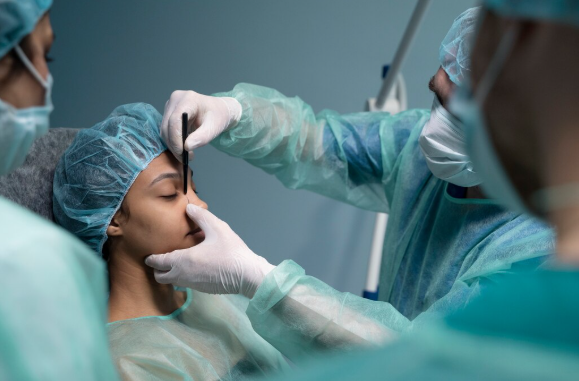
Breathing difficulties after a nose job are more common than many people realize. For some patients, symptoms such as ongoing nasal congestion, restricted airflow, or snoring continue long after the initial recovery period. In major cities like New York City, an increasing number of individuals are seeking solutions when their primary rhinoplasty improved appearance but failed to restore comfortable, unobstructed breathing.
Revision rhinoplasty — a second surgical procedure on the nose — is often associated with cosmetic correction. But its role in restoring proper nasal function is just as significant, and for many patients, it’s the primary reason they go back to the operating table.
ADVERTISEMENT
ADVERTISEMENT
1. Why Breathing Problems Happen After Rhinoplasty
The nose is a remarkably complex structure. Inside, a network of cartilage, bone, and soft tissue work together to direct airflow, filter particles, and humidify the air you breathe. When surgery alters even a small part of this system, the functional consequences can ripple outward in unexpected ways.
Common post-surgical breathing issues include internal valve collapse, a deviated septum that wasn’t fully corrected, excessive tissue removal that destabilised the airway, or scar tissue formation that narrows the nasal passages over time. These aren’t rare complications — they’re well-documented outcomes that a skilled revision surgeon is trained to address.
2. The Internal Valve: A Commonly Overlooked Culprit
The internal nasal valve is the narrowest part of the nasal airway. It accounts for roughly 50% of total nasal airflow resistance — which means even a small structural change in that area can have a large functional impact.
When cartilage is reduced or repositioned during a primary rhinoplasty, the internal valve can lose structural support and begin to collapse inward during inhalation. Patients often describe this as a sucking or pinching sensation when they breathe in hard. Revision surgery can reinforce this valve using spreader grafts — small pieces of cartilage that widen and stabilise the internal passage.
3. Septal Issues That Were Left Behind
A deviated septum — where the wall dividing the two nasal passages leans to one side — is one of the most common causes of obstructed breathing. Some patients undergo rhinoplasty without realising their septum is deviated, or have a correction attempted that wasn’t fully successful.
Revision rhinoplasty can include a septoplasty — a targeted straightening of the septum — as part of the same procedure. When both the external structure and the internal alignment are addressed together, patients often see the most meaningful improvement in both appearance and airflow.
4. Scar Tissue and Airway Narrowing
Every surgical incision creates some degree of scar tissue as part of the healing process. Inside the nose, this tissue can build up around the nasal passages and gradually reduce the available airspace. The effect often isn’t immediate — it can develop slowly over months or even years after the original surgery.
Revision surgeons carefully assess the degree of scarring before operating and plan their approach accordingly. In some cases, scar tissue can be released or reshaped; in others, structural grafting provides an alternative pathway for airflow.
5. Who Is a Good Candidate?
Not everyone with post-rhinoplasty breathing issues will need a revision procedure. Some cases can be managed with non-surgical interventions such as nasal strips, steroid sprays, or allergy treatment. But when structural issues are the underlying cause — not inflammation or allergies — surgery is often the only lasting fix.
Patients who have completed their healing process and still experience significant obstruction are typically the strongest candidates — and those exploring revision rhinoplasty in NYC should ensure their surgeon has specific experience with both functional and cosmetic nasal reconstruction, as the two are deeply intertwined.
A balanced rhinoplasty approach considers both appearance and function, recognizing that aesthetic improvements and proper nasal airflow are closely connected. Practices such as New Face NY emphasise this integrated perspective, viewing cosmetic refinement and structural performance as equally important components of a successful outcome.
6. What the Stats Say About Breathing Outcomes
The evidence supporting revision rhinoplasty for functional outcomes is well-established. Patient satisfaction with breathing improvement is consistently high when the procedure is performed by an experienced surgeon with a clear pre-operative plan.
According to research published in the JAMA Facial Plastic Surgery journal, over 85% of patients who underwent revision rhinoplasty for functional breathing complaints reported significant subjective improvement in nasal airflow following surgery. For many, it was the first time they’d breathed freely in years.
7. What to Expect From the Process
Revision rhinoplasty is technically more demanding than a primary procedure. Scar tissue from previous surgery makes tissue planes harder to navigate, and cartilage that was removed the first time may need to be sourced from elsewhere — often the ear or rib.
Here’s what a typical revision process looks like:
- Thorough pre-operative evaluation including nasal endoscopy and imaging
- Discussion of both structural goals and functional priorities before surgery
- Recovery timeline of one to two weeks for initial healing, with full results emerging over 12 months
- Follow-up assessments to monitor both airway function and structural healing
Patience is essential. Swelling after revision surgery takes longer to resolve than after a primary procedure, and the final functional result may not be fully apparent for up to a year.
Final Thoughts
Breathing difficulties after rhinoplasty are real, recognised, and in most structural cases — treatable. Revision surgery isn’t just a cosmetic do-over. For patients with genuine airway obstruction, it can be a meaningful quality-of-life intervention that makes a difference every single day.
If you’ve been living with post-surgical breathing issues and haven’t found satisfactory answers, a consultation with a board-certified revision specialist is the right place to start. The right surgeon will evaluate your airway as carefully as your aesthetics — and treat both.
Share this article



Latest Posts




ADVERTISEMENT