



How Medical Practice Management Software Is Transforming Healthcare Operations
- Updated on: Sep 25, 2026
- 5 min Read

Monika Singh is an expert in computer sciences and has pursued her Master’s degree (M.Tech-CS) from Banasthali University, Rajasthan. Her areas of interest include data structure, software engineering, software testing, and computer graphics. Monika Singh has published a paper on “Modified AODV in MANET,” International Journal of Computer Science and Management Studies (IJCSMS), ISSN: 2231-5268, Vol-14, Issue-05 May 2014, PP:12-18.
By
- Published on Apr 29, 2026
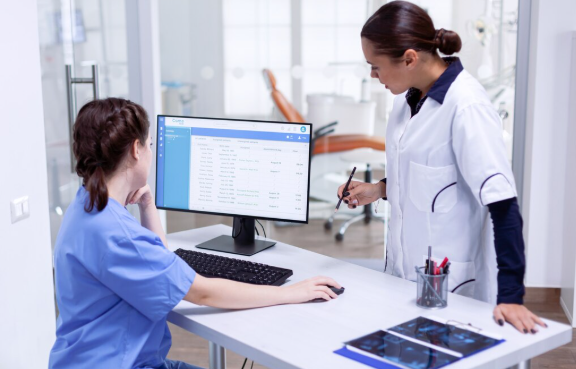
In the healthcare sector, there is a need for efficient service delivery amid increasing complexities. Manually scheduled procedures and mistakes in billing consume resources and create frustrations among healthcare professionals. Medical practice management software is now used in such situations to improve the process of service delivery.
In this article, we will look at what the software entails, including its benefits and future prospects.
ADVERTISEMENT
ADVERTISEMENT
What Is Medical Practice Management Software?
A medical project management software (PMS) serves as the engine of all practice management procedures and helps maintain seamless operations of the administrative process, while medical staff can concentrate on treating patients.
Differing from EHRs, which only deal with storing medical information about patients, the role of PMS software lies in dealing with business-related processes in medicine. PMS combines all necessary aspects such as scheduling, billing, report creation, and even communication within one system.
Key Features Driving Transformation
The real power of practice management systems for medicine is that they help integrate various administrative services into one system. Here are the key features that can bring about such transformation:
Scheduling and Appointment Management
Effective scheduling forms the backbone of successful practice management. PMS facilitates automated appointment scheduling, prevents overlapping appointments, and implements reminders to minimize patient no-shows. This results in efficient use of resources and consistent patient traffic.
Billing and Revenue Cycle Management
Revenue cycle management is one of the most challenging tasks in healthcare management. The automation provided by PMS simplifies claim processing, monitors payment tracking, and identifies mistakes before submitting claims. It decreases the number of denied claims and speeds up payment collection, providing greater predictability in finances.
Insurance Verification and Compliance
Manual insurance verification is fraught with risks for mistakes and inaccuracies. Real-time insurance eligibility verification offered by PMS ensures that patients have coverage before service delivery. Compliance measures built into the system further assist practices in adhering to HIPAA requirements and payer guidelines. For healthcare practices navigating these regulatory demands, understanding the full scope of HIPAA Compliance is essential, not just as a legal obligation but as a framework for building patient trust and protecting sensitive data at every touchpoint. Practices that treat compliance as an ongoing process rather than a one-time checklist are far better positioned to avoid costly penalties and maintain operational integrity.
Patient Communications Methods
Today’s patients want honesty and efficiency. The PMS offers portal access, message boards, and automatic reminders, which allow patients to view their information, book appointments, and stay up-to-date. This results in more involvement and better relationships between the patient and the practitioner.
Analytics and Reports
Information is one of the most important assets in any business, including healthcare. With dashboards and reporting capabilities, the PMS software can monitor patient traffic, financial performance, and employee efficiency, allowing administrative staff to make informed choices and increase productivity.
These reporting strengths carry over to specialized care settings, where providers coordinating autism therapy rely on Lumary ABA software to track session notes, authorizations, and billing against each client’s treatment plan. Because ABA programs generate large volumes of behavioral data across many sessions, choosing a system that ties that data directly to claims and progress reports helps avoid the manual reconciliation that slows down smaller practices.
Operational Advantages for Healthcare Practices
Medical practice management systems do more than automate the current process in the organization; it actually changes the entire system within healthcare organizations. Below are some of the advantages of having such software:
Increase Efficiency
Due to such systems, routine tasks such as scheduling appointments, processing claims, and sending out reminders are automated. This leaves room for staff to focus on other priorities, thus increasing efficiency within the practice.
Cost Savings
Billing mistakes may lead to financial loss. However, practice management software helps to avoid losses due to automation and accuracy of the process.
Scalability
Regardless of whether it is an individual doctor’s office or a large hospital chain with multiple branches, PMS works well for different company sizes. With cloud-based software, it is easier for the practice to grow without investing much in its infrastructure.
Better Patient Experience
Patients can see the advantages of efficient operations firsthand. Faster appointment processes, clear billing policies, and convenient communication channels increase customer satisfaction.
Impact on Health Care Staff and Processes
While changes in medical practice management software influence various parameters related to the operation of an enterprise, they also have an effect on the day-to-day work of health care professionals. Namely, using PMS enables employees to concentrate on other duties instead of completing routine activities, thus resulting in increased efficiency and job satisfaction.
Improved Collaboration Between Teams
PMS acts as an integrated system for all billing, scheduling, and clinical activities. It eliminates miscommunication issues among various sections, ensuring that employees have access to correct information in real-time. For instance, billing personnel have access to information about patient eligibility right away, while clinicians get timely access to appointment history.
Low Burnout Rates
The staff working in healthcare facilities are subjected to a lot of stress as a result of their extensive administrative workload. PMS addresses this issue by eliminating inefficiency and lowering chances of making mistakes, leading to reduced burnout.
Elimination of Administrative Workload
Employees at the front office no longer have to keep track of several spreadsheets and perform appointment-related duties manually, which can be greatly reduced by using a PMS software.
Case Examples
- Small Clinics: A two‑physician practice can operate with lean staff by automating scheduling and billing, reducing the need for dedicated administrative personnel
- Large Hospitals: Complex workflows involving multiple departments are streamlined, ensuring smoother coordination across hundreds of staff members
Integrating PMS Into Other Healthcare Technologies
The days of operating in silos in healthcare are long gone. In order to ensure smooth workflows and seamless experiences for patients, technology solutions are supposed to communicate with one another. That is why medical practice management software is usually designed to be able to integrate with other healthcare technologies.
- PMS and EHR Compatibility
For example, when a system such as PMS integrates with Electronic Health Records (EHR), it is possible to combine administrative and clinical operations. When a patient makes an appointment via PMS, all necessary charts can be prepared within the EHR.
- Telemedicine Solutions
Thanks to telemedicine, PMS solutions today are equipped with telehealth platform integrations, allowing providers to manage virtual appointments within the familiar environment of practice management. Thus, it is now possible for the patients to schedule appointments remotely, while the doctors get access to their billing and documentation.
- AI and Automation Solutions
Due to artificial intelligence, practice management software today can predict patient demand and schedule appointments accordingly. In addition, automated workflows can help avoid errors and speed up operations.
- Billing and Fraud Detection Software
Integrating with sophisticated billing software assists in recognizing discrepancies in billing and avoiding fraudulent practices. Not only does this safeguard revenue, but it also facilitates adherence to payer and regulatory guidelines.
Considerations and Challenges
Although there are many benefits associated with the use of medical practice management software, several challenges arise in their adoption by various healthcare providers. The following factors should be considered to maximize the use of such solutions.
- Data Protection and Compliance with HIPPA
Data security is one of the most crucial aspects in using practice management software. Providers have to make sure that data encryption and protection tools in use are appropriate and compliant with HIPPA.
- User Training and Barriers to Adoption
A well-designed tool is useless unless it is adopted efficiently by the staff members who work in the clinic. Resistance to change, insufficient training, and other issues related to adoption may affect efficiency negatively.
- Cost of Implementing the Software
Small clinics may find themselves constrained by their budgets. Thus, they need to consider whether cloud-based services might be a better option as compared to traditional ones.
- Vendor Considerations
Selecting the right vendor is an important task. Healthcare providers need to choose between cloud-based or on-premise solutions. Furthermore, clinics have to pay attention to scalability and vendor support.
Conclusion
Practice management software in medicine has evolved into an indispensable tool for healthcare institutions desirous of being efficient in their operations. Even though there are barriers such as costs and compliance, the influence of this software on healthcare cannot be overstated. With increasing advancements in AI, analytics, and the cloud, PMS will keep transforming healthcare.
Share this article



Latest Posts





ADVERTISEMENT