

How to Know If You Need Eyelid Surgery: 7 Key Signs to Watch For
- Updated on: Sep 8, 2026
- 3 min Read

Dr. Rafia Usman is a distinguished medical professional with a Bachelor of Medicine, Bachelor of Surgery (MBBS) degree, with a focus on infectious diseases and lifestyle-related conditions such as diabetes. With an experience in both hospital and clinical settings, Dr. Usman has dedicated her career to the diagnosis, treatment, and management of a wide range of infectious diseases and lifestyle disorders, emphasizing patient education and preventive care.
- Published on Jun 14, 2026
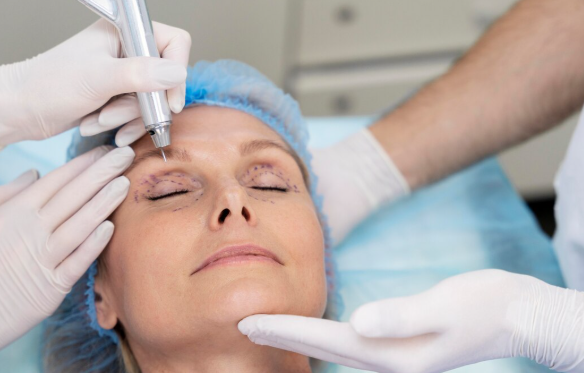
Most people don’t wake up one day and suddenly decide they want eyelid surgery. It’s usually a slower realization, a photo that catches you off guard, a comment from someone who asks if you’re feeling okay when you actually feel fine, or just a quiet frustration that’s been building for a while. The eyes change with age in ways that are gradual but cumulative, and at some point the question shifts from “I’ve noticed something” to “maybe I should actually look into this.”
If you’ve been sitting with that question, here are seven signs that a consultation might be worth your time.
ADVERTISEMENT
ADVERTISEMENT
1. Your Upper Eyelids Feel Heavy by the End of the Day
This one tends to get written off as tiredness, but there’s a difference between feeling tired and having eyelids that physically weigh on your eyes. When excess skin accumulates on the upper lids, it creates a real sense of heaviness that gets more noticeable as the day goes on. Some people describe it as needing to raise their eyebrows just to see clearly, or feeling like their eyes want to close even when they’re wide awake. That’s not fatigue. That’s a structural issue with the lid itself.
2. You’re Constantly Being Asked if You’re Tired or Upset
There’s something uniquely frustrating about being told you look exhausted when you’ve had a full night of sleep, or being asked if you’re angry when you’re perfectly calm. People exploring Bend, OR eyelid surgery with Dr. Nick Vial often mention this exact experience as the moment things shifted from a cosmetic consideration to something more personal. Many plastic surgery practices hear this frequently during consultations, because the way drooping lids and under-eye changes are perceived by others can affect relationships and everyday interactions in ways that quietly wear on you over time.
3. Your Vision Is Being Affected
This goes beyond appearance. When upper eyelid skin droops far enough, it can actually obstruct the upper field of vision, making it harder to see clearly without tilting your head back or raising your brows. This is called dermatochalasis, and it’s one of the few cases where eyelid surgery may be covered by insurance because it crosses from cosmetic into functional territory. If you’ve noticed yourself compensating with your posture or brow position just to see properly, that’s worth bringing up with a specialist.
4. Under-Eye Bags That Don’t Go Away With Rest
Temporary puffiness from a bad night of sleep is one thing. Persistent under-eye bags that are there every morning regardless of how much you slept are something different. These are usually caused by fat pockets beneath the eye shifting forward over time, and no amount of sleep, hydration, or cold compresses will change that. According to research published in the Korean Journal of Ophtalmology, patients who underwent eyelid surgery were rated by others as appearing more rested, younger, and more approachable after the procedure, which reflects just how much the under-eye area shapes overall facial perception.
5. Eye Makeup Has Stopped Working the Way It Used to
If you’ve noticed that eyeshadow creases almost immediately, that liner transfers onto your lid above where you placed it, or that your eye makeup looks different than it did several years ago, excess skin on the upper lid is likely behind it. The surface has changed, and no primer fully compensates for that. For people who enjoy makeup as part of their routine, this is a practical frustration on top of an aesthetic one, and it’s one of the more common reasons people start looking into their options.
6. You’ve Started Avoiding Certain Photos or Angles
When you begin instinctively angling your face a certain way in photos or avoiding straight-on shots altogether, something is driving that habit. A lot of people don’t connect it to their eyelids right away, but the eye area is often what they’re unconsciously working around. In practice, this kind of self-editing tends to build gradually until it becomes second nature, which is usually a sign that the underlying concern has been present longer than people admit.
7. The Change Has Been Gradual but You Can See It in Old Photos
Sometimes the clearest way to understand how much has changed is to look at photos from five or ten years ago. The shift in the eye area with age is slow enough that it’s easy to miss in day-to-day life, but side-by-side comparisons make it obvious. The American Society for Aesthetic Plastic Surgery consistently lists blepharoplasty among the top cosmetic surgical procedures performed each year, and a significant part of that demand comes from people who finally saw the change clearly and decided to do something about it.
Final Thoughts
Recognizing yourself in a few of these signs doesn’t mean surgery is the only answer or even the right one for you right now. But it does mean the conversation is worth having. The eye area is one of those things that affects how you feel about yourself in photos, how others read you in person, and sometimes even how clearly you see, which makes it more than just a cosmetic question.
A consultation gives you a clear picture of what’s actually going on, what your options are, and what realistic outcomes look like, without any commitment attached to showing up.
Share this article

Latest Posts




ADVERTISEMENT