
What Shoulder Dislocation Treatment Actually Corrects Structurally
- Updated on: Aug 26, 2026
- 3 min Read

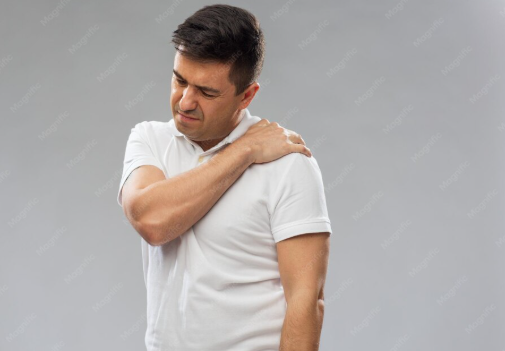
The shoulder goes back in, and the pain stops, which feels like the problem has been solved. It hasn’t. Putting the joint back in position addresses the emergency and leaves untouched whatever tore, stretched, or fractured while it was out. That distinction explains why some people dislocate once and never again while others find their shoulder giving way for years.
What determines which group you fall into is largely structural rather than a matter of rehabilitation effort. Patients seeking care in Hollywood, FL frequently arrive after a second or third episode, having assumed the first one had been resolved.
ADVERTISEMENT
ADVERTISEMENT
Here’s what’s actually damaged and what treatment corrects.
Understanding What Changes Inside the Shoulder After a Dislocation
The shoulder trades stability for range of motion, relying on soft tissue rather than bone to stay in place, which is why it dislocates more readily than any other joint in the body.
- Labrum tears: the cartilage rim that helps deepen the socket is damaged as the joint moves out of place
- The capsule and ligaments stretch: soft tissue restraints are pulled beyond their normal range during dislocation.
- Bone can be compressed or fractured: the surfaces grind past each other, sometimes damaging bone on either side of the joint.
- Reduction restores position, not repair: putting the joint back in place doesn’t undo any of the underlying tissue damage.
Reduction returns the joint to its socket, but everything torn or stretched along the way still needs its own separate process of healing.
Labral Repair Restores Important Joint Support
The labrum is a rim of cartilage deepening the socket and providing an attachment point for the ligaments. A tear at the front and bottom of it is the classic finding after anterior displacement and is known as a Bankart lesion.
Once detached, the labrum no longer deepens the socket or anchors the capsule properly, which leaves the joint measurably less stable than before. Repair involves reattaching it to the glenoid rim using suture anchors, restoring both the containment it provided and the tension in the ligaments attached to it. This is the most commonly performed structural correction after dislocation.
Restoring Stability When Ligaments Have Been Damaged
The capsule surrounding the joint contains ligaments that tighten at the end of range. These prevent the humeral head from travelling too far. Dislocation stretches them. Stretched capsular tissue doesn’t return to its original length on its own. Was capsular laxity assessed alongside the labral tear? Raising this question during research into shoulder dislocation treatment Hollywood, FL helps determine whether part of the instability goes uncorrected.
Surgeons including Dr. Aron Rovner examine capsular volume during arthroscopy rather than relying on imaging alone. Where excess laxity is found, a capsular shift can be performed alongside labral repair to reduce the redundant tissue.
Addressing Bone Loss That Contributes to Repeated Dislocations
Bone damage is the variable that most predicts whether a soft tissue repair will hold. A review published through the NIH’s National Center for Biotechnology Information notes that Hill-Sachs lesions may be present in up to 93% of patients with recurrent instability, which is why bone is assessed rather than assumed intact.
Size determines significance. Small defects on the humeral head rarely cause problems, while larger ones contribute to instability almost universally, and the same principle applies to loss on the socket side. Where bone loss is substantial, repairing the labrum alone frequently fails, and procedures that transfer or graft bone to restore the socket become the appropriate correction instead.
Recurrent Displacements Can Require Structural Correction
Each displacement compounds the damage from the last. The labrum tears further, the capsule stretches more, and bone on both surfaces erodes with repeated contact, which is why a shoulder that dislocates easily tends to dislocate increasingly easily.
This progression is the argument for addressing instability rather than managing it. Recurrent instability also carries longer-term consequences beyond the immediate episodes, including a documented association with glenohumeral arthritis developing years later. Physiotherapy strengthens the muscles that compensate for structural damage and cannot repair the structures themselves.
Imaging Helps Identify the Underlying Damage
Different imaging answers different questions, which is why one study rarely settles the picture:
- Plain radiographs: confirm reduction and reveal larger bone fragments
- MRI or MR arthrogram: shows labral tears, capsular damage, and rotator cuff involvement
- CT with 3D reconstruction: quantifies glenoid bone loss precisely, which plain films underestimate
The bone loss measurement matters most for planning, since the percentage determines whether a soft tissue repair is likely to hold or whether bony reconstruction is indicated from the outset.
Conclusion
The useful question after a dislocation isn’t whether you need surgery but what specifically was damaged, because those aren’t the same question, and only the second one has a definite answer. A first dislocation in an older patient with an intact labrum is a genuinely different situation from a young athlete with a Bankart lesion and measurable glenoid bone loss, and treating them identically serves neither.
Ask what imaging showed, ask for the bone loss percentage if it was measured, and ask what specifically a proposed procedure would correct. Surgery carries real risks, including stiffness, infection, and recurrence despite repair, and it isn’t right for everyone. A surgeon who explains which structures are damaged and which their proposed operation addresses is giving you the basis for an actual decision.
Share this article



Latest Posts





ADVERTISEMENT