

How Botox Helps Prevent Fine Lines Before They Become Deep Wrinkles
- Updated on: Jul 20, 2026
- 4 min Read

Dr. Rafia Usman is a distinguished medical professional with a Bachelor of Medicine, Bachelor of Surgery (MBBS) degree, with a focus on infectious diseases and lifestyle-related conditions such as diabetes. With an experience in both hospital and clinical settings, Dr. Usman has dedicated her career to the diagnosis, treatment, and management of a wide range of infectious diseases and lifestyle disorders, emphasizing patient education and preventive care.
- Published on Jul 20, 2026
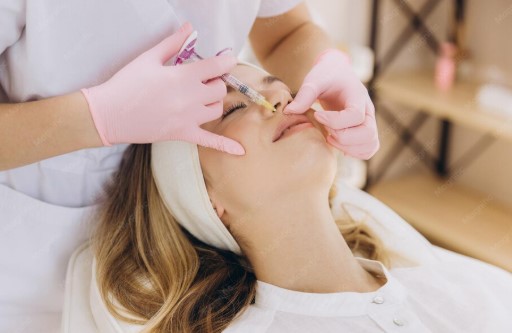
There’s a moment a lot of people notice in the mirror, usually somewhere in their late twenties or early thirties: a faint line between the eyebrows that wasn’t there before, or a crease at the corner of the eye that lingers a beat too long after a smile fades. At first it comes and goes with expression. Then one day it doesn’t quite go away anymore.
That shift, from a line that only shows up when your face moves to one that’s visible even at rest, is exactly the window where preventative treatment makes the biggest difference — and it’s why so many people here in Sarasota start asking about Botox years before they ever expected to.
ADVERTISEMENT
ADVERTISEMENT
Why Fine Lines Develop Into Deeper Wrinkles
Every time you frown, squint, or raise your eyebrows, the muscles underneath your skin contract and fold the skin along with them. In your twenties, skin bounces back almost instantly. But collagen production slows with age, and skin gradually loses elasticity.
Repeat the same muscle movement enough times over enough years, and the fold stops fully releasing — what used to be a temporary crease becomes a permanent one, etched in even when your face is relaxed. This is the whole logic behind preventative Botox: instead of waiting for an expression line to become a static wrinkle, treatment relaxes the muscle earlier, before repetitive movement leaves a lasting mark.
How Botox Helps Prevent Fine Lines From Becoming Wrinkles
Botox works by temporarily blocking the nerve signals that tell a muscle to contract. With the muscle relaxed, the skin above it stops folding along the same crease line every time you make an expression. Over months and years of consistent treatment, that repeated relaxation gives the skin a real break from the folding that eventually leads to permanent wrinkles. It’s a subtle distinction, but an important one: Botox isn’t erasing wrinkles that already exist so much as preventing the mechanical process that creates them in the first place.
It’s also why more people are having this conversation earlier with their provider. Choosing botox in Sarasota from a team that understands facial anatomy in depth matters here, since preventative treatment calls for a lighter, more precise hand than correcting deep-set wrinkles. At Holcomb-Kreithen Plastic Surgery & MedSpa, treatment plans are built around each patient’s own muscle strength and expression patterns rather than a one-size-fits-all dose — exactly the nuance preventative Botox depends on.
Why Some People Choose Preventative Botox Earlier
Three areas usually show early signs first: the forehead, the space between the eyebrows, and the outer corners of the eyes. Forehead lines form from raising the eyebrows in surprise or concentration. Glabellar lines, the vertical creases between the brows often nicknamed “11s,” come from frowning or squinting. Crow’s feet develop from smiling and laughing, which, ironically, means the people who show the most expression tend to notice these lines earliest.
None of this means every twenty-something needs an appointment right away — it simply means paying attention to your own pattern. If a specific line has started lingering a little longer after your face relaxes, that’s usually the signal worth discussing with a provider, rather than a fixed age on a calendar.
What Preventative Treatment Actually Looks Like
Preventative Botox generally uses a lighter dose than treatment aimed at established wrinkles, since the goal is to soften muscle movement rather than eliminate it entirely. Most patients still want to look like themselves — raising an eyebrow, smiling naturally, showing surprise — just without the same depth of permanent creasing building up underneath. A quick in-office appointment, typically well under half an hour, is usually all it takes, with no downtime afterward.
Results generally last three to four months, so most patients settle into a schedule of a few appointments a year rather than a single one-time fix. That consistency is really the point: prevention works because the muscle keeps getting a break, session after session, long before a wrinkle has the chance to set in permanently.
The Data Behind the Trend
This shift toward earlier treatment isn’t just anecdotal. According to the American Society of Plastic Surgeons, nearly 10 million cosmetic botulinum toxin types. Treatments were administered in 2024, with neuromodulator use climbing 4% year over year.
Younger patients make up a meaningful share of that growth, as more people choose to address expression lines early rather than wait until they’ve become permanent — a pattern showing up across Sarasota and well beyond it, reflecting a broader move toward gradual, preventative skincare over reactive correction after the fact.
Setting Realistic Expectations
Preventative Botox won’t stop the aging process altogether, and it isn’t a substitute for sunscreen, hydration, or a solid skincare routine — those still matter just as much as ever. What it can do is slow the formation of specific expression lines in areas where a person’s own facial movement tends to create them, meaning fewer, softer lines to correct later on.
The best results tend to come from a provider who evaluates your unique expression patterns rather than applying the same approach to everyone who walks through the door.
The Takeaway
Fine lines don’t turn into deep wrinkles overnight — they build up slowly, one repeated expression at a time, until the skin simply stops bouncing back. Preventative Botox interrupts that pattern early, while lines still only show up when your face moves rather than when it’s at rest.
If you’ve noticed a line lingering a little longer than it used to, that’s a reasonable moment to start the conversation, not a sign you’ve waited too long. A thoughtful, personalized approach now can mean a much simpler routine for years to come.
Share this article



Latest Posts





ADVERTISEMENT