

How Can a Plastic Surgeon in Houston Help Minimize Visible Scars?
- Updated on: Jul 22, 2026
- 3 min Read

Arshi Anjum is a qualified homeopath who believes alternative medicine disciplines can really do wonders in certain situations and particularly for some conditions and diseases. She completed her medical education from Bakson Homeopathic Medical College, Greater Noida, India.
- Published on Jul 22, 2026
Scars have a way of catching your attention every single time you look in the mirror, even years after the original injury or surgery has fully healed. For a lot of people in Houston, that constant visual reminder is more frustrating than the initial procedure or accident ever was. The good news is that scar appearance is not something you simply have to accept as permanent.
It helps to start with realistic expectations. No treatment can make a scar vanish completely, since scar tissue is a permanent part of how skin heals. What is achievable, in most cases, is a meaningful improvement in texture, color, and visibility.
ADVERTISEMENT
ADVERTISEMENT
If you have been living with a scar that bothers you, here is how a qualified plastic surgeon can actually help minimize its appearance.
Understanding Why Scars Look the Way They Do
Not all scars heal the same way, even on the same person. Factors like skin tone, the direction of the original wound, tension on the skin during healing, and genetics all play a role in whether a scar ends up flat and pale or raised and discolored.
This is actually good news for treatment. Since so many variables influence scar appearance, there are usually multiple ways to intervene and improve how a scar looks, rather than just one fixed outcome you are stuck with.
How Common Is Scar Revision, Really?
Scar revision is far more common than most people realize. According to the American Society of Plastic Surgeons, surgeons performed 54,280 scar revision procedures in 2024 alone, making it one of the most frequently requested reconstructive procedures nationwide.
That volume reflects just how many people, across every background and skin type, deal with scars that affect their confidence enough to seek professional treatment rather than living with them indefinitely.
Surgical Scar Revision Options
For scars that are raised, widened, or poorly positioned, surgical revision can make a significant difference. This typically involves removing the existing scar tissue and closing the wound with more precise technique, often resulting in a thinner, less noticeable line.
Surgical revision is often considered when a scar shows signs like:
- Noticeable puckering or unevenness along the healed line
- Significant width compared to the original wound
- Placement that runs against the skin’s natural tension lines
Recovery from surgical revision is generally similar to the original procedure that caused the scar, though the new incision is planned with far more precision than most original injuries or emergency surgeries allow for.
Non-Surgical Treatment Approaches
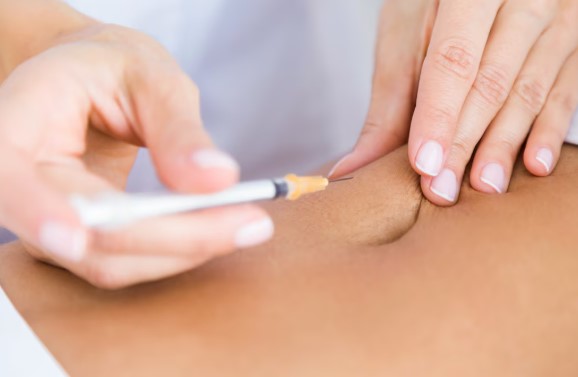
Not every scar needs surgery to improve. Laser treatments can reduce redness and stimulate collagen remodeling, while steroid injections can flatten raised or thickened scars without requiring an incision at all.
These options are frequently used together in a staged treatment plan, since combining approaches often produces better results than relying on a single method alone.
Silicone sheeting and topical treatments can also play a supporting role, particularly in the earlier stages of healing when a scar is still soft and more responsive to conservative, non-invasive care.
Why Timing Matters for Scar Treatment
Scar healing is a gradual process. Even after a wound has closed, the underlying scar tissue continues to remodel and mature for up to a year or longer. During this time, the scar’s color, texture, thickness, and flexibility can change significantly, which is why treatment recommendations often depend on the stage of healing rather than the scar’s initial appearance.
Seeking an evaluation early can help you understand the most appropriate next steps. Dr. Ahmadi, a plastic surgeon in Houston, TX, at Avante Plastic Surgery can assess how your scar is progressing and determine whether continued observation, non-surgical therapies, or scar revision surgery is likely to provide the best outcome. Choosing the right treatment at the right time helps maximize results while supporting the natural healing process.
What to Expect During a Consultation
A good consultation should involve a close physical examination of the scar, a conversation about how it formed, and a realistic discussion of what results are achievable given your specific skin type and scar characteristics.
Be wary of anyone promising a scar will completely disappear. The honest goal of most scar treatment is significant improvement and reduced visibility, not total erasure, and a trustworthy surgeon will set that expectation clearly from the start.
It is also reasonable to ask about before-and-after examples of similar scars the surgeon has treated, since seeing real outcomes on comparable skin types and scar patterns can help set accurate expectations before committing to a treatment plan.
Final Thoughts
Living with a scar that bothers you does not have to be permanent. Between surgical revision, non-surgical treatments, and the right timing, a qualified plastic surgeon has more tools available than most people expect to meaningfully improve how a scar looks and feels.
The best results often come from a personalized treatment plan based on the scar’s size, location, age, and underlying cause. Consulting an experienced specialist allows you to understand your options, set realistic expectations, and choose an approach that supports both improved appearance and greater confidence over the long term.
Share this article



Latest Posts




ADVERTISEMENT