

Why a Degree Can Change Your Nursing Career Faster Than You Expect
- Updated on: Oct 21, 2026
- 4 min Read

Vishakha Yadav is a biotechnologist with Masters's degree in Biotechnology. She has pursued her Bachelors's and Masters's degrees from Amity University, Noida. She aspires to contribute to the field of healthcare and research. Currently, she is associated with Maxinov Solutions Pvt. Ltd. as Research Analyst and a medical content writer at DiseaseFix.
- Published on Oct 21, 2026
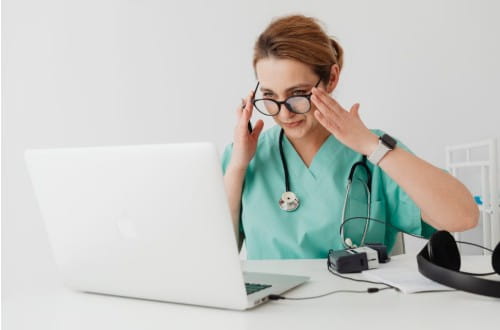
If you’re already working as a registered nurse, you’ve probably noticed how quickly healthcare expectations keep shifting. Hospitals, clinics, and community settings want nurses who can do more than handle bedside care. They want leadership, critical thinking, and a stronger grasp of public health. An RN to BSN can help you move with that reality instead of trying to catch up later, especially when your schedule already feels packed.
Online RN to BSN programs can fit a working nurse’s life
One of the biggest reasons nurses delay school is time. Fair point. Between shifts, family obligations, sleep debt, and the occasional attempt to have a personality outside work, your week may already feel maxed out.
ADVERTISEMENT
ADVERTISEMENT
That’s where a flexible RN to BSN online degree can make sense. Since this kind of program is designed for licensed RNs, coursework often reflects the reality that you’re already practicing. You’re not starting from scratch. You’re building academic depth around hands-on experience.
Online study can help if you need to:
Work full time while earning your degree
Avoid relocating or commuting to campus
Keep a more predictable study schedule
Move through coursework with greater flexibility
The key is choosing a program that’s accredited, realistic about workload, and structured for actual working adults, not imaginary humans with eight extra hours a day.
You’re not just adding a degree, you’re expanding your range
An associate degree and RN license can get you into nursing, but a BSN often opens more doors once you’re inside the field. You’re not replacing your experience. You’re building on it.
A bachelor’s program usually adds training in areas like:
Leadership and team coordination
Community and population health
Research and evidence-based practice
Healthcare policy and ethics
Communication across multidisciplinary teams
That matters because modern nursing isn’t limited to giving meds, documenting care, and sprinting through a 12-hour shift. You’re often expected to interpret data, advocate for patients, and adapt to systems that change constantly. A BSN sharpens those skills in a more structured way.
In practical terms, it can make you more competitive for roles that involve case management, charge nurse duties, quality improvement, or public health work.
Employers increasingly treat a BSN as the new baseline
You’ve probably seen job listings that say “BSN preferred” or “BSN required.” That wording isn’t there for decoration. Many healthcare employers now use the BSN as a hiring filter, especially in large hospital systems.
Part of that comes from industry pressure. Organizations such as the American Association of Colleges of Nursing have long pushed for a more highly educated nursing workforce. Research has also linked better nursing education levels with stronger patient outcomes in certain settings.
For you, the message is pretty direct: staying clinically skilled may not be enough if you want long-term flexibility. Even if your current workplace doesn’t require a BSN today, policy shifts and staffing trends can make that expectation show up fast.
Healthcare hiring can be a bit like charting during a system outage—messy, stressful, and full of unwelcome surprises. Having a BSN can reduce some of that friction.
The biggest benefits show up in career mobility and confidence
A BSN can affect more than your résumé. It can change how you approach your work and where you can go next.
For example, if you want to move into leadership, many employers expect formal education in management concepts, systems thinking, and professional communication. If you’re interested in school nursing, public health, informatics, or care coordination, a BSN may also strengthen your path.
You may notice gains in day-to-day confidence too. Courses in evidence-based practice can help you evaluate care decisions more critically. Training in community health can change how you view prevention, access, and patient education. Those shifts are useful whether you stay in med-surg, move into outpatient care, or aim for graduate school later.
According to the U.S. Bureau of Labor Statistics, nursing remains a strong field overall, but growth often favors nurses who can adapt to broader responsibilities.
Going back to school works best when you plan like a nurse
Impulse rarely wins against a packed schedule. A solid plan does. If you’re thinking about an RN to BSN program, treat the process like a care plan for your future self.
Start with the practical questions:
How many credits will transfer?
How long will the program take?
What are the weekly time expectations?
Is tuition manageable with your budget and aid options?
Are clinical or project requirements local and realistic?
You should also look at your support system. If you work rotating shifts, you may need a semester strategy before classes begin. Some nurses batch assignments on off days. Others carve out one hour before work several times a week. There’s no perfect formula, but there does need to be a system.
The more honest you are about your limits, the more likely you are to finish without burning out halfway through term.
Your patients may never ask about your degree, but they feel the difference
Most patients won’t ask whether you hold an ADN or BSN. They care whether you listen, respond, educate clearly, and notice problems early. Still, the deeper training that comes with a BSN can strengthen those exact skills.
You may become better at connecting bedside details to larger patterns, such as discharge barriers, health literacy issues, or preventable readmissions. You may communicate more confidently with providers and advocate more effectively for safer care plans.
That doesn’t mean a BSN magically turns someone into a great nurse. Nursing still depends on judgment, empathy, and real clinical experience. But more education can refine what you already bring to the job.
In a healthcare system where patients often feel rushed through the process, stronger nursing preparation matters. Quietly, consistently, and sometimes more than people realize.
The smartest time to move forward is often before you feel fully ready
A lot of nurses wait for the “perfect” time to go back to school. That moment can stay imaginary for years. Work stays busy. Life stays complicated. Laundry continues its hostile takeover.
If a BSN aligns with your goals, waiting too long can limit options that might otherwise be within reach. Promotions, specialized roles, and future graduate programs often become easier to access once the degree is done.
You don’t need a dramatic career crisis to justify taking the next step. Wanting more stability, mobility, or professional growth is enough. An RN to BSN path can be a practical move for your future, not just an academic box to check.
If you’re already doing the hard work of nursing, expanding your education can help your career catch up with your capability. That’s a smart upgrade, not extra fluff.
Share this article

Latest Posts





ADVERTISEMENT